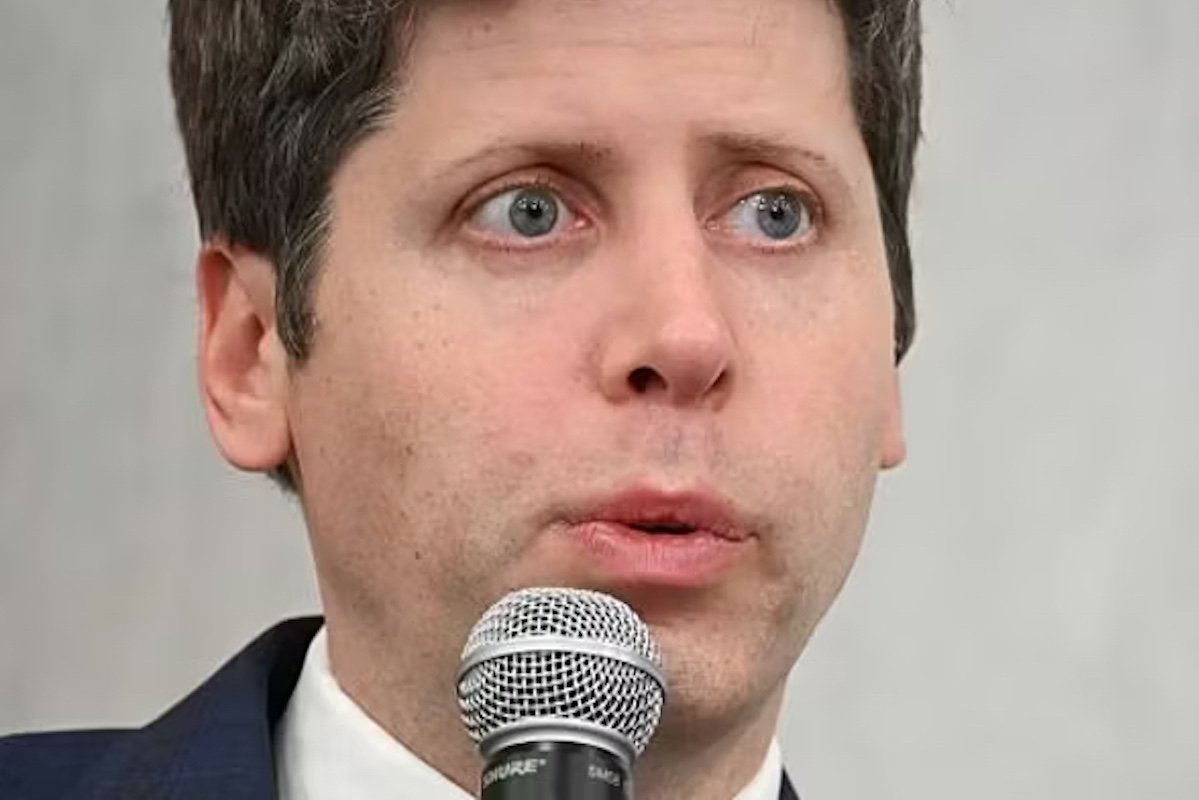
A Washington-based government watchdog has launched a public database to track the activities of prominent figures in the artificial intelligence industry, labeling them as the biggest “AI villains” for their role in shaping US policy. The Revolving Door Project, a nonprofit known for monitoring conflicts of interest between government and corporate power, released the tracker on Thursday, aiming to shed light on the close ties between AI executives and the administration of President Donald Trump.
The group argues that the Trump administration has embraced an “AI first” approach, pushing to embed artificial intelligence across the economy despite what it calls “little proof that its value for the American public is anywhere close to commensurate with its costs.” The watchdog warns that this policy, pursued in concert with major tech firms, threatens to displace human labor, deepen environmental strain, and override state-level regulatory efforts.
Key Figures on the Watchlist
The database includes well-known names such as Elon Musk, CEO of SpaceX; Sam Altman, CEO of OpenAI; and Larry Ellison, co-founder of Oracle. But it also highlights less visible players who wield significant influence behind the scenes. Among them is Chris Lehane, OpenAI’s director of government affairs, whose career spans Democratic Party politics—including a stint as a special assistant counsel in the Clinton administration and as deputy campaign manager for Al Gore’s 2000 presidential bid. Since then, Lehane has worked in public relations for Silicon Valley firms like Airbnb and Coinbase. According to the Revolving Door Project, Lehane has been a vocal proponent of a “reverse federalism” regulatory framework that would strip states of their power to impose guardrails on the AI industry.
Another figure on the list is Greg Brockman, president of OpenAI, who has traditionally aligned with the Republican Party. Brockman and his wife were the largest donors to the MAGA, Inc. super PAC in 2025, and the watchdog describes him as “a regular attendee at White House events throughout Trump’s second term.” This access has helped Brockman push for policies that fast-track data center construction and advance the same “reverse federalism” approach championed by Lehane.
The tracker also pays special attention to Marc Andreessen, co-founder of venture capital firm Andreessen Horowitz (a16z). The Revolving Door Project notes that Andreessen’s allies are “deeply entrenched” in the Trump administration. Former a16z general partner Sriram Krishnan served as a senior AI policy advisor; former engineering fellow Peter Bowman-Davis acted as acting chief AI officer at the Department of Health and Human Services; and former managing partner Scott Kupor now directs the Office of Personnel Management. Andreessen himself sits on the President’s Council of Advisors on Science and Technology, which the watchdog describes as a “vessel… to freely lobby on behalf of the tech industry’s interests without the need for lobbyist intermediaries.”
The database comes amid growing backlash against the AI industry in the United States, where concerns about job displacement, privacy, and environmental impact have intensified. The Revolving Door Project’s Fletcher Calcagno wrote that the tracker is needed to understand why the Trump administration has been willing to “accept Big Tech’s maximally irresponsible recommendations” for AI regulation.
This development also has implications for Asia, where countries like China, Japan, South Korea, and Singapore are racing to set their own AI standards. China, for instance, has pursued a state-led approach to AI development, while Japan and South Korea have emphasized innovation with regulatory guardrails. The US debate over AI governance could influence global norms, particularly as American tech giants expand their operations across the Indo-Pacific. For more on how Asian chipmakers are navigating global pressures, see our analysis of Samsung and SK Hynix facing a reckoning as chip inflation fuels global backlash.
The Revolving Door Project’s tracker is likely to fuel further scrutiny of the revolving door between Silicon Valley and Washington. As the AI industry continues to grow, the question of who sets the rules—and whose interests they serve—remains a central concern for policymakers and the public alike.