During US President Donald Trump's visit to Beijing this week, Chinese President Xi Jinping made a pointed reference to the so-called Thucydides trap, a concept drawn from the ancient Greek historian's account of the Peloponnesian War. Xi's remarks, delivered directly to Trump, were a clear attempt to shape the narrative of US-China relations—and to warn against the dangers of strategic arrogance.
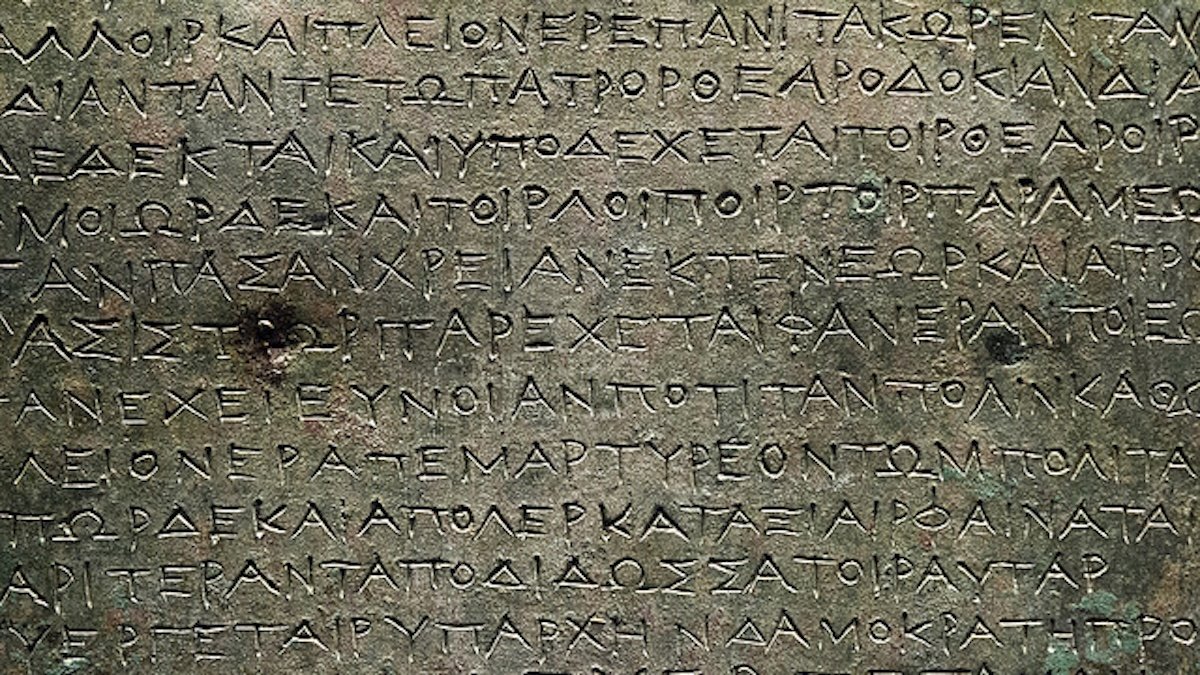
The term, popularized by Harvard professor Graham Allison, describes the perilous dynamic when a rising power challenges an incumbent one, often leading to conflict. Allison's book argues that the fear Sparta felt toward Athens' ascent triggered decades of war. Xi, however, rejected the notion that such a trap is inevitable. “We should strictly base our judgment on facts, lest we become victims to hearsay, paranoid or self-imposed bias,” he told Trump. “There is no such thing as the so-called Thucydides trap in the world – but, should major countries time and again make the mistakes of strategic miscalculation, they might create such traps for themselves.”
This was not the first time Xi has cited Allison's work, but it marked the first occasion he personally lectured an American president on its meaning. His interpretation was deliberately narrow: the trap is not a historical law but a product of flawed human leadership. The subtext was unmistakable—Xi was cautioning Trump against hubris, a quality critics say defines the current US administration.
Hubris and the Iran Precedent
The timing of Xi's lecture was significant. In Washington, the Trump administration's military campaign in Iran has drawn growing criticism, with parallels emerging between Xi's warning and domestic US dissent. Critics argue that the decision to invade Iran was influenced by the success of two earlier, unrelated military operations: the bombing of Boko Haram in northeastern Nigeria and the commando raid that captured Venezuelan dictator Nicolás Maduro. These victories, they contend, emboldened Trump to attempt the overthrow of Iran's tightly controlled Islamic regime, backed by the fanatical Revolutionary Guard Corps.
Ivo Daalder, a former US ambassador to NATO, described the pattern in a podcast: “Having seen the military successfully used in Venezuela and Nigeria, Trump now believes he can use raw power to force political change. There is a human element to this, which is called hubris. And this president has hubris in his DNA.” Daalder's assessment echoes a broader critique of US foreign policy, one that Xi himself articulated in Beijing.
Andrew Latham, a political science professor at Macalester College, offered a similar analysis. “The real lesson of Thucydides is not that war is preordained,” he wrote. “But it becomes more likely when nations allow fear to cloud reason, when leaders mistake posturing for prudence and when strategic decisions are driven by insecurity rather than clarity.” Latham concluded that the trap is the result of “hubris and nemesis”—excessive pride followed by damaging costs—rather than structural determinism. “Much of this is lost when the phrase ‘Thucydides trap’ is elevated into a kind of quasi-law of international politics,” he added.
The historical record supports this view. In 1993, President George H.W. Bush sent troops to Somalia to feed a starving population, but the mission morphed into an effort to install a government, leading to a disastrous confrontation with warlord Mohamed Farrah Aidid. His successor, Bill Clinton, withdrew US forces less than a year later. In 2001, President George W. Bush invaded Afghanistan to capture Osama bin Laden; the operation expanded into a 20-year nation-building project that ultimately collapsed, with the Taliban returning to power. The 2003 invasion of Iraq, launched on false claims of nuclear weapons, ousted Saddam Hussein but left behind unstable, corrupt governments plagued by ethnic conflict and Iranian-backed militias.
Max Boot, an international security expert at the Council on Foreign Relations in New York, summed up the pattern: “Before going to war in the future, US political leaders need to give more careful consideration to how they can leverage the US military to produce a desired outcome. The lack of such strategy has been a glaring American shortcoming from the Vietnam War to the wars in Iraq and Afghanistan – and now the war in Iran.”
Xi's intervention in Beijing was not merely a diplomatic nicety. It was a calculated effort to position China as a responsible global power, contrasting its restraint with US adventurism. As the Trump-Xi summit showed, smiles can mask deep strains. The question now is whether Trump will heed the lesson—or, as critics fear, continue to let hubris drive US strategy in the Indo-Pacific and beyond.