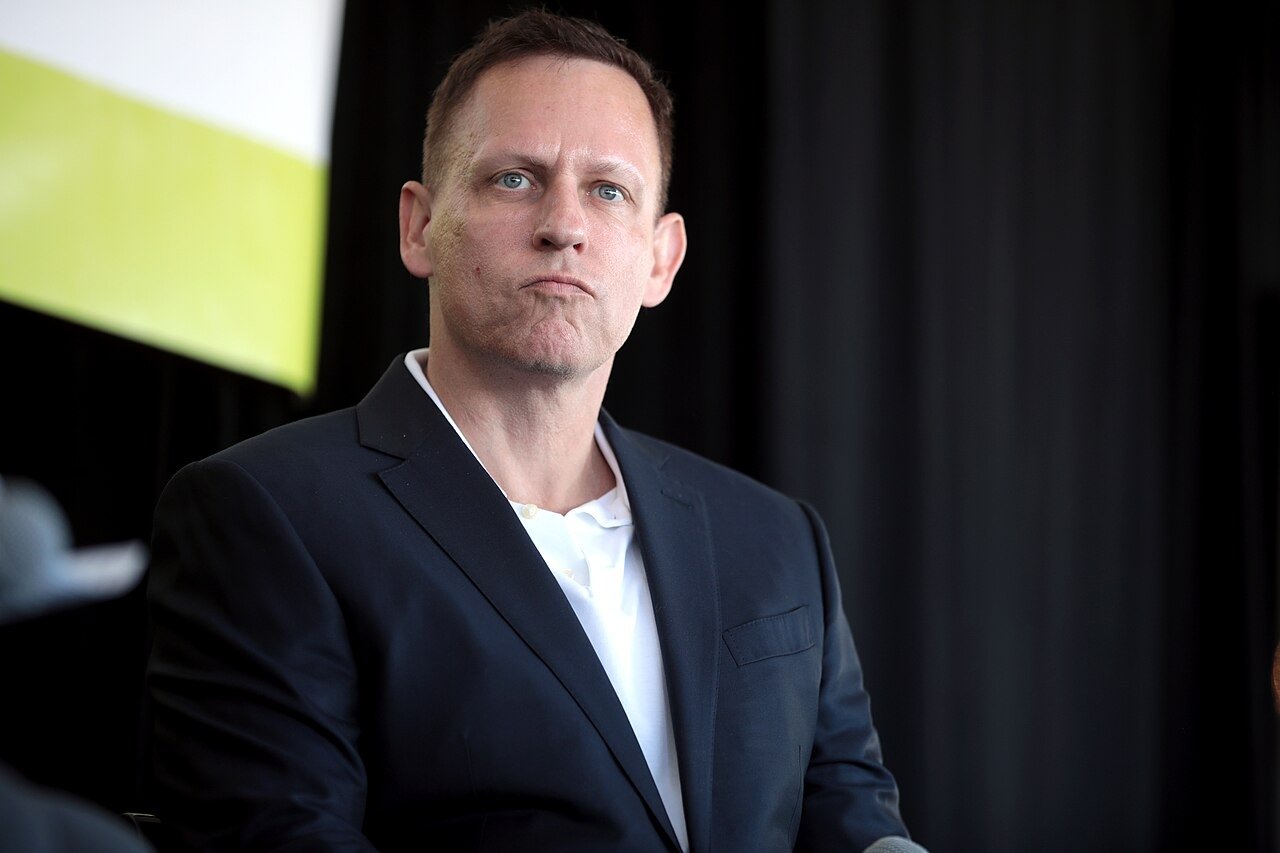
Billionaire tech investor Peter Thiel has leveled an extraordinary accusation against Pope Leo XIV, claiming that the pontiff's recent criticisms of artificial intelligence effectively make him an agent of the Chinese Communist Party. Speaking at the Aspen Ideas Festival in Colorado on Tuesday, Thiel argued that the pope's 42,000-word encyclical, which called for strict regulation of AI and warned of the technology's risk of dehumanization, could undermine the United States in its technological competition with China.
According to a report from CNN, Thiel told the festival audience that the pope's stance is dangerous because it could cause the US to lose the race to build more advanced AI systems to China. "He's essentially working for the Chinese communists," Thiel said, suggesting that the pope's moral guidance on AI inadvertently serves Beijing's interests by slowing American innovation.
Thiel's Longstanding Hostility Toward AI Critics
Thiel, a co-founder of PayPal and Palantir, has a history of harshly denouncing critics of AI development. Over the past year, he has delivered a series of lectures in which he claimed that opponents of AI are acting as agents of the Antichrist. Journalist Christopher Hale, who writes the Letters From Leo newsletter, noted on Friday that Thiel has even speculated that Pope Leo himself could be "a manifestation of the Antichrist."
Hale also reported that Thiel instructed Vice President JD Vance, a longtime political ally who received substantial funding from Thiel for his 2022 Senate campaign, to ignore the pope's moral guidance. This is despite Thiel having influenced Vance to convert to Catholicism. "Thiel seeded the vice president's Catholic faith," Hale wrote, "and he now tells wealthy festival audiences that the leader of that faith works for a communist government."
The accusation comes amid a broader debate about the role of AI in global power dynamics. The pope's encyclical, released earlier this year, called for international regulation of AI to prevent it from exacerbating inequality and undermining human dignity. Thiel's framing of this as a pro-China move reflects a growing tendency among some US tech figures to view any restraint on AI development as a concession to Beijing.
Thiel's Broader Political Concerns
In addition to his attacks on the pope, Thiel warned about what he called "a democratic-socialist takeover of the Democratic Party," pointing to recent primary victories in New York and Colorado by candidates backed by the Democratic Socialists of America. Thiel argued that this takeover would doom the US, saying, "When the Democratic Party goes, this country is over."
Thiel's comments come as he has reportedly been seeking alternative bases of operation outside the United States. The New York Times reported in May that Thiel, who was born in Germany and raised in the US, has acquired citizenship in New Zealand and applied for a passport in Malta. He is now considering Argentina, governed by libertarian President Javier Milei, as another potential "Plan B."
Thiel's accusations against the pope highlight the intersection of technology, geopolitics, and religion in the Indo-Pacific region. As China continues to invest heavily in AI development, the debate over how to regulate the technology is increasingly framed in terms of national security and ideological competition. The pope's intervention adds a moral dimension that some in the tech industry find inconvenient.
For readers in Asia, Thiel's remarks underscore the high stakes of the AI race. Countries like Japan, South Korea, and Singapore are also major players in AI development, and the pope's call for regulation resonates with concerns about the social impact of automation and surveillance. The accusation that moral criticism of AI is a form of Chinese influence may further polarize an already contentious debate.