This year, South Korea and Indonesia have been working to elevate their bilateral relationship, a move that reflects their shared vulnerability to the changing geopolitical currents of the Indo-Pacific. While their security postures differ—Seoul maintains a treaty alliance with Washington, while Jakarta adheres to its bebas aktif (free and active) non-bloc foreign policy—both face similar pressures from a more transactional US approach and an assertive China.
Recent shifts in US policy, including sharper burden-sharing demands and a more transactional stance toward alliances, have created uncertainty across the region. This does not diminish the importance of the ROK-US alliance, but it strengthens the case for Seoul and Jakarta to broaden their strategic options and invest in additional reliable partnerships. As South Korea rethinks its reliance on the US alliance, diversification becomes a prudent strategy.
China presents a different combination of opportunities and constraints. It is an indispensable economic partner for both countries, central to regional growth and supply chains. Yet the expansion of Chinese strategic influence, ongoing maritime disputes, and the risks of excessive economic dependence create incentives for regional states to diversify relationships and preserve policy space. For both Seoul and Jakarta, the challenge is not to choose against China, but to maintain mutually beneficial relations with Beijing while safeguarding sovereign interests and supporting international law.
US policy volatility and its regional impact
The 2026 US defense-policy debate reflects a more transactional emphasis on burden-sharing and measurable contributions from allies. In an August 2026 speech in Manila, US Under Secretary of Defense for Policy Elbridge Colby cautioned against "middle power alliances designed to exclude America," yet also stressed that the US seeks "partnerships, not dependencies," encouraging stronger indigenous defense-industrial capacity. This tension matters: countries like the ROK and Indonesia may welcome stronger capabilities and cooperation with the US while still seeking strategic room to define their own priorities.
South Korea has experienced this volatility directly. In August 2026, the ROK and US cut short the annual Ulchi Freedom Shield exercise after President Trump directed substantial reductions, sparking debate in Seoul about consultation, readiness, and implications for wartime operational control (OPCON) transition. Such episodes do not negate the alliance's value, but they illustrate why Seoul has an interest in strengthening its own capabilities and widening its network of partners. Indonesia, with its substantial defense-industrial, maritime, economic, and technological complementarities, should be part of that wider network.
From special strategic partnership to SCSP
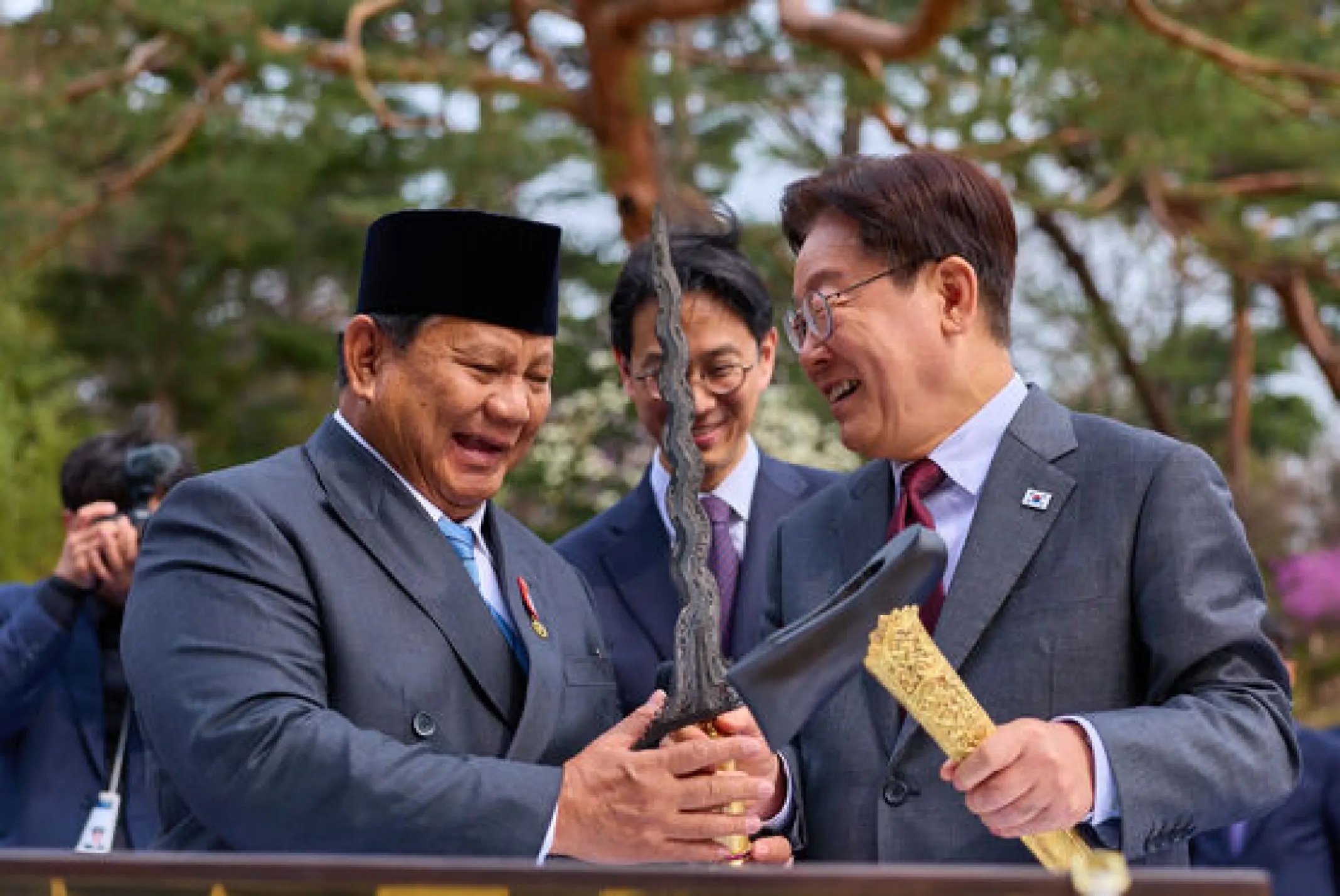
On April 1, South Korean President Lee Jae-myung and Indonesian President Prabowo Subianto met at the Blue House in Seoul, agreeing to upgrade their relationship from a "special strategic partnership" to a "special comprehensive strategic partnership" (SCSP). They signed 16 memoranda of understanding covering political and security cooperation, economic partnership, advanced technology, health, energy, and other fields. Indonesia reported approximately US$10.26 billion in South Korean business commitments associated with the visit.
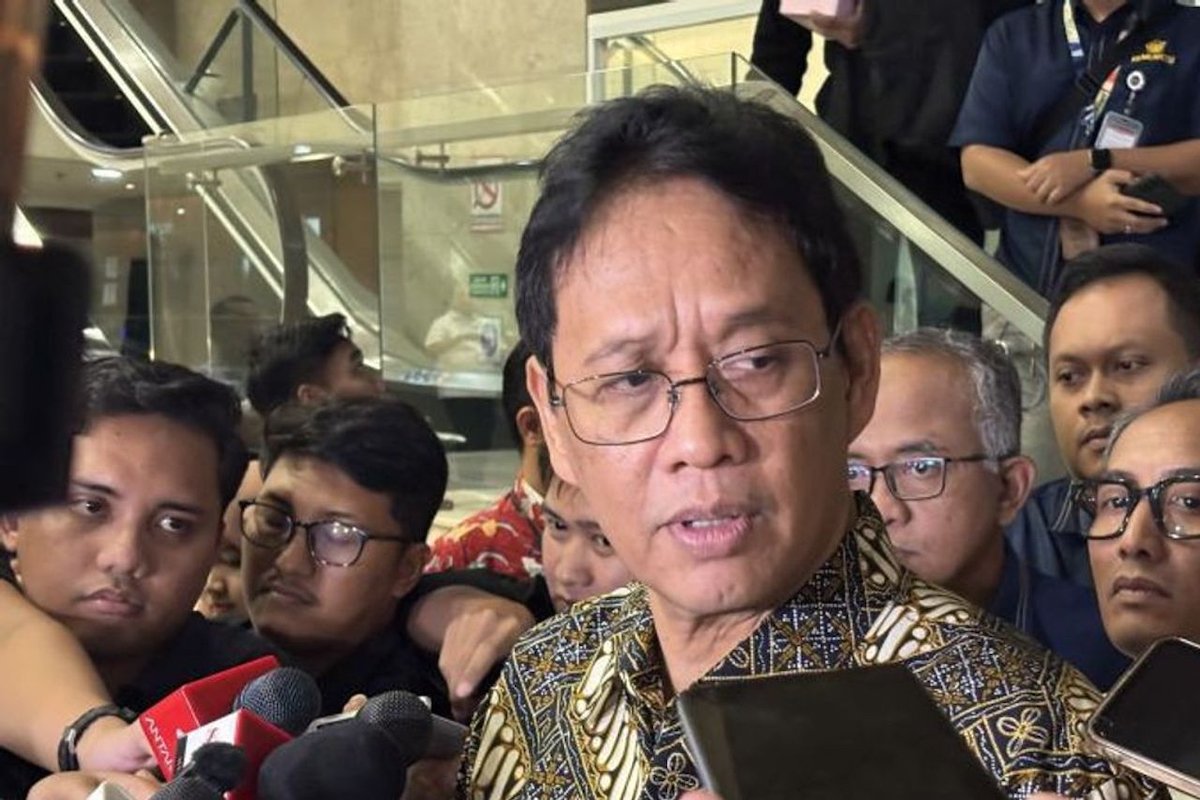
Implementation will not be automatic, given geographic separation and differing strategic environments. On July 27, a hybrid "track 1.5" diplomatic meeting brought together officials and experts to discuss strategic autonomy, navigating US-China rivalry, and middle-power cooperation. The dialogue exposed a real challenge: translating broad strategic convergence into concrete objectives in areas like energy, critical minerals, defense-industrial cooperation, data, maritime cooperation, and supply-chain resilience. The next step should be to identify practical projects, responsible agencies, timelines, and measurable outcomes.
For Indonesia, this aligns with its free and active foreign policy and preference for constructive relations with all major powers. For the ROK, it means complementing alliance commitments with a wider network of dependable partnerships. Diversification should be understood as adding strategic options, not replacing one dependency with another. As both countries navigate these currents, their upgraded partnership could serve as a model for middle-power cooperation in the region.