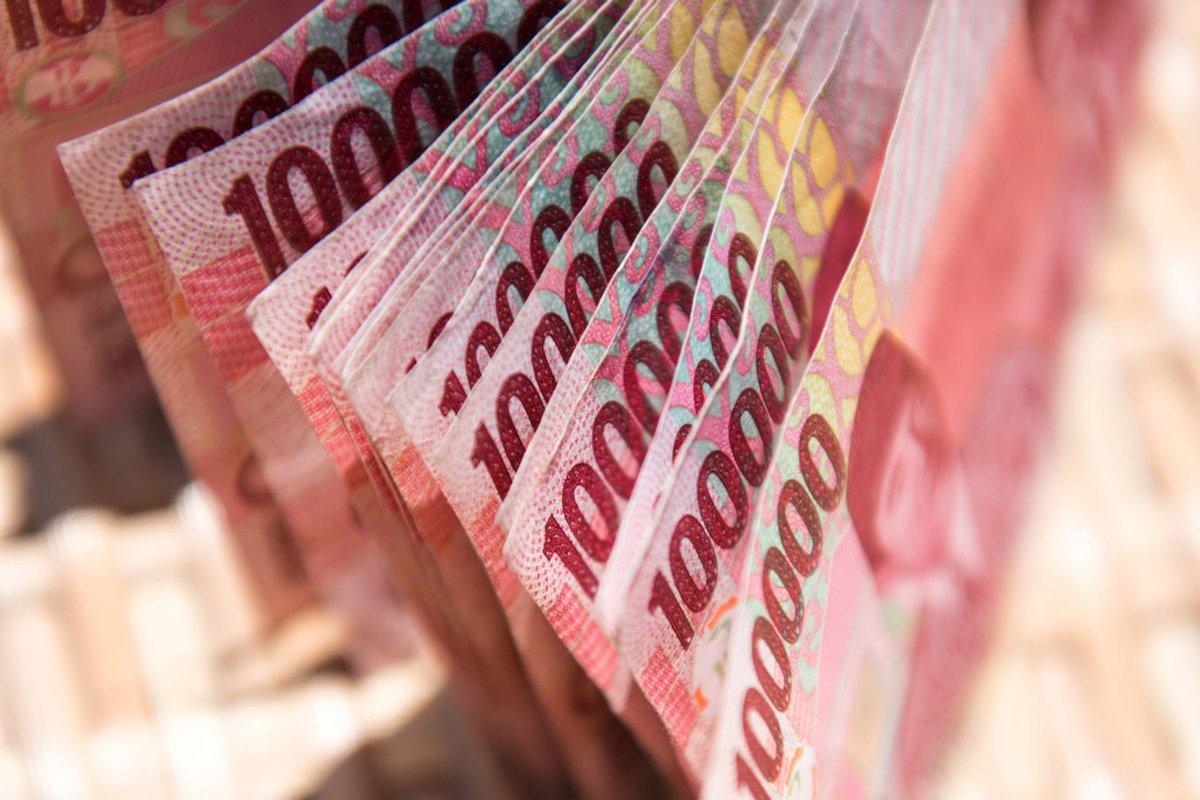
Indonesia's currency crisis deepened in mid-May when the rupiah breached the 17,500 mark against the US dollar, hitting a historic low of 17,513. The decline, roughly 5% year-to-date, signals that the stabilization measures long promoted by policymakers are losing effectiveness amid intensifying global volatility.
The rupiah's slide did not emerge in isolation. Since early 2026, capital outflows have accelerated, with $1.6 billion leaving Indonesian markets in the first three weeks of January alone. Geopolitical shocks, particularly the war in Iran and disruptions to the Strait of Hormuz, have reshaped global risk perceptions, driving investors toward safe-haven assets like the US dollar.
External Shocks and Domestic Vulnerabilities
Indonesia's position as a net oil importer makes it acutely vulnerable to the surge in energy costs. Brent crude prices hovering around $110 per barrel have increased demand for US dollars to finance fuel imports, compounding pressure on the rupiah. Meanwhile, the US Federal Reserve's commitment to a higher-for-longer interest rate stance, with rates steady at 3.75%, has narrowed the yield differential between Indonesian assets and US Treasuries, reducing the appeal of emerging market investments.
Domestically, Indonesia's economic growth of 5.61% year-on-year in the first quarter has been met with skepticism. Analysts describe the expansion as shallow, driven largely by social spending and seasonal consumption rather than productive investment. This lack of a robust economic anchor has left the currency vulnerable to speculative attacks.
The MSCI's May 2026 index review, which deleted 18 Indonesian equities, has further eroded investor confidence. Concerns over high shareholding concentration in major firms, such as BREN and DSSA, have fueled fears of rating downgrades and reduced index weighting, prompting foreign investors to sell heavily ahead of the rebalancing.
Bank Indonesia's Policy Dilemma
Bank Indonesia faces a classic monetary trilemma: it cannot simultaneously maintain a stable exchange rate, preserve independent monetary policy, and allow free capital mobility. By holding its benchmark rate at 4.75%, the central bank has effectively widened the yield gap with dollar-denominated assets, encouraging further currency speculation. Critics accuse authorities of an "ostrich policy," downplaying market realities to preserve the rhetoric of stability.
Indonesia's foreign exchange reserves are also eroding, falling to $146.2 billion in April 2026 from $148.2 billion the previous month. This limited ammunition constrains the central bank's ability to intervene effectively in the spot market.
The rupiah's trajectory now hinges on whether Bank Indonesia and the Prabowo Subianto-led government can restore credibility. Preventing the currency from sliding further below 17,500 has become the most critical test of their macroeconomic management. Without deeper structural reforms to boost productive investment and reduce import dependence, the rupiah may remain under pressure, echoing the vulnerabilities that preceded the 1997 Asian financial crisis.