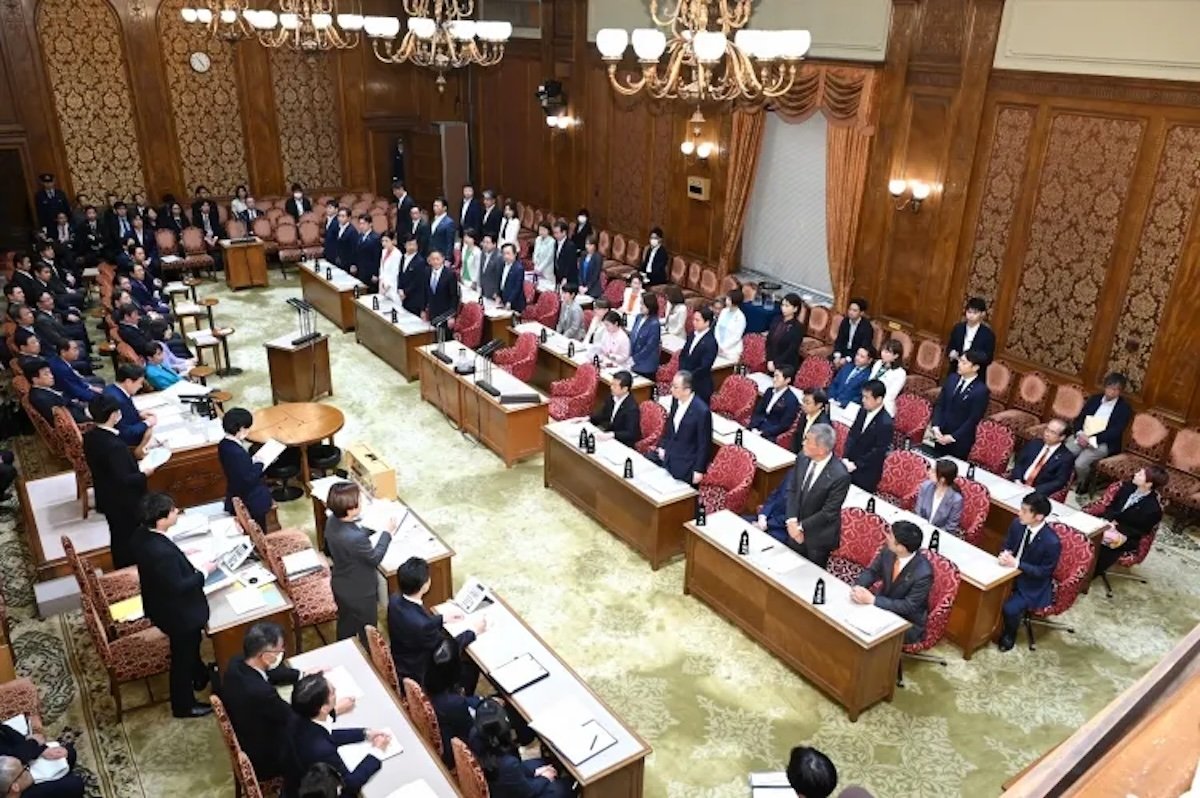
Japan's upper house passed Prime Minister Sanae Takaichi's ¥3.11 trillion supplemental budget on Friday, June 5, with support from the Liberal Democratic Party (LDP), Ishin no Kai, the Democratic Party for the People (DPFP), Team Mirai, and the Conservative Party of Japan (CPJ). The budget moved through parliament with unusual speed: the cabinet approved it on June 3, and each chamber deliberated for only a single day.
The extra spending provides a larger cushion for continued fuel subsidies, but its passage does little to ease the political heat on Takaichi to outline a clear exit strategy from the costly program. The supplemental budget also flips Japan's fiscal outlook from a projected ¥1 trillion surplus in FY2026 to a ¥1.7 trillion deficit, according to government estimates.
Tax cut on foodstuffs raises new fiscal questions
As the Takaichi administration prepares to introduce a reduced consumption tax on foodstuffs, it faces mounting demands for business support. Finance Minister Satsuki Katayama stated on Friday that the government will not rely on deficit bonds to fund the tax cut, but analysts caution against taking that claim at face value.
The government must account for roughly ¥4.4 trillion in lost revenue from cutting the consumption tax on food to 1%, plus compensation for businesses and a possible household rebate that could make the cut effectively zero. Restaurants, already disadvantaged by the current 8% discounted rate for takeout versus 10% for dining in, fear a steeper gap when grocery shopping and convenience store takeout fall to 1%. Food producers operating small retail outlets that are exempt from collecting consumption taxes also warn that their gross receipts will decline while costs remain unchanged.
Given these pressures, the government may ultimately resort to deficit bonds despite Katayama's assurances, as it did with the supplemental budget itself.
Defamatory video scandal refuses to fade
During Diet deliberations on Friday, Takaichi faced renewed questions about her staff's involvement in creating and disseminating defamatory videos targeting her rivals in last year's LDP leadership race. After initially claiming she lacked a subscription to listen to a recording allegedly between one of her secretaries and a man who said he made the videos, she said Thursday evening that she had listened to it but could not identify the secretary's voice.
Takaichi insisted there was no record of the meeting in her office and took issue with a weekly tabloid article being given more credence than her denials. She suggested the recording might be fake or manipulated. When a Constitutional Democratic Party (CDP) lawmaker urged her to file a complaint with the publication, she replied that she was too busy with affairs of state.
Despite her indignation, the story persists. Asahi noted that her responses have subtly shifted from saying she and her secretary had "no acquaintance" with the alleged video maker to saying they had "not met" him. On Friday, Centrist Reform Alliance (CRA) leader Junya Ogawa called for her secretary to be summoned for Diet questioning if she does not provide clear answers. Even some LDP members have voiced criticism, albeit anonymously.
Yen weakness and falling approval ratings
For the second time this week, Takaichi used parliamentary deliberations to comment on the yen's value. In the upper house budget committee on Friday, she repeated her view that yen weakness "has merits and demerits" and argued that strengthening Japan's international competitiveness will "ensure confidence in the yen." She stressed her focus on boosting investment and potential growth.
Meanwhile, Mainichi Shimbun's latest opinion poll shows Takaichi's approval among independents falling below disapproval for the first time, at 35% versus 37%. Dissatisfaction with the government's handling of inflation appears to be a key factor. Support among voters under 30 also dipped below 50% for the first time.
On Friday evening, Takaichi hosted LDP upper house officials at the Kantei to thank them for helping move the supplemental budget through the Diet.
In other developments, the Japanese government has begun talks with Indonesia on selling retired Asagiri-class destroyers. The Ministry of Economy, Trade, and Industry announced an additional ¥150 billion investment in chipmaker Rapidus, bringing total government support to at least ¥2.6 trillion. LDP lawmakers continue to express anger over Ishin no Kai's plan to push its Osaka metropolis plan forward.