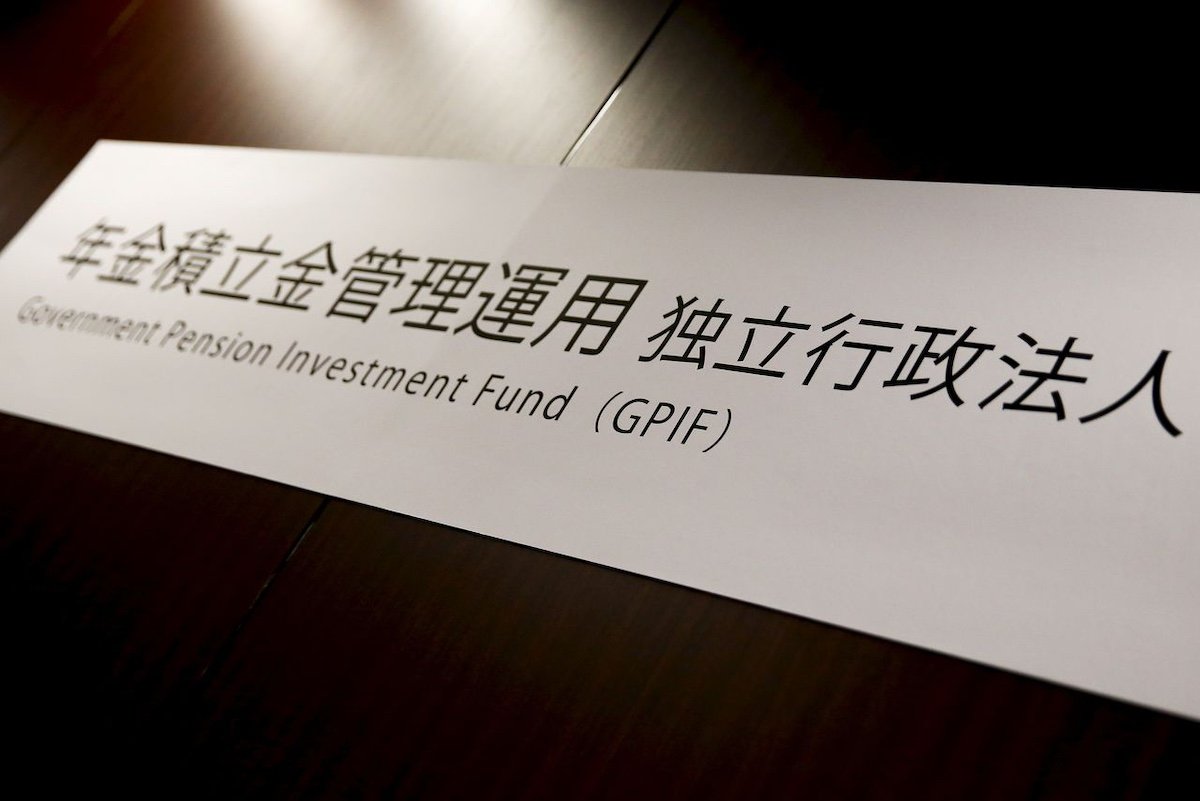
Japan's national pension fund, the world's largest with over $2 trillion in assets, is at the center of a political tug-of-war. Finance Minister Satsuki Katayama and Prime Minister Sanae Takaichi have both suggested that the Government Pension Investment Fund (GPIF) should increase its holdings of Japanese assets, a move that has alarmed fiscal conservatives and market professionals alike.
On July 10, Katayama's comment that the government wants to encourage households and pension funds to invest more in Japanese financial assets triggered a sharp drop in the benchmark 10-year JGB yield, from nearly 2.9% to under 2.7%, and a brief strengthening of the yen. Prime Minister Takaichi echoed the sentiment, saying it is important for the public to benefit from Japan's economic growth.
But GPIF President Kazuto Uchida pushed back on July 27, telling a health ministry expert panel that the fund will manage assets solely in the long-term interest of beneficiaries, not based on short-term market or political conditions. The fund's recent performance—an 8.2% return in the quarter ending June—was driven by strong international equities (16.9%) and Japanese equities (14.5%), while Japanese fixed income lost 1.1%.
Political interference vs. prudent management
Jun Arima, a former GPIF public market investment chief with over three decades of experience in Seoul, London, New York, and Tokyo, warns that political meddling could undermine the fund's stability. In interviews with Asia Times, Arima explained that the current allocation rule (2025-2030) allows for overweight/underweight deviations of 5-6% around a 25% baseline for each of four asset classes. However, GPIF has kept deviations minimal, frequently rebalancing to maintain the target.
Arima noted that without government guidance, GPIF already purchased a significant amount of JGBs last fiscal year—net excess purchases of 14.75 trillion yen ($92 billion)—while selling equities. He argues that the system's inflexibility is necessary because even a 1% shift represents $20 billion, and GPIF manages about 90% of Japan's public pension funds. "Suffering losses from bad bets could easily become a nationwide scandal," he said.
Katayama has not specified exact changes, but Arima believes her goal is to cope with expected JGB selling triggered by the Takaichi administration's economic plan. "The timeframe mismatch between politics and pensions is fundamental," Arima said. "Politicians look to the next election; pension fund managers must look 30 years ahead."
Arima also criticizes the lack of a holistic discussion on Japan's pension system, which ranks 39th out of 52 countries in the Mercer CFA Institute Global Pension Index for 2025. He calls for a strict segregation of the general account budget and the pension special account budget, given their vastly different time horizons.
The political pressure on GPIF comes amid broader concerns about Japan's fiscal health. The country's debt-to-GDP ratio remains the highest among advanced economies, and the Takaichi administration's stimulus plans have added to worries. As Japan's bond market shows signs of stress, the debate over pension fund management is likely to intensify.
For now, GPIF appears to be holding the line, but the political pressure is unlikely to disappear. As Arima put it, "The government needs to seriously discuss how the holistic Japanese pension system could be improved." The stakes are high: the retirement security of millions of Japanese citizens depends on the fund's integrity.