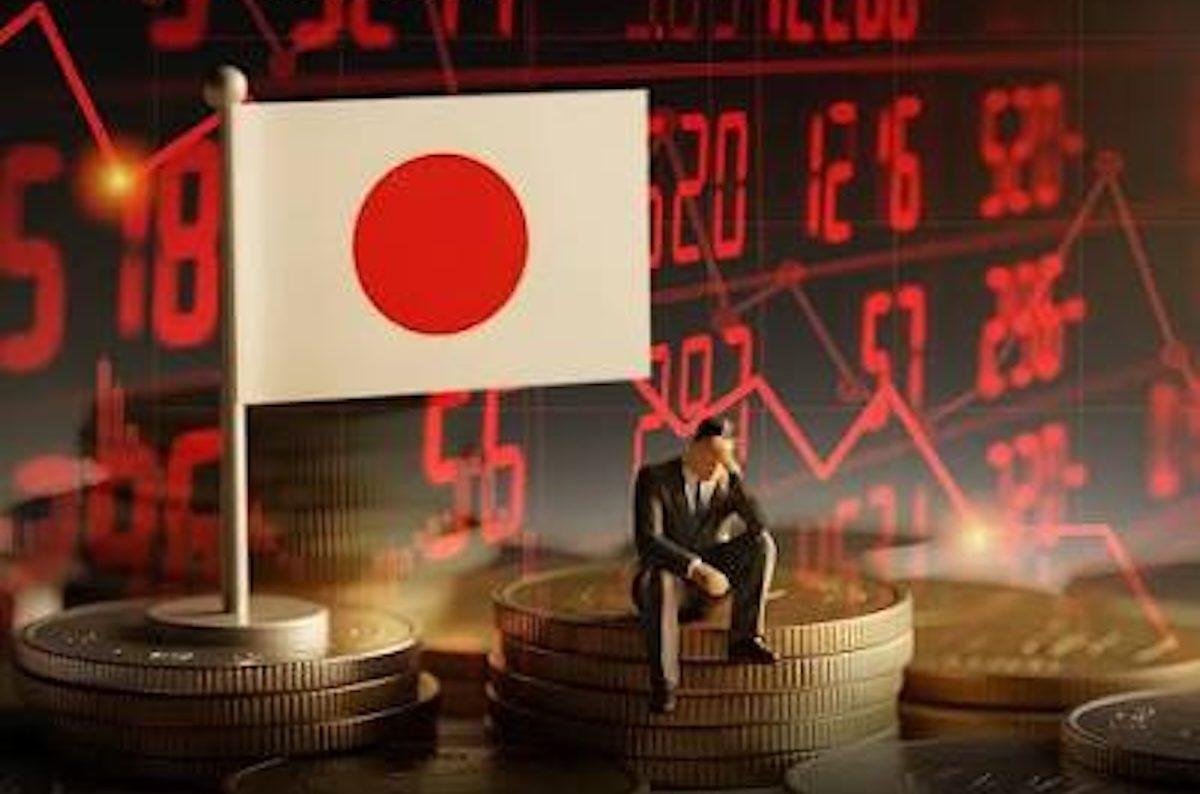
As global bond markets face renewed turbulence amid Middle East tensions, Japan has emerged as the focal point of investor anxiety. While US Treasury yields have grabbed headlines—with the 10-year note auctioning at 4.683% and 30-year yields hitting 5.216%, the highest since 2001—the pressure is most acute in Tokyo, where Japanese government bond (JGB) yields have climbed to a 29-year high of 2.8%.
Japan's fiscal and monetary tightrope
Japan's debt-to-GDP ratio, already the highest in the developed world at around 260%, is a key driver of the selloff. Prime Minister Sanae Takaichi, who took office with a reputation for fiscal stimulus, has signaled a willingness to accept a Bank of Japan (BOJ) rate hike as early as September 16—a stark reversal from her earlier stance when she called rate increases “stupid.” Her government's approval rating has slipped below 50% for the first time, as inflation outpaces wage growth, a classic stagflation scenario.
The BOJ's own research team has cut its GDP forecast for the current fiscal year to 0.9%, down from 1.3%, while inflation is projected at 2.2%. This divergence has spooked bond investors, who fear that the central bank is behind the curve. Takaichi's push for consumption tax cuts and increased spending has only added to the sense of fiscal looseness, prompting what some call “bond vigilantes” to drive JGB yields to three-decade highs.
The yen carry trade and global spillover
The yen's slide to 40-year lows has revived fears of an unwinding of the yen carry trade, a strategy where investors borrow cheap yen to invest in higher-yielding assets elsewhere. Japan's near-zero interest rates over the past 27 years made it the world's top creditor nation, but a BOJ hike could trigger a rapid reversal, with global repercussions.
Moody's analyst Deborah Tan notes that the Middle East conflict has prompted a revision of growth and inflation forecasts for Japan, with higher inflation and fiscal support compounding pressure on JGB yields. Morgan Stanley MUFG economist Koichi Sugisaki observes that yields have kept climbing even with many market participants on summer vacation, indicating a persistent trend.
US-Japan intervention and Treasury market risks
The US Treasury, led by Secretary Scott Bessent, has intervened to support the yen, but not out of altruism. Japan holds nearly $1.2 trillion in US Treasuries, the largest foreign holding, and a JGB crisis could force Japan to sell dollars, destabilizing the $31 trillion Treasury market. Bessent's team funded the intervention by selling euros, not dollars, signaling a careful approach.
Former Prime Minister Shigeru Ishiba had warned that Tokyo's finances were “worse than Greece,” a prescient caution. The current situation echoes the 2023 regional-bank panic sparked by Silicon Valley Bank's collapse, as investors scan for cracks in the financial system.
China's yuan strategy and the Plaza Accord legacy
Concerns over the yen and yuan have revived talk of a Plaza Accord-style currency deal, but Chinese leader Xi Jinping would likely reject such an arrangement. Beijing views the 1985 Plaza Accord, which sent the yen soaring, as the catalyst for Japan's decades-long stagnation. China has been propping up the yuan despite deflationary pressures, using daily fixings and capital controls to manage its currency.
Trump has floated a “Mar-a-Lago Accord,” but the framework he describes would attempt to resurrect a global trade order that no longer exists. Markets may be underestimating Xi's capacity to resist external pressure, as China's capital controls and political system give it more room than Japan had in the 1980s.
As rising US Treasury yields put Asia back on edge, the interconnectedness of global bond markets is clear. The two wars deepening the global oil crisis add to inflationary pressures, complicating central bank responses. Japan's situation is a reminder that fiscal and monetary policies in one country can have far-reaching consequences, especially when that country is a major creditor and holder of foreign debt.
The Japan's calculated silence on Trump's Gaza Reconstruction Board shows Tokyo's careful diplomatic balancing, but on economic matters, the pressure is more direct. As the BOJ contemplates a rate hike, the world watches to see if Japan can navigate this tightrope without triggering a global financial shock.