The 2026 Asian Games in Nagoya, Japan, concluded on October 4, wrapping up two weeks of competition that brought together 45 countries and territories across 43 sports. The official slogan, “Imagine One Asia,” promised unity, but the event instead became a stage for the region’s unresolved political fractures.
Days before the opening ceremony, a welcoming event for athletes in Nagoya featured an actor portraying Toyotomi Hideyoshi, a 16th-century warlord who is a local hero but also led Japan’s invasion of Korea. The choice struck a raw nerve in Seoul, where memories of that invasion and the subsequent 1910-1945 colonial rule remain vivid. South Korea lodged a formal complaint with the organizers, recalling a similar incident at the 2020 Tokyo Olympics when a banner referencing Admiral Yi Sun-sin, who defeated the Japanese Navy, was removed from the athletes’ village.
North Korea’s rare appearance
The games also marked the first time in over four decades that North Korea sent athletes to a sporting event in Japan. Given that Tokyo and Pyongyang have no formal diplomatic ties and Japan’s sanctions normally bar North Koreans from entering the country, the delegation’s presence was itself significant.
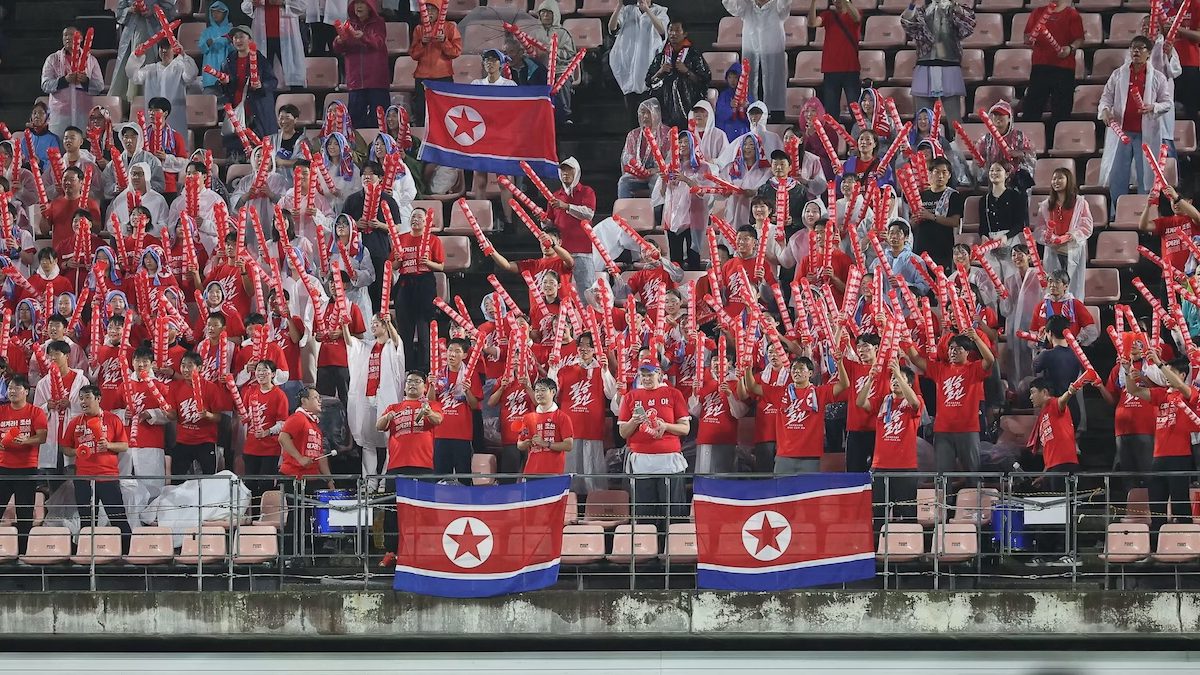
Japan hosts a sizable North Korean diaspora, many of whom trace their roots to the colonial period. These community members turned out in force, displaying banners with slogans like “Let’s show the majesty of the Republic.” After the North Korean women’s football team thrashed Bangladesh 10-0, coach Pak Song-jin thanked the supporters, saying their cheers “gave great strength and encouragement to our players and myself.” The team celebrated with the fans in the stands.
Pyongyang tightly controls its athletes’ interactions with foreigners, wary of defections. Despite 24-hour monitoring by intelligence personnel, South Korean media reported that two North Korean team members managed to seek asylum in Japan during the games.
Inter-Korean friction
The rivalry between the two Koreas played out in predictable ways. Early in the games, the North Korean anthem was mistakenly played for the South Korean men’s hockey team—an error that drew sharp rebuke from Seoul’s sport and Olympic committee, which said such a mistake “should never happen” at an international competition.
When the two countries met in women’s football, the match ended 1-1, but the coaches did not shake hands. At the post-match press conference, North Korea’s coach Park Sung-jin ignored questions from South Korean journalists. In other incidents, a North Korean shooter named Kim Hyon-Suk skipped a media session where many Seoul-based reporters were present, and weightlifting gold medallist Ri Seong-Geum refused to answer a question from a South Korean reporter who did not use the term “DPR Korea.” North Korean officials have long insisted on that designation, which South Korea does not recognize.
Taiwan’s diplomatic isolation
Taiwan’s delegation faced its own set of political hurdles. Before the games, a banner at the Taiwanese team’s training camp reading “National Sport Training Center” was vandalized. Taiwan competes under the name Chinese Taipei due to its disputed sovereignty, and the banner’s wording implied independence, which likely provoked the act.
Taiwan’s sports minister, Lee Yang, was initially barred from the athletes’ village welcoming ceremony over concerns of political controversy. The Taiwanese athletes walked out in protest, and Lee was eventually allowed in. Marshals also prohibited fans from wearing clothing with the word “Taiwan” and put up signs banning the waving of Taiwan’s flag in stadiums. Taiwanese supporters responded by chanting “Team Taiwan” throughout the games.
The tensions at the 2026 Asian Games are not isolated. As global politics grow more divisive, international sporting events increasingly become arenas for political expression. The games in Nagoya, meant to celebrate Asian unity, instead highlighted the deep-seated rivalries and unresolved historical grievances that continue to shape the region’s relations.