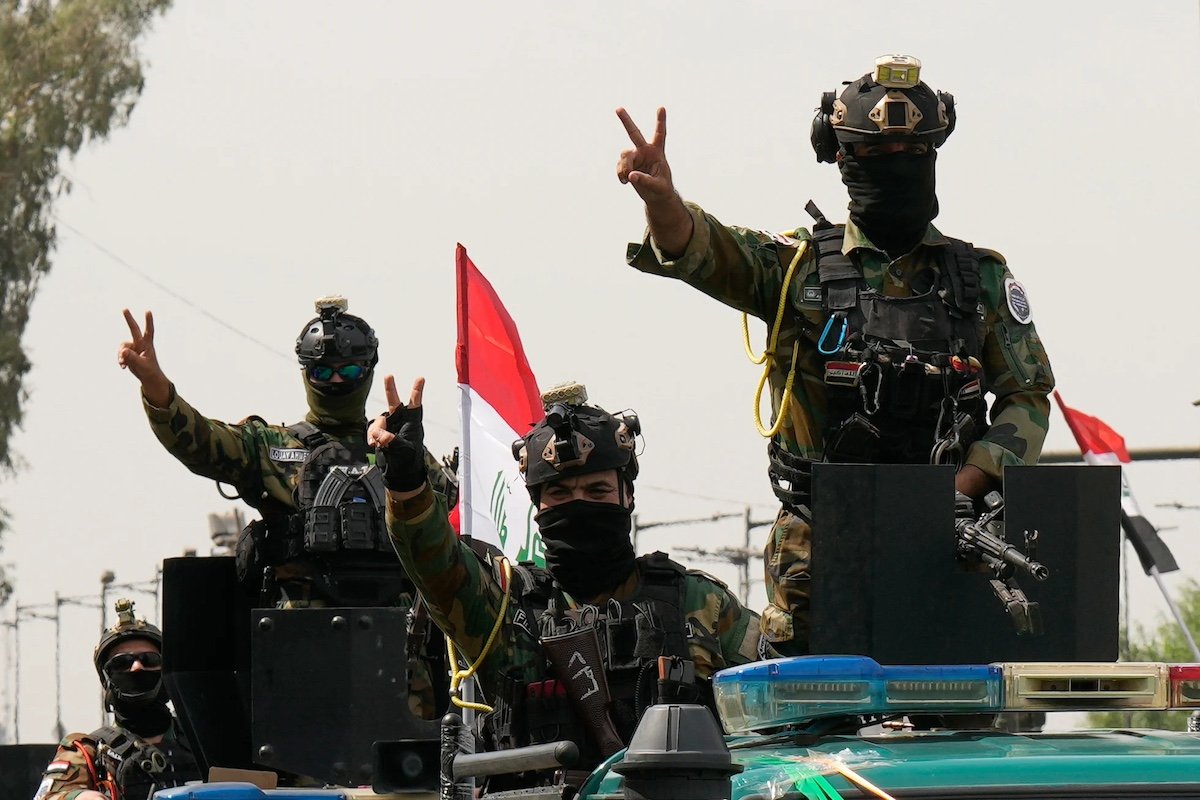
The departure of American combat forces from Iraq in late September was met with celebrations in Baghdad and other cities, and even within the ranks of the Iraqi national army. For many Iraqis, the end of a two-decade occupation felt like a moment of national liberation. But beneath the surface, the withdrawal is less a farewell than a repositioning—a calculated shift from direct occupation to remote containment.
Washington's objective is no longer territorial control. Instead, it aims to use political structures, financial leverage, and control over the international infrastructure on which Iraq's economy depends. The real battle for the Middle East's future has only just begun, and it will be fought not with tanks and troops but through proxies, sanctions, and narratives.
Neutralizing the resistance
The primary strategic goal of the United States after withdrawal is the neutralization of armed groups that form the backbone of the so-called Axis of Resistance in Iraq. These groups, many of which are backed by Iran, have refused to lay down their arms or integrate into the national army. They see themselves as a deterrent against American hegemony in the region.
By removing its conventional forces, Washington seeks to strip these groups of their raison d'être. The logic is straightforward: if the foreign occupier is gone, the resistance's justification for existing disappears. The United States is now working to reframe these militias not as liberators but as rogue factions challenging Iraqi sovereignty.
This narrative shift is crucial. It allows Washington to pressure the Iraqi government to disarm these groups under the banner of law enforcement and the state's monopoly on violence. If the militias can be portrayed as obstacles to stability rather than guarantors of security, they can be isolated politically and economically—neutralized without a single shot fired.
A prelude to confrontation with Iran
The second, and perhaps more significant, aspect of this withdrawal is preparation for a potential large-scale confrontation with Iran. The United States learned from its occupation mistakes: a conventional invasion created a power vacuum that Tehran quickly filled. Now, Washington is adjusting its strategy.
Any future attack on Iran, especially one targeting the Islamic Revolutionary Guard Corps (IRGC), could push Iranian forces into Iraqi territory to regroup and continue the fight. By disarming Iraqi resistance groups now, the United States is clearing the battlefield, closing the backdoor through which Iran could project power and sustain a guerrilla war against American interests.
This is a preventive measure. Washington wants to ensure that a potential war with Iran remains confined to Iranian borders, avoiding a multi-front conflict. Secret meetings with Arab states and efforts to mobilize public opinion are part of this broader strategy to secure allies for such a confrontation.
Obstacles to regime change
Resistance groups also stand as a strategic obstacle to the broader American project of destabilizing and ultimately overthrowing the Iranian government. Their presence in Iraq, Syria, and Lebanon creates a multi-front deterrent that keeps the United States engaged and occupied. They serve as a forward line of defense for Tehran, ensuring that any conflict is fought as far from Iranian territory as possible.
By demanding disarmament, the United States seeks to sever the organs of Iran's defense strategy. It wants a single, cohesive army under Iraqi government authority, through which it can then implement its decisions via political pressure, currency manipulation, and economic threats. If these groups are disbanded, Iran loses its ability to respond asymmetrically across the Middle East, making it a much easier target for regime-change operations.
Eliminating the Iraqi resistance is therefore a prerequisite for any successful campaign to alter Tehran's political landscape. As Trump's Iran war strategy has shown, direct confrontation carries immense risks, but Washington appears willing to pursue indirect means to achieve its goals.
Seeds of future chaos
Failure to disarm these groups risks sowing future chaos in the Middle East. If armed factions remain intact and operate outside central government control, they could become spoilers in any future political settlement. They may be accused of provoking civil wars and destabilizing the region, as has happened in Syria and Yemen.
The celebrations surrounding America's departure are premature. The structural dynamics that have shaped Iraq for decades remain in place, and the United States retains significant influence through economic and political channels. As the US exit hands Iran a strategic windfall, the region faces a new phase of competition, one that could either deliver Iraq into a new form of foreign domination or fracture it into warring militias.
For the informed observer, the lesson is clear: the American withdrawal from Iraq is not an end but a strategic pivot. The real battle for the Middle East's future has only just begun, and it will be fought in the shadows, far from the headlines.