Yemen is sliding back toward full-scale conflict after its Saudi-backed government launched a major offensive on Sunday to reclaim territory held by the Iran-aligned Ansar Allah, commonly known as the Houthis. President Rashad al-Alimi declared that the armed forces would push to retake all Houthi-controlled areas, which are home to roughly 70 percent of Yemen's population, including the capital Sanaa. He vowed the campaign would continue “until the country is liberated from the grip of the terrorist militia.”
The offensive marks a sharp reversal from the relative calm that followed the 2022 truce, which had largely halted the brutal eight-year civil war. That conflict, according to the United Nations Development Program, caused an estimated 377,000 excess deaths by the end of 2021—154,000 from direct violence and 223,000 from indirect causes such as hunger, disease, and the collapse of healthcare and basic infrastructure. Nearly 259,000 of those deaths were children under five.
US support without direct combat
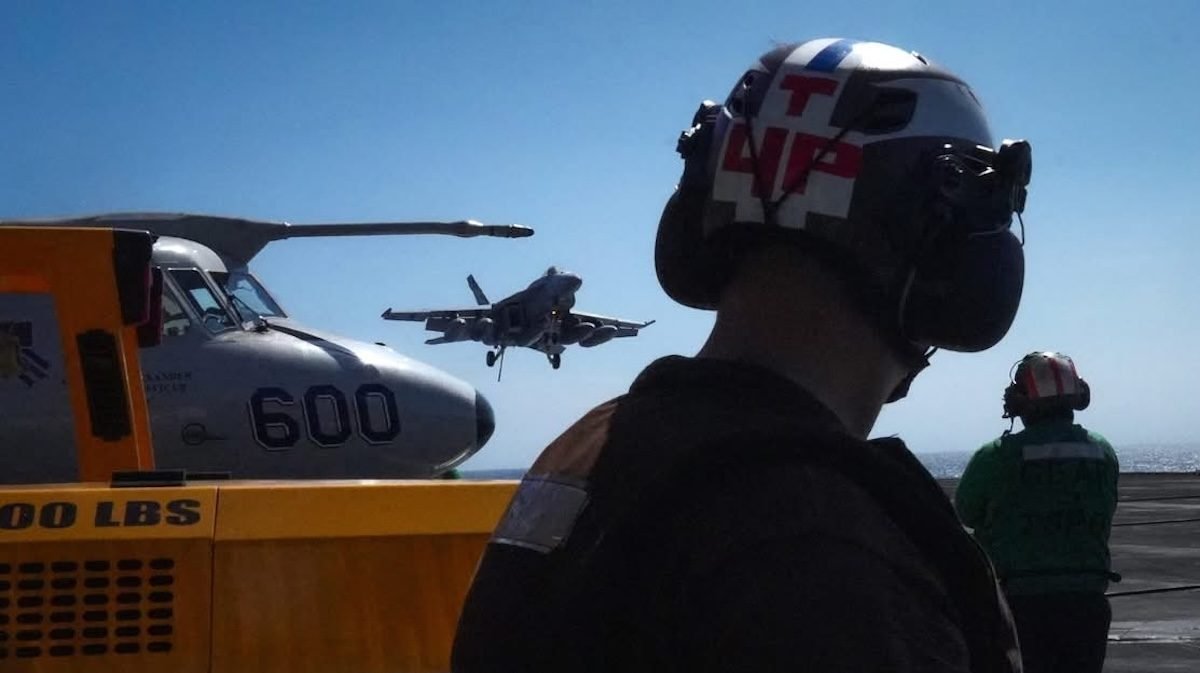
Washington's role has shifted in recent weeks. Earlier this month, reports indicated that President Donald Trump had rebuffed a request from Saudi Crown Prince Mohammed bin Salman for US airstrikes against the Houthis. However, US officials told Axios on Friday that the military is now providing Saudi Arabia with “everything short of direct combat, mainly intelligence and targeting data.” This backing gives Riyadh significant operational advantages while keeping American forces out of the fray.
The Houthis have responded swiftly. Officials from the group said Saudi forces have launched 50 air and missile strikes in the past 12 hours. In retaliation, the Houthis fired ballistic missiles and drones at Saudi Aramco oil facilities, including one near Riyadh that was seen engulfed in flames. The attack on critical energy infrastructure underscores the regional ripple effects of the renewed fighting.
The escalation also carries implications for global shipping and energy markets. Last month, the Houthis captured strategic areas along the Red Sea coast, giving them unprecedented leverage over one of the world's busiest maritime routes. This adds to the economic pressure Iran is exerting by restricting travel through the Strait of Hormuz in response to US-Israeli attacks. Any sustained disruption could affect oil prices and supply chains, with potential knock-on effects for Asian economies that rely heavily on Gulf energy imports.
Yemen's government could reportedly mobilize as many as 100,000 troops, one of the largest military buildups since the truce. The scale of the offensive suggests a determination to reverse Houthi gains, but it also raises the risk of prolonged urban warfare and a deepening humanitarian catastrophe.
Even before Sunday's escalation, renewed fighting was already driving displacement and hunger. The International Organization for Migration reports that more than 149,000 people have been forced from their homes. The World Food Program warns that disrupted food delivery routes have placed 18.3 million Yemenis at risk of acute food insecurity.
The conflict is not merely a bilateral struggle between the Saudi-backed government and the Houthis. It is a proxy battleground in the wider rivalry between Saudi Arabia and Iran, with the US and other external powers deeply involved. The Houthis' ability to strike Saudi infrastructure and threaten Red Sea shipping gives them outsized influence, as recent coastal gains have bolstered Iran's position while eroding the rebels' domestic legitimacy.
Some analysts argue that Washington should reconsider its approach, with a few suggesting that recognizing the Houthis as Yemen's government might be a more pragmatic path to stability. But the current trajectory points toward more violence, not less.
The renewed offensive also comes at a time of heightened global tensions, with the war in Ukraine and rising great-power competition. The US support for Saudi operations, even if limited to intelligence, signals a willingness to re-engage in the region's conflicts. For Asian nations, particularly those in East and Southeast Asia that depend on stable sea lanes and energy supplies, the stakes are high. A return to all-out war in Yemen could disrupt shipping, inflate energy prices, and add to inflationary pressures—concerns that are already prompting central banks in the region to consider rate hikes, as US diesel price spikes are set to push Asian central banks toward rate hikes.
The coming weeks will be critical. If the offensive stalls or triggers a Houthi counter-escalation, the region could face a humanitarian disaster of even greater magnitude than the previous war. The international community, including Asian powers with economic interests in the Red Sea and Gulf, will be watching closely—and may need to press for a return to diplomacy before the conflict spirals beyond control.