In July, India conducted tests of two new interceptors designed to destroy missiles at ranges up to 5,000 kilometers, marking the latest step toward one of the few layered missile defense systems in the world. New Delhi describes the program as purely defensive, but in the eyes of its neighbors, a shield is rarely seen as benign.
India's expanding defenses could embolden its leaders during a crisis, push Pakistan and China to develop weapons designed to overwhelm the shield, and ultimately leave South Asia less stable than before. The program raises fundamental questions about the offense-defense paradox and the region's strategic stability.
India's layered defense architecture
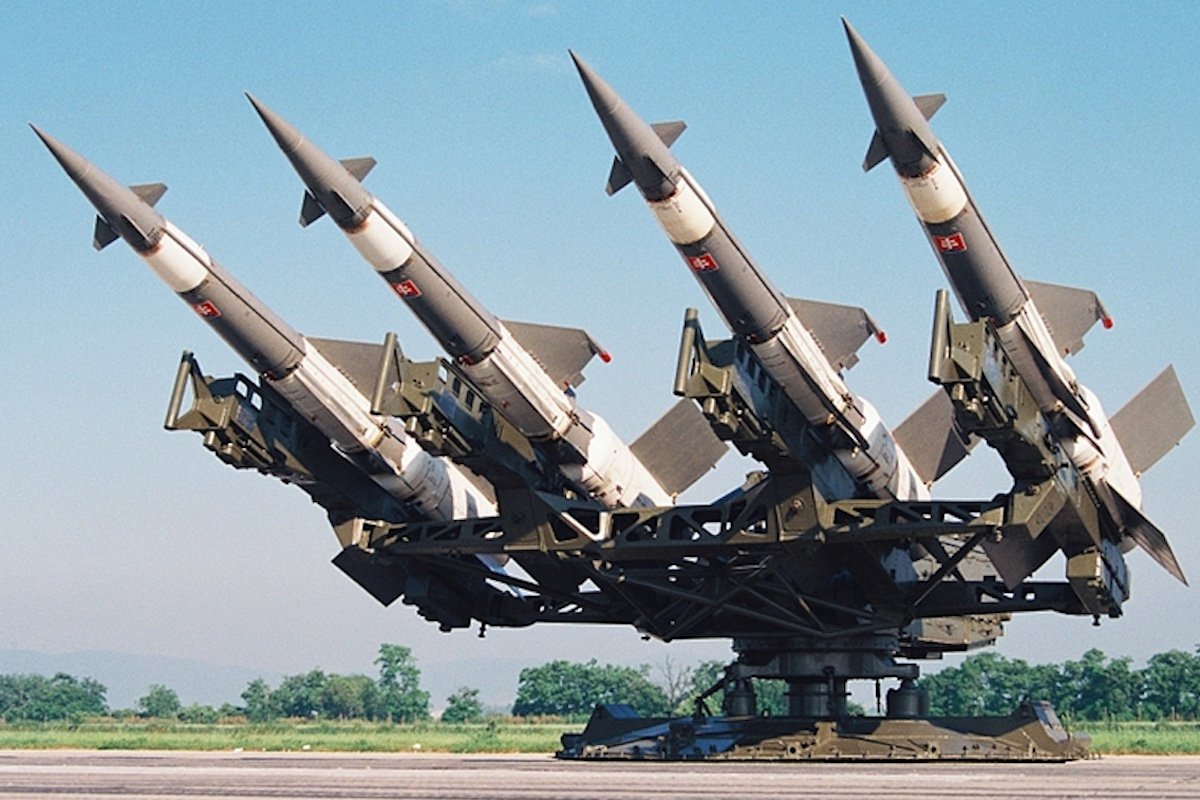
India currently operates two known systems. The Prithvi Air Defense (PAD) is an exo-atmospheric interceptor that tracks and destroys incoming missiles at altitudes of 50 to 80 kilometers. The Advanced Air Defense (AAD) is an endo-atmospheric interceptor that engages targets up to 30 kilometers. Additionally, India has developed the Prithvi Defence Vehicle (PDV), which will replace the PAD and engage missiles at longer ranges. The July tests, part of the program's second phase, involved two new-generation interceptors, AD-1 and AD-2.
New Delhi says these systems are meant to protect major cities, leadership, and strategic assets from decapitation and preemptive strikes. In the third phase, India expects to field faster, larger interceptors aimed at hypersonic missiles. However, whether India can stop hypersonic missiles or handle multiple independently targetable reentry vehicles (MIRVs)—which carry several warheads aimed at widely separated targets—remains unclear. Nor is it clear how India could defeat a barrage of sophisticated missiles arriving at high speed across the country, which it likely cannot fully protect.
The offense-defense paradox
The offense-defense paradox holds that a sophisticated defense can look defensive to its owner and offensive to its rival. A state that believes it is shielded may grow confident enough to strike first. Some argue that “where there is a spear, there must be a shield.” This has two consequences: first, a state with missile defenses may adopt a more offensive, escalatory posture; second, it creates a security dilemma, pushing its rival to build countermeasures that defeat those defenses.
A good offense tends to beat a good defense. An adversary with sophisticated countermeasures can destroy the sensors, interceptors, and command-and-control networks that missile defense depends on. Knocking out one element can cripple the whole system. Defense is also almost always costlier than offense. Since 1957, the United States has spent at least $400 billion on missile defense. A single Patriot battery costs $1.1 billion to deploy, and it has been used against Shahed-136 drones, flown by Russia and Iran, that cost $20,000 to $50,000 each.
India's spending is hard to pin down. Some sources put it at $1.2 million to $2.5 million per unit, and at about $3.2 billion for ballistic missiles, a category that may include missile defense. Other estimates run from $4.5 billion to $7 billion, counting the Russian S-400 air-defense system.
False confidence and regional escalation
Critics argue that missile defenses can foster a false sense of security, because no system, India's included, can guarantee protection against a barrage of hypersonic missiles. Estimates suggest most systems stop 75% to 80% of incoming missiles, and even that may be optimistic. A leak of 20% to 25%, whether the warheads are conventional or nuclear, would be unacceptable to the state under attack.
In practice, that false confidence means Pakistan, armed with effective countermeasures, could saturate India's defenses. It might use MIRVs, cruise missiles, drones, and hypersonic missiles, where speed and precision would matter most. Many South Asian security analysts warn that India's steady buildup heightens the security dilemma, the arms race, and crisis instability while alarming both China and Pakistan. Each may develop offensive capabilities to defeat such defenses in a serious crisis.
No evidence shows that Pakistan is developing missile defenses, though it is upgrading its air defenses. China, for its part, has already built countermeasures against US systems, could turn some of them against India, and is developing its own missile defenses, such as the HQ-29.
Space and arms control
Future systems will reach into space. India and other countries will likely put defensive weapons in orbit, particularly to counter hypersonic missiles, and that would erode the Outer Space Treaty of 1967, which calls for the peaceful use of space and bans weapons of mass destruction in orbit. Many countries already have anti-satellite weapons that could serve as countermeasures against space-based defenses.
No arms-control efforts currently address missile defense, India's included. The major powers might share an interest in such talks, and India could be brought in. But the obstacles are steep. Arms control agreements have grown more complex, been abandoned, or been suspended amid the war in Ukraine, the US-Iran war, India-Pakistan conflicts, and the race to modernize arsenals among the major powers. India and Pakistan are thus unlikely to agree on any arms-control regime that covers missile defense in the foreseeable future, including the Strategic Restraint Regime that Pakistan proposed and India rejected.
As India continues to invest in its missile shield, the region faces a paradox: a defense that promises security may ultimately deliver the opposite. The path to stability lies not in ever more sophisticated interceptors, but in diplomatic engagement and mutual restraint. For now, New Delhi's shield may be more a source of anxiety than of safety.