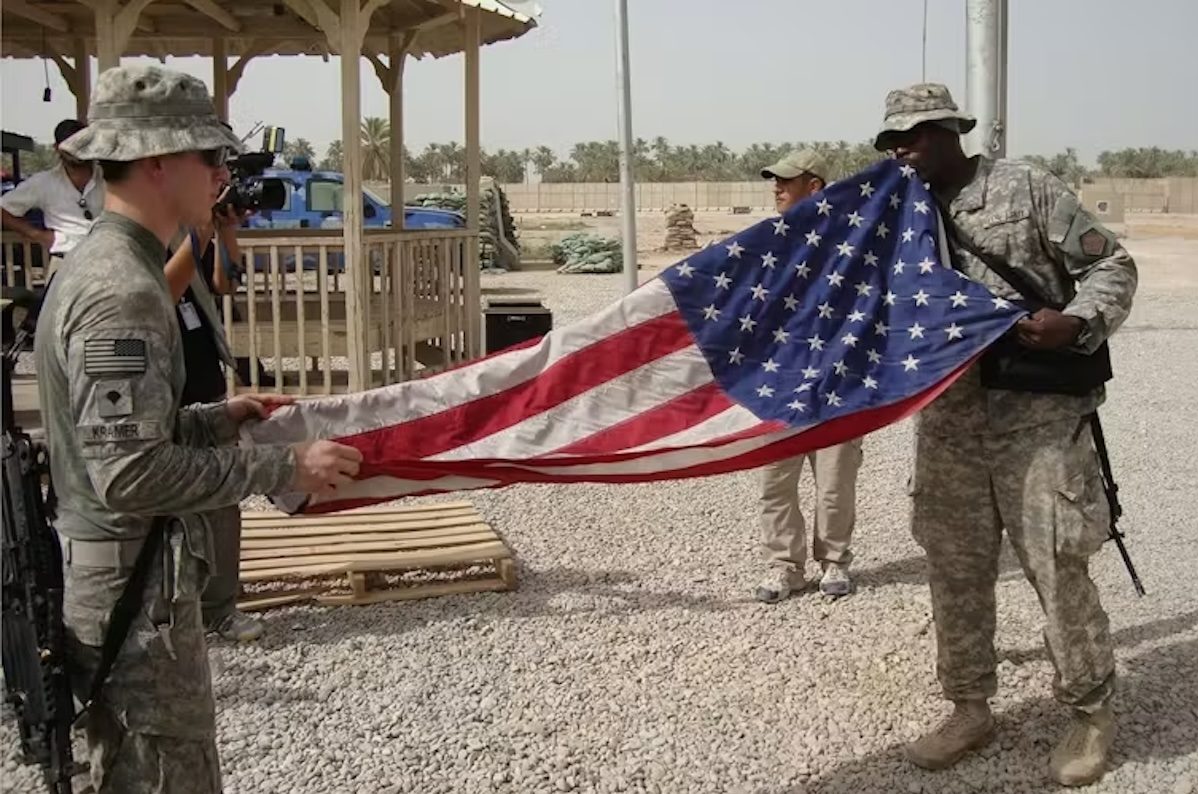
The final contingent of US-led coalition forces is departing Iraq, marking the end of a two-decade military presence that began with the 2003 invasion. For Tehran, the timing is fortuitous: the withdrawal date of September 30 coincides with a deadline Baghdad had set to bring powerful Iran-backed militias under state control—a pledge that is almost certain to be missed.
The result is a paradox at the heart of US strategy. Washington is currently engaged in a costly military campaign intended to weaken Iran, yet it is simultaneously reducing its footprint in the country that has arguably delivered Tehran its greatest strategic prize since the fall of Saddam Hussein. As the US exits, it removes a key counterweight to Iranian influence, leaving Tehran with substantial sway over Iraq's political and economic trajectory.
Iraq is not a passive actor in this dynamic. It has its own nationalist instincts and has repeatedly tried to balance American and Iranian pressures while charting an independent course. But the US withdrawal now risks tilting that balance decisively in Iran's favor.
Iran's deep roots in Iraq
Iran's influence in Iraq did not emerge suddenly after 2003. Like Washington, Tehran spent decades cultivating Iraqi opposition movements during Saddam's rule. Among those it nurtured were the Islamic Dawa Party and the Supreme Council for the Islamic Revolution in Iraq—both of which hold significant power in Baghdad today.
Perhaps the most potent Iran-backed proxy in the political-military nexus is the Badr Organization. Created in Iran in the 1980s, supported by the Revolutionary Guards, and fighting alongside Tehran during the Iran-Iraq war, Badr transformed itself after 2003 from an exiled militia into a major political and security player. Thousands of its fighters returned to Iraq, and the organization now holds key positions in the state apparatus.
Iran's ability to cultivate relationships across political parties, ministries, religious networks and armed groups was greatly aided by the flawed political system that emerged after the hurried 2005 constitutional process. The so-called muhasasa (quota) system divided state institutions along ethnic and sectarian lines, creating fertile ground for Iranian penetration.
The rise of Islamic State (IS) in 2014 further played to Iran's advantage. Tehran provided direct military assistance to Iraqi forces and Shia militias, with thousands of Iranian troops joining the fight. Qassem Suleimani, then commander of the Revolutionary Guards' elite Quds Force, personally arrived in Baghdad to oversee the defense of the capital.
The al-Hashd al-Shaabi (Popular Mobilization Forces, or PMF) was formed from a coalition of Shia militias, most of which owed allegiance to Iran. The PMF played an indispensable role in defeating IS and was later incorporated into Iraq's formal security architecture in 2016. Yet some of its most powerful factions retained close ties to Tehran and developed their own political and economic interests.
This overlapping web of political, military and economic relationships—some operating outside the state, others embedded within it—explains why Iranian influence has proved so difficult to unwind. Removing one militia, politician or commercial relationship does not dismantle the wider network.
Economic lifeline
Iran's political and military influence is reinforced by deep economic integration. Iraq and Iran share an extensive border, with substantial flows of goods, energy, pilgrims and commerce. Iraq became a major market for Iranian exports and for years depended heavily on Iran for gas and electricity, creating ties that sanctions could complicate but not easily sever.
These links became increasingly valuable as Iran faced growing international isolation. As I noted in a 2022 analysis, Iraq has effectively served as Iran's cash cow, providing markets, revenue and routes that soften the impact of external pressure.
Washington has tried to close these channels, sanctioning Iraqi individuals and businesses accused of facilitating oil sales that benefit Iran and its militias. But the task is daunting. The US can sanction Iranian banks, target oil exports and disrupt global financial networks, yet as long as Tehran retains deep access to Iraq's political economy, an important avenue for absorbing external pressure remains open.
The US withdrawal does not automatically give Iran greater economic control, but it removes a source of American leverage precisely when Washington is trying to squeeze Tehran hardest. Tehran does not need to control Baghdad outright—merely to retain enough influence to preserve the networks that help it withstand sanctions.
Iran also benefits from the centralized nature of the Iraqi economy, where the public sector accounts for about 40% of jobs, according to the International Monetary Fund. The IMF has warned that this has crowded out private sector growth. This structure has enormous political consequences: factions that control ministries and institutions gain influence over jobs, contracts and resources, creating a patronage system that reinforces loyalty. Many of these factions owe their allegiance to Tehran.
This system extends beyond Iran-aligned parties, but they have profited from it. A competitive private economy would dilute their power, but that prospect remains distant. As the US military presence fades, Iran's position in Iraq looks more entrenched than ever—a strategic windfall that Washington's current campaign against Tehran seems unlikely to reverse.