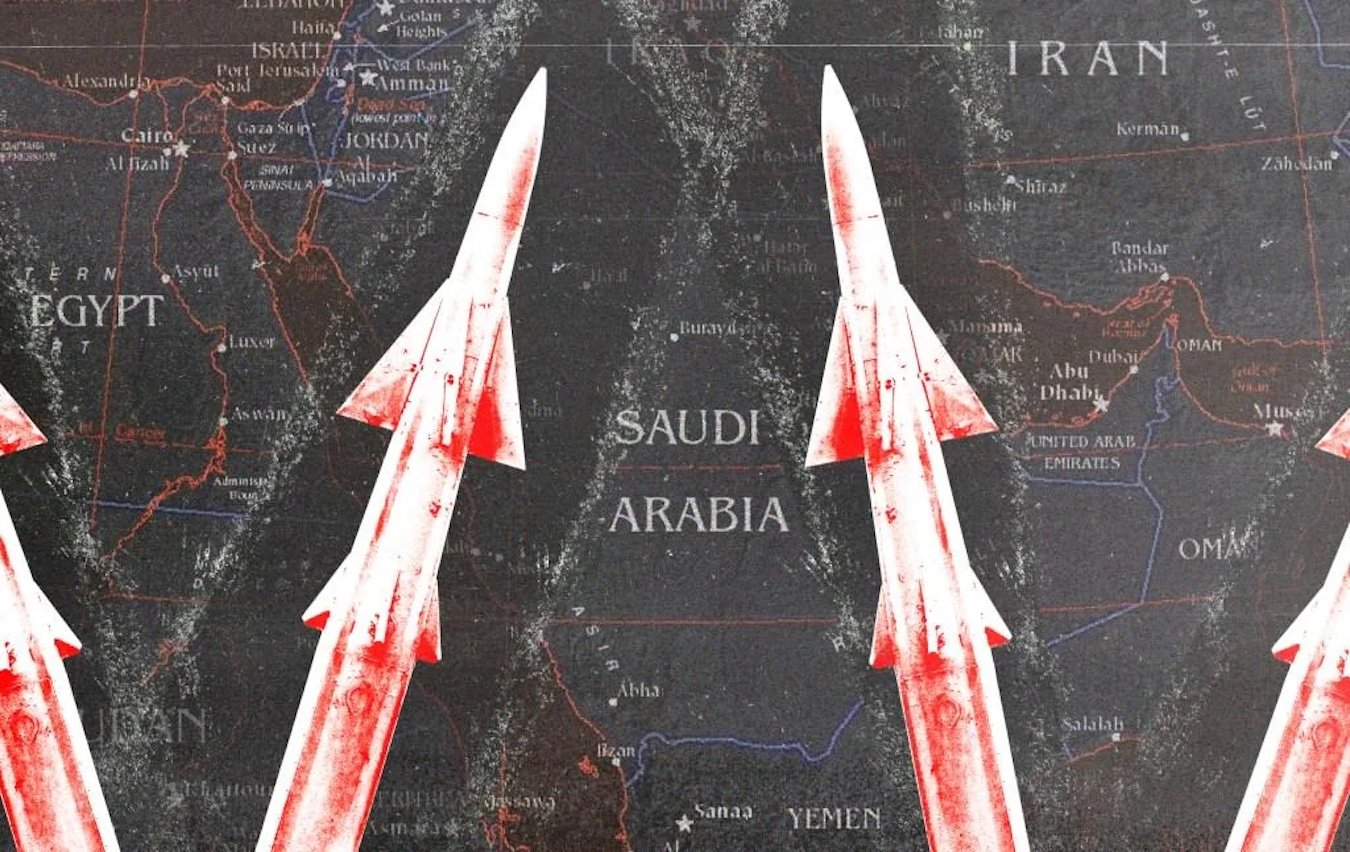
A contentious civilian nuclear agreement between Washington and Riyadh has reignited a fierce debate over Middle Eastern security, exposing the growing tension between American nonproliferation goals and Saudi Arabia's strategic ambitions.
According to a classified US intelligence assessment reported by The Washington Post, Saudi Arabia has not ruled out developing nuclear weapons. This has alarmed lawmakers about President Donald Trump's decision to help the kingdom build a civilian nuclear energy program. The multi-billion-dollar pact, finalized in July 2026 to counter Chinese and Russian influence in the region, initially limits uranium enrichment to under 5% but permits future enrichment up to 20% without requiring Saudi Arabia to sign the IAEA's intrusive Additional Protocol.
Democratic lawmakers and arms-control experts warn that this framework gives Riyadh a direct path to fissile material, risking a proliferation spiral in the Middle East amid heightened tensions with Iran. Critics also point to potential conflicts of interest involving administration associates, including Westinghouse Electric and Trump's son-in-law adviser Jared Kushner.
The State Department insists the agreement upholds realistic nonproliferation standards, and Saudi officials maintain their intentions are peaceful. However, congressional Democrats are mobilizing legislation to block the deal during the 90-day statutory review window, though any such measure would likely face a presidential veto.
A latent weapons capability
The technical core of the agreement reflects a deliberate ambiguity. While 20% enriched uranium is not enough to build a warhead, analysts David Albright and Sarah Burkhard note in an April 2026 article for the Institute for Science and International Security (ISIS) that reaching this threshold accomplishes roughly 90% of the enrichment work needed for weapons-grade material. They explain that just 200 kilograms of 20% enriched uranium can be rapidly processed into the 25 kilograms of weapons-grade uranium required for a bomb.
By formally conceding a pathway to this threshold without IAEA Additional Protocol inspections, the pact effectively shortens Saudi Arabia's hypothetical breakout window under the guise of commercial energy. This dynamic is not unique to the Gulf; similar concerns have been raised about nuclear ambiguity in Asia as the US pushes hypersonic missiles.
Iran war upends Saudi calculations
The regional hostilities that erupted in February 2026 have fundamentally undermined the premises behind Saudi Arabia's previous nuclear latency posture. Michael Ratney and Abdullah Alhenaki argue in a July 2026 article for the Center for Strategic and International Studies (CSIS) that the Iran war began without meaningful US consultation with Saudi Arabia, turning its primary security guarantor into a direct source of vulnerability to Iranian reprisals.
While Ratney and Alhenaki acknowledge that heightened threats reinforce Saudi dependence on US air defense, they emphasize that association with Israeli war objectives has magnified risks without providing strategic payoffs. Coupled with Israel's outright rejection of Palestinian statehood, the conflict has dismantled Saudi Arabia's core rationale for diplomatic recognition, leaving normalization firmly off the table for the near term.
This diplomatic stalemate has deepened Saudi Arabia's drive to diversify its foreign partnerships. Jean-François Seznec notes in a Responsible Statecraft article that Riyadh is increasingly frustrated by Washington conditioning civilian nuclear cooperation on normalization with Israel. Consequently, Saudi Arabia is actively diversifying its security architecture through mechanisms such as the Mecca Agreement, a mutual defense pact signed with Pakistan and Turkey, and deeper strategic ties with China.
China's tangible assistance to Saudi nuclear ambitions was reported by the Wall Street Journal in August 2020, which revealed that Saudi Arabia had constructed an undisclosed facility to extract uranium yellowcake with Chinese help. The facility, located near the northwestern city of Al Ula, was built alongside two Chinese entities under bilateral exploration pacts with China National Nuclear Corp. and China Nuclear Engineering Group Corp. The Saudi Energy Ministry denied building the milling plant.
Faced with Saudi hedging toward China, the US may have overhauled its traditional nonproliferation playbook. Yoel Guzansky and Eldad Shavit argue in a July 2026 article for the Institute of National Security Studies (INSS) that Washington is deliberately shifting from nonproliferation prevention to long-term management of a nuclear-capable Saudi Arabia. This shift mirrors broader debates in the region, such as Seoul's call for a seat at the table on tactical nuclear options.
The ultimate question remains whether these strategic concessions will bind Saudi Arabia to American nonproliferation norms or accelerate the regional arms spiral they are meant to prevent. As the Iran war continues to reshape the Middle East, the US-Saudi nuclear pact may prove to be a pivotal test of Washington's ability to balance its security commitments with its nonproliferation principles.