For anyone who has followed Pakistan-Afghanistan relations closely, the headlines of the past week demand skepticism. Two events, read together, seemed to suggest a Russian plot against Islamabad. The reality is more complicated—and, for Pakistan, more uncomfortable.
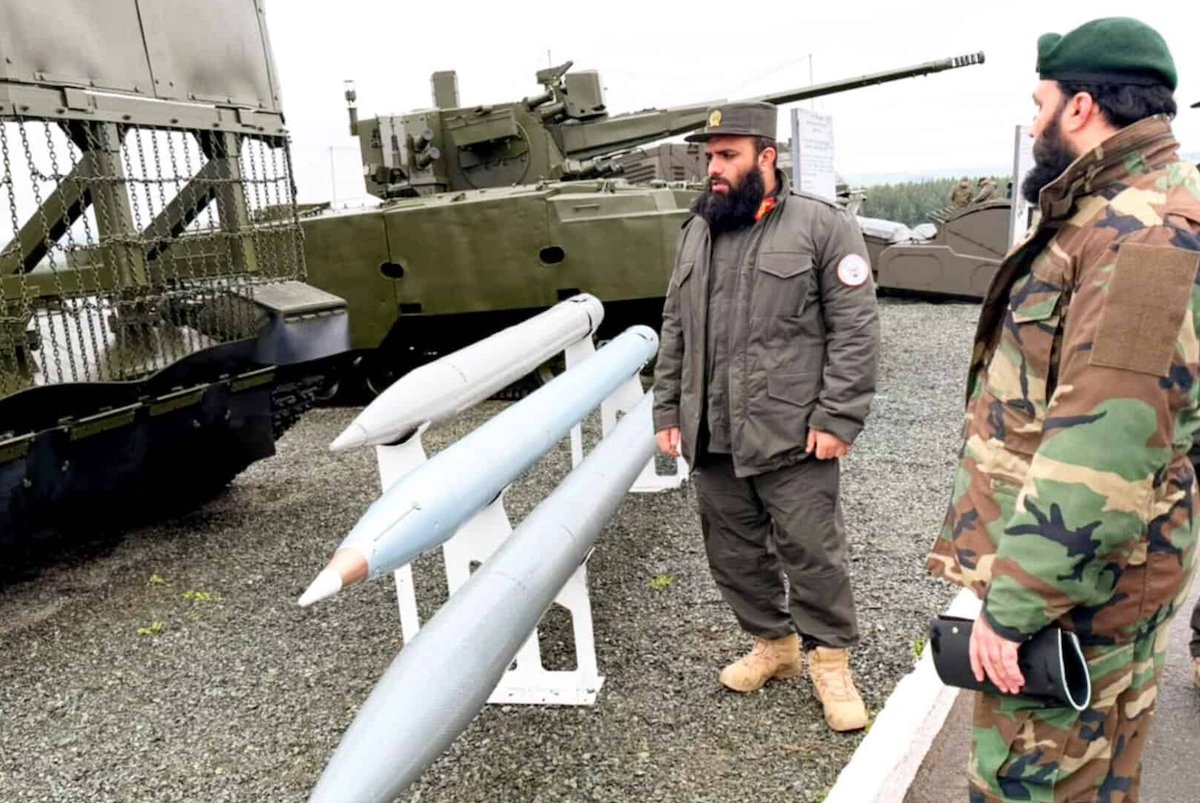
At the Center-2026 (Tsentr-2026) exercises in Russia's Chelyabinsk region, Taliban officers appeared among foreign observers. Reports indicate it was the first time Moscow had invited a Taliban military delegation since the movement seized power in 2021. Days earlier, Pakistani jets struck Kunar and Helmand provinces; the UN mission confirmed at least 10 civilians dead, most of them children.
Set side by side, these events invite a theory of Russian machination. I don't buy it. What I see is messier and, for Islamabad, harder: Kabul is becoming a military partner that others want to be seen with, and Pakistan no longer holds a special place in Afghan strategy.
From pariah to partner
Russia once banned the Taliban as a terrorist group. Its Supreme Court suspended that ban in April 2025, and by July Moscow had become the first government to recognize Taliban rule. On May 27, Sergei Shoigu, secretary of Russia's Security Council, and Mohammad Yaqoob Mujahid, the Taliban's defense minister, signed a military-technical agreement. Its text has not been made public. Zamir Kabulov, Moscow's envoy for Afghanistan, has described it as mostly about refurbishing equipment Kabul already owns.
On the public record, then, Russia has agreed to keep an old Soviet-era arsenal running, not to build a new one. Afghanistan International, a London-based outlet that is no friend of the Taliban, claims that Kabul has asked for much more, including air defense and help reviving fighter jets and helicopters. I can't verify that. If accurate, it would suggest the Taliban sees the pact as a first step.
The Center-2026 exercises ran from September 28 to October 3. The South China Morning Post reported more than 47,000 personnel and named troops from Russia, Belarus, China, Pakistan, Kazakhstan, Kyrgyzstan, Mongolia and Tajikistan. Russia's defense minister, briefing President Vladimir Putin, put the number at about 6,000 for the final stage, so the headline figure depends on who is counting.
The Taliban were not among the troops. They were observers, one of dozens of delegations, in the same category as India, North Korea and Vietnam. That still matters: an invitation signals that Kabul counts. But it doesn't make the Taliban part of a Russian bloc, and it is hard to call an exercise anti-Pakistan when Pakistani soldiers took part.
An unconfirmed lead
Another story has run harder than its evidence supports. Afghanistan International, citing five sources, says the Taliban is buying weapons and drones from Belarus with Indian money. Taliban ministers have visited Minsk. Beyond that, there is nothing: India, Belarus, Russia and the Taliban have confirmed none of it, and the report names no contract or system.
I keep the two stories apart for a practical reason. Russian-Taliban military contact is documented; the Belarus channel is a lead. Merge them, and if the lead collapses, it takes the solid story down with it.
Russia doesn't need to dislike Pakistan to want a stronger Taliban. Its real fear is Islamic State Khorasan Province, or ISIS-K, and it wants whoever rules Kabul to be able to fight it. Afghanistan also borders Central Asian states that Moscow regards as its southern flank, and with the Americans gone, it would rather not cede that space to others. A Taliban army that can keep its existing equipment running suits Moscow fine. One with modern drones and air defense would be a different matter, and nothing public says that is on offer.
Pakistan's shrinking leverage
Islamabad once counted the Taliban's return as a win. Then the Pakistani Taliban, formally the Tehrik-e-Taliban Pakistan, changed the mood. Pakistan says Kabul lets the group operate from Afghan soil; Kabul denies it. The dispute has moved from protests to air raids. The latest raids came a week after earlier strikes in Kandahar, Paktia and Khost. Pakistan says it killed 22 militants on October 1. The UN has counted more than 1,100 civilian casualties from cross-border violence this year, and a Taliban official has promised a “calculated” response.
What worries me is the cycle of violence. Every strike hardens Afghan opinion, strengthens Kabul's case for better weapons and burns goodwill that Pakistan will need later. Dead children are a diplomatic cost that no tactical gain repays. None of this means Russia has dropped Pakistan. Moscow has widened its defense and counterterrorism contacts with Islamabad too, and Pakistani troops drilled at the same exercise the Taliban watched. That is balancing. What should unsettle Pakistan is that even good ties with Moscow no longer guarantee agreement on Afghanistan.
The same caution applies to India. Not every Indian move in Kabul is aimed at Pakistan, and a long Pakistan-Afghanistan conflict would create problems for New Delhi, too. Meanwhile, China is making its own bets. The Taliban is pushing ahead with a road through the Wakhan Corridor, Afghanistan's only border with China, and analysts see it as a way to reduce reliance on Pakistan. Beijing has moved carefully. It established a new county on its side of the frontier in March and wants joint patrols against militants, but it has not rushed to pay for the road. China also has investments in the China-Pakistan Economic Corridor to protect, and it would rather see Kabul and Islamabad repair ties than see Afghanistan bypass Pakistan.
Everyone with a stake in Afghanistan is hedging, and Pakistan is no longer the only way in. The real change is not a secret weapons deal. It is the Taliban's evolution from an insurgency that leaned on Pakistan into a government that collects partners. Russia wants help against ISIS-K, China wants a quiet border, India wants access, and Pakistan wants the attacks to stop. Those aims sometimes overlap and sometimes collide, and drones remain in the sky.