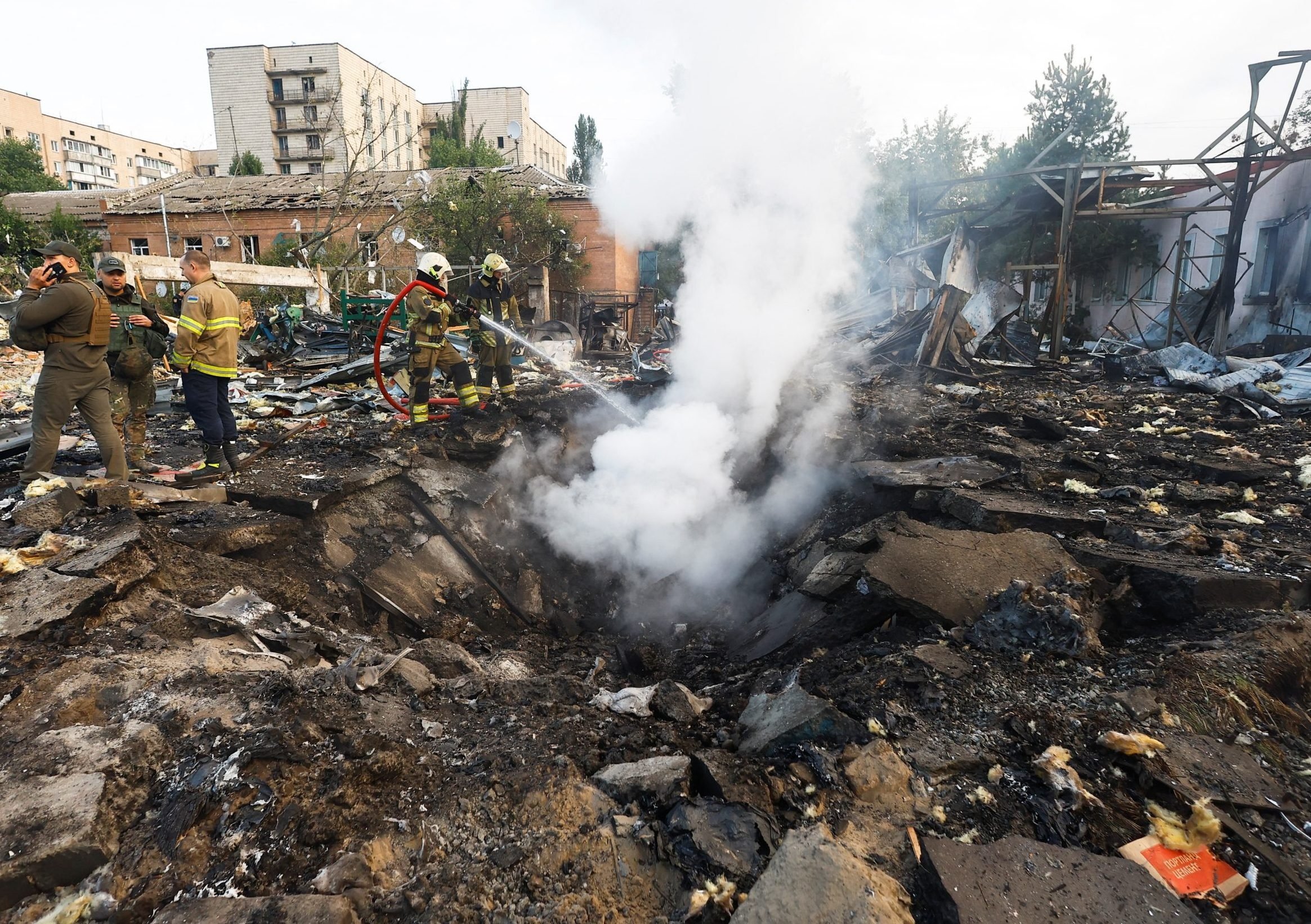
As the war in Ukraine grinds into its fourth year, Russia's military is increasingly unable to achieve its objectives on the ground or at sea. Ukrainian long-range strikes have degraded Russian logistics and naval assets, forcing Moscow to rethink its approach. The result, as reports this week confirm, is a deliberate strategy to make Ukraine's major cities unlivable—a campaign that amounts to war crimes.
President Volodymyr Zelensky has begun speaking openly about what this strategy entails, first in the Financial Times and then directly. He warns that Russia will target power grids, transport links, and even water supplies to make civilian life impossible. The main targets are Kyiv, Kharkiv, Odesa, and Lviv, with a timeline that aims to force a deal favorable to Moscow by the first half of 2027.
From battlefield setbacks to a war on civilians
Russia's shift to attacking civilian infrastructure is a direct response to its failures on the front lines. Ukrainian forces have shown increasing proficiency with long-range strikes, and the use of robotic systems has reduced Ukrainian casualties while inflicting heavy losses on Russian troops. As one analysis noted, Ukraine's robot army advances, but Russia's economic strikes bite. Without the option of escalating atrocities, Russia would be seen as losing the war.
The Kremlin's new approach was underscored this week by attacks on Kyiv's bridges. The South Bridge, a vital artery connecting the city's east and west banks and carrying the metro, was struck twice and remains closed. The North Bridge was also hit on its supports. The Russian Ministry of Defense claimed these strikes were to facilitate troop movements, but the real purpose is to make life in the capital so difficult that residents, particularly those on the east side, will flee.
Ukrainian officials also report that Russia has used specially adapted Geran drones to take down energy pylons, further crippling the power grid. These attacks are part of a broader effort to destroy Ukraine's non-nuclear power generation, including dams and thermal plants, leaving the country reliant on its three functioning nuclear power stations and a growing solar capacity.
The nuclear threat
The most alarming aspect of Russia's new strategy is the potential for attacks on Ukraine's nuclear plants. While Russia has previously avoided direct strikes, fearing radioactive fallout that could affect its own forces and Europe, Ukrainian intelligence now suggests Moscow is prepared to escalate. The New York Times reported that Russia might attempt to cut water supplies to the cooling systems of the three plants, a move that could lead to a catastrophic meltdown.
Zelensky has pointed to Putin's statement that "there are no rules now," indicating a willingness to abandon even the pretense of restraint. This is not a sudden departure from Russian conduct, which has never adhered to legal norms, but rather an acceleration of a pattern seen since the invasion began.
The international community, including the United States, has been slow to respond. As Trump's Ukraine stance hands Russia the initiative, Moscow sees an opportunity to press its advantage. The Kremlin is also courting the Global South, as Putin's Global South outreach reshapes Russia's wartime alliances, to counter Western pressure.
For Ukraine, the coming months will be a test of endurance. The strategy of making cities unlivable is designed to break civilian morale and force a negotiated settlement on Russian terms. But as Zelensky has made clear, Ukraine will not surrender its sovereignty. The world watches as Russia's war on civilians intensifies, with the specter of nuclear catastrophe looming over the region.