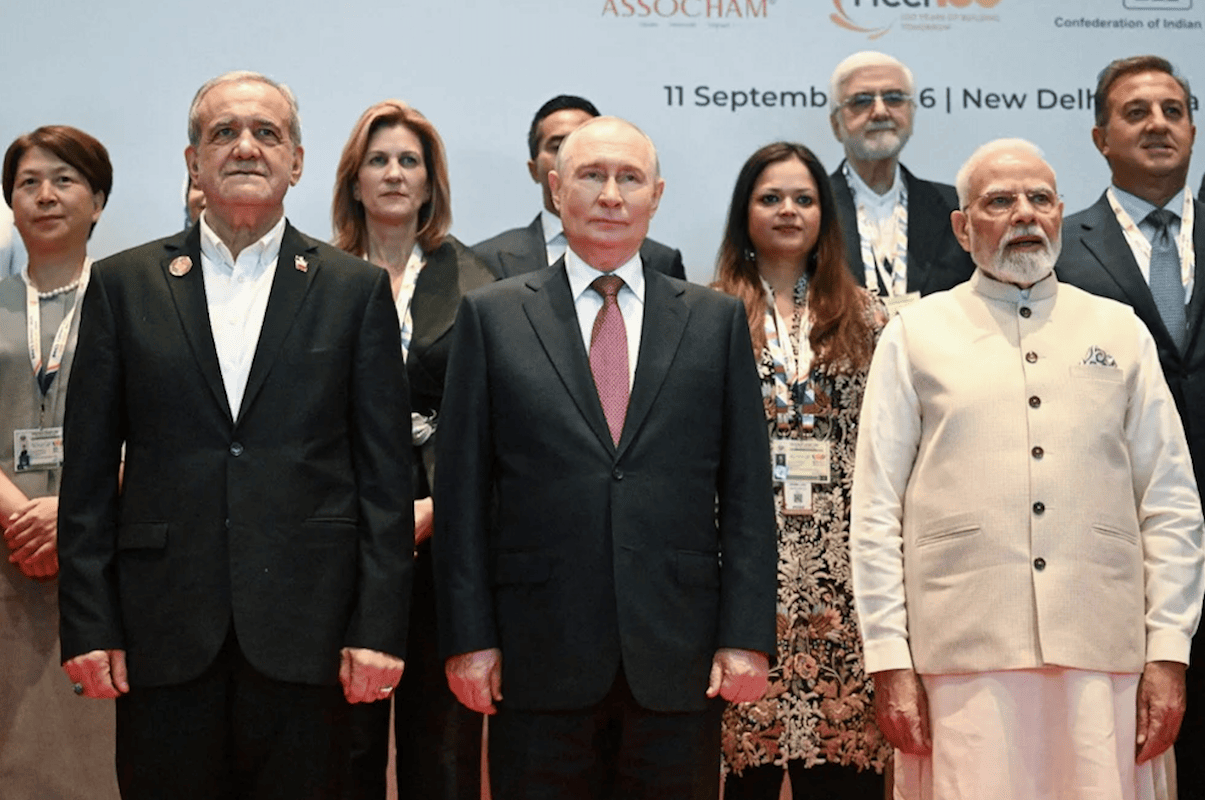
In a concentrated two-week diplomatic push, Russian President Vladimir Putin convened with leaders from across the Global South, signaling a strategic recalibration of Moscow's foreign policy. Meetings in Bishkek, Kyrgyzstan; Vladivostok, Russia's Far East; and New Delhi, India, alongside a state visit by Vietnam's president, brought Putin face-to-face with roughly 18 heads of state, including heavyweights such as China's Xi Jinping, India's Narendra Modi, Indonesia's Prabowo Subianto, and Iran's leadership.
While the Ukraine war inevitably featured in these discussions—Russia has recently intensified attacks on Ukrainian territory—the core agenda was notably different: fuel, trade, and transit. This focus underscores how Russia is deepening ties with non-Western partners to mitigate the impact of Western sanctions and sustain its economy amid the ongoing conflict.
Energy security as a mutual concern
Fuel and energy security have become a shared priority for Moscow and its Global South partners. Ukrainian drone strikes on Russian oil refineries have caused domestic fuel shortages, forcing Russia to import refined products from countries it traditionally exports to, such as Belarus, Turkey, and India. At the same time, the Kremlin is pushing to expand its energy exports, including finalizing the Power of Siberia 2 pipeline, which would deliver 50 billion cubic meters of natural gas annually from Russia to China via Mongolia.
Russia also signed a deal to establish a strategic oil reserves hub in Vietnam, and nuclear power cooperation was on the agenda with Turkish President Recep Tayyip Erdogan, Vietnam's To Lam, and India's Modi. These moves reflect a deliberate effort to lock in long-term energy partnerships with Asian economies, a trend that has accelerated since the onset of the Ukraine war.
Trade blocs and the pivot to Asia
The sanctions war has made Russia's economic ties with the Global South pivotal. Two intergovernmental bodies—BRICS and the Shanghai Cooperation Organization (SCO)—are central to this strategy. BRICS, now comprising 11 economies including Brazil, China, India, Indonesia, and Iran, accounts for about 40% of global GDP, and intra-BRICS trade surpassed $1 trillion last year. The SCO, a political and security bloc spanning Europe and Asia, saw Russia's trade turnover exceed $400 billion in 2025, according to Putin.
Asia now accounts for 73.4% of Russia's trade turnover, a figure that highlights the region's growing importance. In Bishkek, Vladivostok, and New Delhi, trade and transit corridors dominated conversations, reflecting Moscow's need to bypass disruptions in the Middle East and secure alternative routes to global markets.
Transit corridors and strategic autonomy
Russia is actively promoting two new transcontinental networks: the International North-South Transport Corridor, a 7,200-kilometer route linking Russia's Baltic ports to Mumbai via the Caspian Sea and Iran, and the Northern Sea Route, a 5,600-kilometer maritime passage along Russia's Arctic coast. The latter saw its first commercial operations by a Chinese vessel in August, a milestone for Arctic shipping.
For leaders like Modi, Prabowo, and To Lam, engaging with Russia is part of a broader foreign policy based on "strategic autonomy." This approach allows them to maintain ties with Moscow without alienating the West, a balancing act that sends a powerful signal to Washington and its allies. The recent high-level consultations between CIA and US Treasury chiefs and their Russian counterparts, as well as President Donald Trump's personal envoys to Moscow, underscore the West's ongoing efforts to manage the relationship.
Russia's diplomatic blitz yielded tangible wins, including $7.7 billion in investments in Vladivostok and lucrative deals with Vietnam. But the broader message is clear: despite five years of war and sanctions, Russia's relationships with major non-Western players remain resilient. This is partly a function of shared interests in energy security and trade, but also a reflection of the Global South's desire to maintain strategic independence.
Yet, concerns persist. Many in the Global South worry about the escalating conflict's spillover effects, from rising energy prices to disruptions in global shipping. The recent tit-for-tat attacks on merchant vessels in the Black Sea have heightened these anxieties, even as Russia and its partners continue to deepen their economic ties.
As Russia's pivot to Asia accelerates, the implications for the Indo-Pacific are profound. The region's leaders are navigating a complex landscape, balancing economic opportunities with geopolitical risks. For now, Putin's outreach appears to be yielding dividends, but the long-term sustainability of these partnerships remains uncertain, especially as the war in Ukraine grinds on.