In July 1971, Henry Kissinger, then National Security Adviser to US President Richard Nixon, was said to be unwell and resting at a mountain resort in Nathiagali, outside Islamabad. That was the story Pakistani officials allowed to circulate. In reality, Kissinger was on his way to Beijing, traveling secretly through Pakistan to meet Chinese Premier Zhou Enlai. The carefully arranged meeting concealed one of the most consequential diplomatic missions of the Cold War.
Pakistan had provided Washington with a channel to a government with which the United States had no formal diplomatic relations. The secret visit paved the way for Nixon's historic 1972 trip to China and fundamentally altered the international balance of power. Pakistan had offered Washington diplomatic access, political trust, and a reliable intermediary. More than five decades later, circumstances have changed, but this feature of the relationship remains unchanged.
What Washington gains
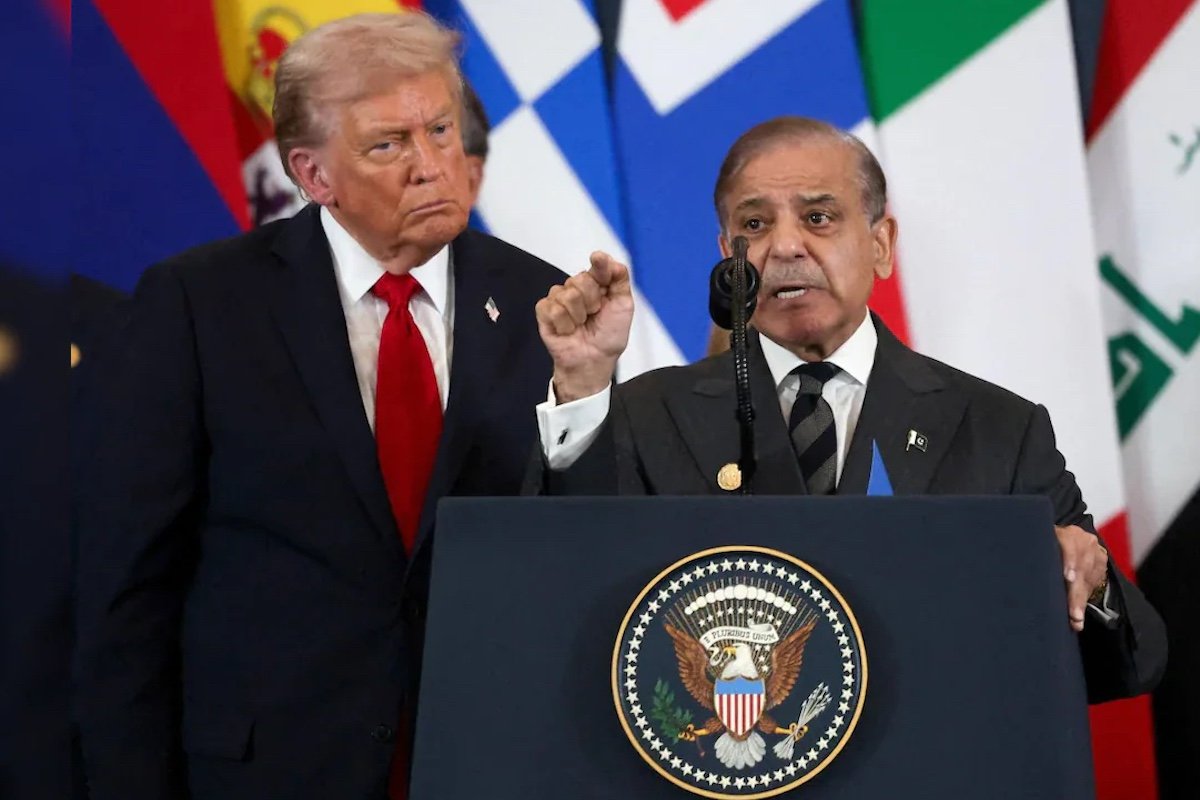
Pakistan's relationship with Washington has once again attracted considerable attention. President Donald Trump has welcomed Pakistani leadership, publicly praised its military leadership, and opened new avenues for cooperation. Yet critics question whether this diplomatic visibility has translated into sufficient economic and strategic returns. That concern raises a more important question: What does Washington actually gain from maintaining relations with Pakistan, and how does diplomatic engagement eventually translate into tangible economic and strategic benefits?
The answer begins with understanding that international diplomacy is not a charitable arrangement. Countries engage with one another because their interests overlap. These interests may evolve with changing administrations, regional developments, and global power dynamics, but they do not automatically disappear when a president leaves office or loses political influence.
The history of US-Pakistan relations illustrates this reality. During the 1980s, Pakistan became a central partner in the American-backed effort against the Soviet occupation of Afghanistan. Following the September 11 attacks in 2001, it again emerged as a frontline partner in the US-led war on terrorism. Despite periods of disagreements and strained relations, Washington and Islamabad repeatedly returned to cooperation because neither could disregard the other's role in regional security.
This recurring engagement is not simply a product of personal relationships between political leaders. It reflects a geographical and strategic reality. Pakistan sits at the intersection of South Asia, Afghanistan, Central Asia, and the wider Middle East. Its relationships across these regions provide Washington with diplomatic channels and opportunities for engagement that would otherwise be difficult to establish. Pakistan's strategic relevance, therefore, extends well beyond traditional security cooperation.
Iran war mediation
The recent US-Iran conflict has demonstrated this potential particularly clearly. Pakistan's longstanding relations with both Washington and Tehran positioned it to facilitate communication between two countries that do not maintain direct diplomatic relations. Islamabad helped broker the April 2026 ceasefire, hosted the first round of high-level US-Iran talks, and subsequently facilitated the June 2026 Islamabad Memorandum of Understanding. Pakistan and Qatar also participated in the subsequent negotiations in Switzerland.
This does not mean that every mediation effort has succeeded or that Pakistan can dictate the outcome of negotiations between major powers. Indeed, the implementation of the understanding remains challenging. But diplomacy should not be measured solely by whether a final settlement is achieved immediately. A country's ability to establish communication channels, reduce misunderstandings, bring adversaries to the negotiating table, and create opportunities to prevent wider conflict carries considerable strategic value. Such contributions may not immediately appear on a financial balance sheet, but they can significantly influence regional stability and international security.
Trade and critical minerals
The economic dimension of the relationship is equally important. The United States remains Pakistan's largest single-country export market, providing a substantial foundation for bilateral economic engagement. According to the US Trade Representative, total US-Pakistan trade in goods and services reached an estimated US$11.5 billion in 2025, representing a 14% increase over 2024. US imports from Pakistan alone amounted to approximately $5.4 billion in goods during 2025. Furthermore, Pakistan's Economic Survey 2025-26 identified the United States as its largest export destination, accounting for 19.9% of exports during July-March FY2026.
Critical minerals represent another emerging area of mutual interest. Pakistan possesses considerable deposits of copper, gold, antimony, tungsten, and rare earth elements, resources that have become increasingly important to advanced manufacturing, defense, aerospace, and technology supply chains. In September 2025, Pakistan's Frontier Works Organization signed a memorandum of understanding with Missouri-based US Strategic Metals, envisaging approximately $500 million in investment and cooperation in mineral extraction, processing, and the possible establishment of a polymetallic refinery in Pakistan. The initial phase is expected to include exports of readily available minerals, followed by expanded operations.
These economic ties are not merely transactional. They provide a foundation for a relationship that can weather political changes in both capitals. As Pakistan's recent dealings with the Trump administration show, the personal factor can be unpredictable, but the underlying interests remain. Similarly, the broader rethinking of American power after the midterm elections will inevitably shape how Washington approaches Islamabad, but it is unlikely to erase the strategic logic that has kept the two countries engaged for decades.
For Pakistan, the relationship with Washington is not a substitute for its ties with Beijing or its own defense ambitions, such as the Fa'az missile program aimed at reducing dependence on foreign arms. But it remains a valuable hedge and a source of economic opportunity. For the United States, Pakistan's geographic position and its ability to mediate in conflicts from Afghanistan to Iran make it an indispensable partner in a volatile region. The Trump factor may dominate headlines, but the US-Pakistan relationship is built on deeper foundations that will outlast any single presidency.