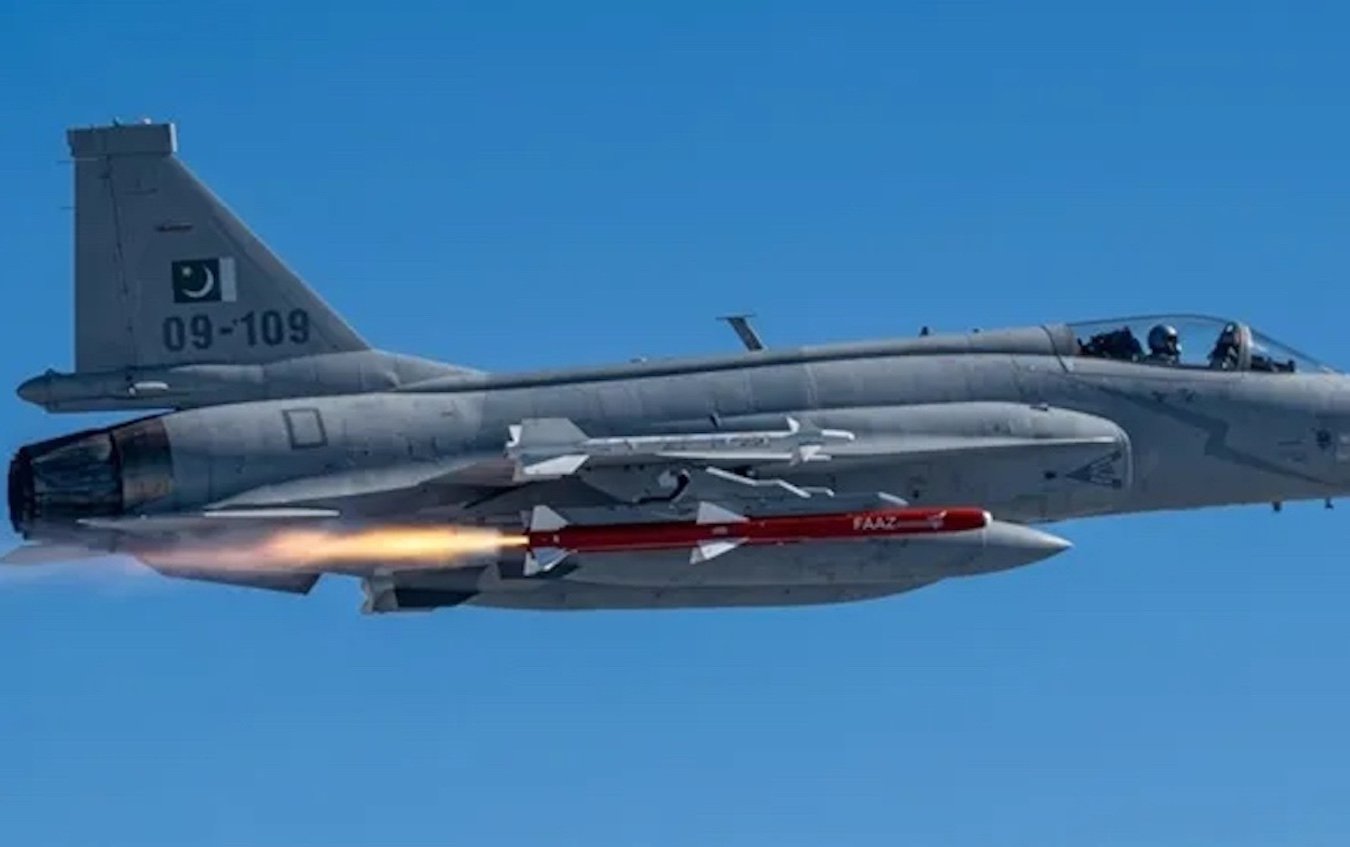
Pakistan's recent maiden test of its indigenously developed Fa'az beyond-visual-range (BVR) air-to-air missile signals a determined effort to reduce reliance on foreign defense suppliers, particularly China and the United States. The test, conducted with a JF-17 Thunder fighter jet, showcased the Fa'az-IIR variant, which uses an imaging infrared seeker and midcourse inertial navigation with datalink updates. Developed by the Air Weapons Complex under NESCOM and marketed by Global Industrial & Defense Solutions (GIDS), the missile family is advertised to exceed Mach 3.5 with ranges over 100 kilometers.
A family of missiles for diverse threats
The Fa'az program includes several variants: the radar-guided Fa'az-RF, an extended-range Fa'az-2 with a reach of up to 180 kilometers, and a short-range surface-launched air-defense derivative. This suite is designed to complement Pakistan's existing inventory of Chinese PL-15E and US AIM-120 missiles, offering a dual-guidance approach that can adapt to various combat scenarios.
The push for self-reliance is driven by operational imperatives from volatile border clashes with India and the strategic vulnerabilities of depending on foreign partners. The May 2025 aerial skirmishes over Kashmir underscored the decisive role of BVR missiles in modern air warfare. As noted by Farhat Hussain Khan in a September 2026 Strategic Thought article, BVR missiles like the Chinese PL-15E achieved surprise intercepts at 160 to 190 kilometers against Indian aircraft, providing kinematic reach and first-shot capability. Khan argues that success in BVR combat hinges on compressed kill chains, electronic warfare, and sensor fusion, not just numerical superiority.
However, Pakistan's heavy reliance on Chinese military equipment poses significant risks to its long-term strategic autonomy. According to March 2026 data from the Stockholm International Peace Research Institute (SIPRI), Pakistan was the largest buyer of Chinese defense exports from 2021 to 2025, accounting for 61% of China's total sales. This dependence forces Pakistan to adopt Chinese operational procedures and maintenance standards, constraining independent procurement choices and leaving frontline readiness vulnerable to supply disruptions, especially during a potential conflict over Taiwan. China also withholds sensitive source code to protect its proprietary technology.
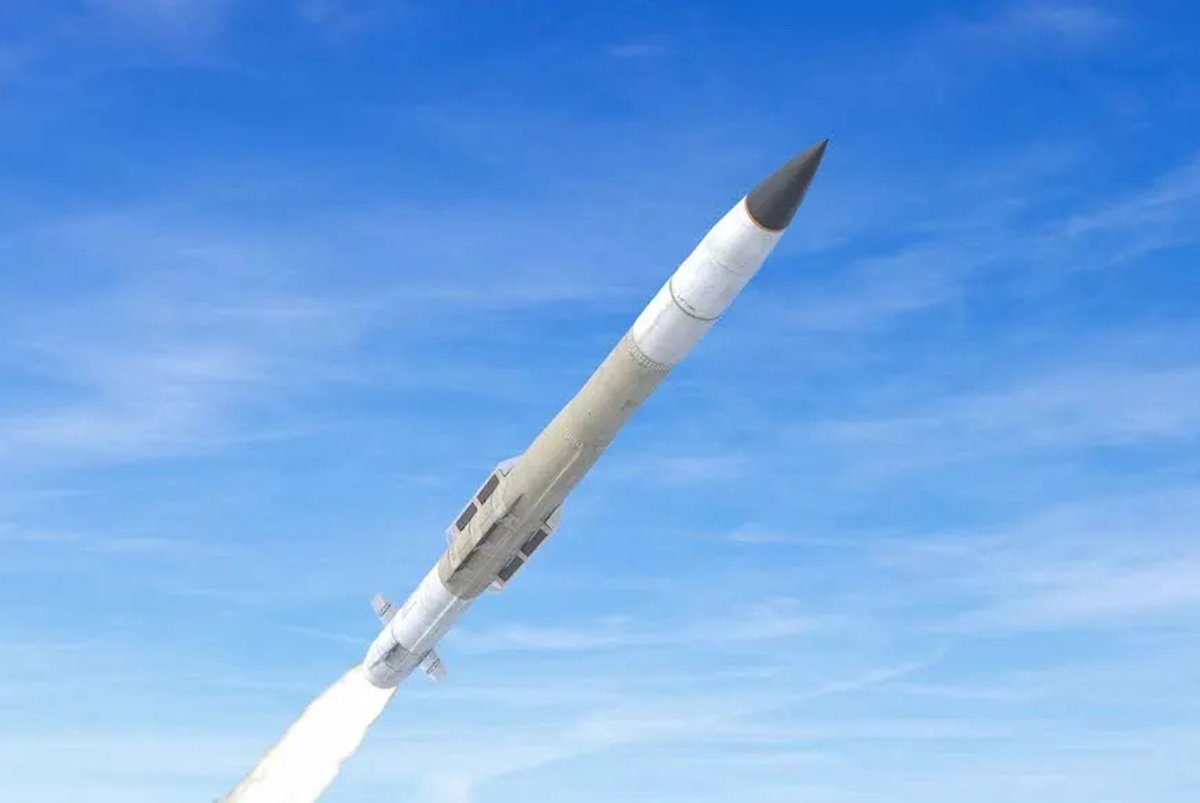
Reinforcing these concerns, Kriti Upadhyaya notes in an August 2026 Heritage Foundation report that Pakistan's reliance on Chinese equipment creates severe technology-leakage risks, effectively reducing Pakistan to a testing ground for Chinese weapons. Meanwhile, Pakistan's legacy Western hardware offers diminishing utility. The aging fleet of 70 to 80 US F-16s faces limitations due to the roughly 100-kilometer reach of its AIM-120C-5 missiles, which are vulnerable to jamming, placing Pakistani fighters inside the engagement envelopes of advanced Indian fighters like the Su-30MKI. This tactical deficit forced the Pakistan Air Force to withhold F-16s from high-threat sectors during the May 2025 skirmishes.
Although the US has approved upgrades for Pakistan's F-16s, including a US$686 million package with Link 16 datalinks and inert bomb bodies, these may not shift the regional airpower balance. The Fa'az missile program represents a strategic bet on indigenous capability to preserve defense autonomy. As Pakistan navigates its complex security environment, the success of this program will be crucial in determining its ability to operate independently of both Chinese and US arms dependencies.