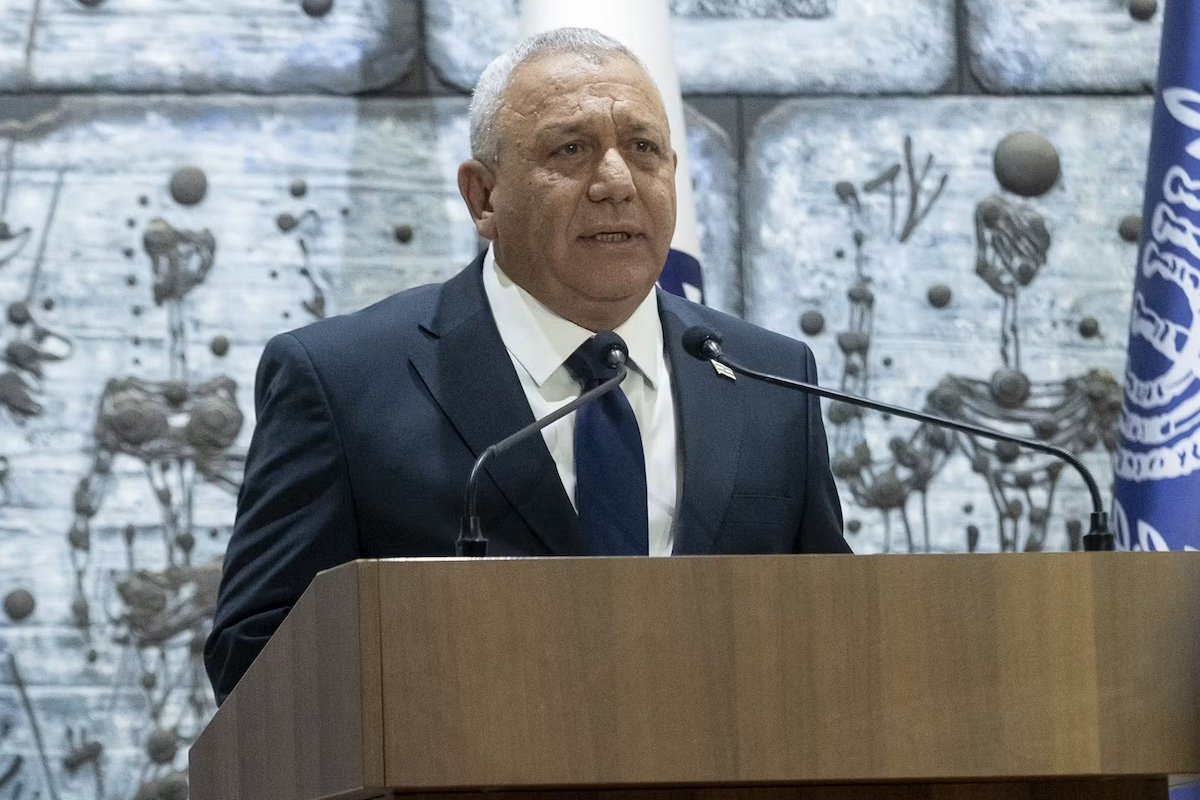
Israeli President Isaac Herzog on Sunday formally nominated Gadi Eisenkot, the main challenger to Prime Minister Benjamin Netanyahu, to try to form a new government. The move follows nearly two weeks of political deadlock after an election widely described as the most consequential in Israel's history failed to deliver a clear winner.
Eisenkot, a former chief of staff of the Israel Defense Forces, now has 28 days—with a possible 14-day extension—to assemble a stable coalition. The task is daunting: he must unite a deeply fractured opposition, navigate historic gains by Arab-led parties, and confront a volatile security environment in the West Bank and beyond.
An extraordinary election, an uncertain mandate
In Israel's parliamentary system, the president's nomination is standard practice, and it does not necessarily go to the leader of the largest party. Netanyahu's Likud won the most seats in the October 27 vote, but his right-wing bloc fell short of the 61 seats needed for a majority in the 120-seat Knesset. Eisenkot's opposition bloc also lacks a majority on its own.
The two Arab-majority parties—the Joint List and Ra'am—together captured a record 19 seats, representing the interests of Israel's two million Arab citizens. Their enhanced presence has fundamentally altered the coalition arithmetic, but it also raises profound questions about the nature of Israeli democracy.
This is the first Israeli election since the Hamas attack of October 7, 2023, and the ensuing war in Gaza. The inconclusive result comes at a moment of national trauma and international scrutiny, with many Israelis demanding accountability and change.
The 'disaster bloc' and the Arab party dilemma
To reach a majority, Eisenkot's Yashar party could partner with Naftali Bennett's B'Yachad, Yair Golan's Democrats, and Avigdor Liberman's Yisrael Beytenu. But even together, they would need at least one of the two Arab parties to join a historically broad unity government. That would require Eisenkot, Bennett, and Liberman to break campaign promises not to enter a coalition with Arab parties.
Likud members have derided this potential grouping as the “disaster bloc,” but the label reflects the deep unease within the opposition itself. Eisenkot has acknowledged the need for compromise, saying, “All of us will need to compromise.” Yet the practical feasibility of a government that relies on Arab parties—formally or informally—remains highly uncertain.
Israel's 2018 Nation-State Law declares that “the right of national self-determination in the state of Israel is unique to the Jewish people,” complicating Arab parties' ability to support a government while representing Palestinian national aspirations. Past attempts have failed: in 2021, Ra'am joined a coalition under Bennett, but the experiment collapsed after just 12 months. Ra'am has now signaled it would back an Eisenkot government, but history offers little reassurance.
Coalition conundrums and ultra-orthodox leverage
Beyond the Arab parties, Eisenkot faces the challenge of holding together a coalition that includes parties with sharply divergent agendas. He has limited political experience, having entered politics only in 2022 and founded Yashar last year. Less than six months ago, he dismissed the idea of opposition parties joining forces, specifically criticizing opposition leader Yair Lapid.
The ultra-orthodox parties Shas and United Torah Judaism, which have been key to Netanyahu's coalition, strongly oppose compulsory military service for ultra-orthodox Jews—a deeply divisive issue. Their alignment and demands will powerfully shape Eisenkot's coalition-building efforts, as they did for Netanyahu.
Even if Eisenkot succeeds in forming a government, it will face immediate challenges: keeping the coalition together, managing a changing relationship with the United States, and addressing escalating violence in the West Bank. The record showing by Arab parties has already reshaped the political landscape, and the opposition's willingness to work with them will be tested in the coming weeks.
For now, Israel's political future hangs in the balance. The next 28 days will determine whether Eisenkot can break the cycle of deadlock that has plagued Israeli politics for years, or whether the country is headed for yet another election—its sixth in six years, as previous rounds have shown.