TEL AVIV – Every Israeli election of the past decade has been sold as the last chance to save the country, and every one has ended in the same place: a long night of counting, followed by weeks of bargaining among men who swore they would never sit together.
The vote on October 27 has a stronger claim to drama than most. It is the first since the October 7, 2023 attacks and it follows the longest war Israel has fought since 1948. Yet the pundits who expect a national reckoning should look at the numbers before they look at the rhetoric.
Three weeks out, the country still hasn't delivered a verdict on Prime Minister Benjamin Netanyahu. It is splitting almost exactly down the middle, as it has in nearly every contest since 2019. The war changed a great deal in Israel. It did not change the arithmetic.
The 61 that nobody has
The one number that matters in Israeli politics is 61, a majority of the 120-seat Knesset. And neither camp has it.
The Middle East Forum's poll of polls, averaging five polling houses with fieldwork through October 1, gives the parties aligned with Netanyahu 51 seats and the Zionist opposition 52. The Arab parties hold 13. A new right-wing list, Amcha Yisrael, hovers at four seats with its loyalties unclear.
The weekly television polls move a seat or two in either direction and are reported as earthquakes. Channel 13 had the Netanyahu bloc ahead 54 to 52 in mid-September and behind 51 to 52 a week later.
This is noise. The signal is that Likud, the party of the prime minister who presided over the October 7 carnage, is still polling around 20 seats, and its allies have barely moved.
The outcome may turn less on the big parties than on the small ones. Yoaz Hendel's Reservists list sits at the 3.25% threshold and belongs to neither bloc. Whether it and Amcha Yisrael clear the bar could shift four to eight seats, enough to decide who gets the first shot at forming a government.
Israel's fate, we are told, hangs in the balance. So, apparently, does the rounding error.
The general in the wings
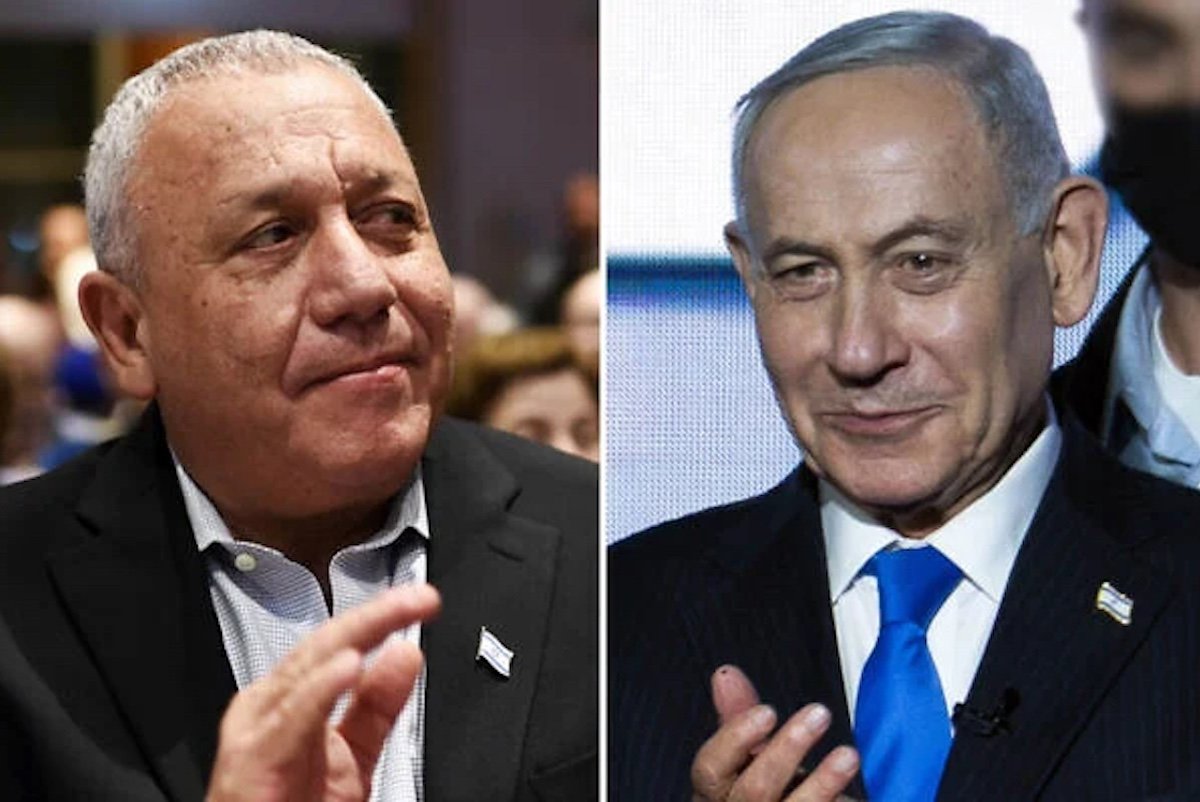
The opposition's standard-bearer is Gadi Eisenkot, a former army chief of staff whose Yashar party leads most surveys with 22 or 23 seats. He has overtaken Beyachad, the joint list of Naftali Bennett and Yair Lapid, which polls around 13. His appeal is easy to understand. He is a soldier who lost a son in Gaza, he speaks plainly and he is not Netanyahu.
Israelis have been here before. Yitzhak Rabin and Ariel Sharon made the passage from uniform to power, but the road is also littered with generals who led in September and vanished by winter.
Benny Gantz, who three times came within reach of the prime minister's office, now leads a party fighting to survive. The Israeli center keeps looking for a man on horseback to rescue it from politics, and keeps discovering that governing coalitions are assembled by politicians.
Eisenkot says he wants to lift the opposition to 63 to 64 seats and end what he calls the country's isolation. On Sunday, he challenged Netanyahu to a televised debate, pressing him on the refusal to appoint a state commission of inquiry into October 7.
It is a strong card. It is also telling that the frontrunner is the one asking for the debate.
Mr. Security, again
Netanyahu, who turns 77 a week before the vote, is running the only campaign he knows. The choice, his message goes, is between the right and a Palestinian state. In late September, he stood at an air force base and warned that Israel's enemies might strike to disrupt the election.
The next day a Tel Aviv-bound Flydubai jet carrying more than 100 Israelis was diverted to Saudi Arabia after one pilot attacked the other. The prime minister's allies presented it as vindication. The incident has become a talking point in the campaign, though officials remain divided over whether it was terrorism or a suicide attempt.
Lapid replied that the security briefing he had received the night before mentioned nothing of the kind. Israeli officials are reportedly still divided over whether it was terrorism or a suicide attempt, and the opposition is demanding the transport minister's head.
The episode shows both Netanyahu's method and its limits. Fear has always been his best campaign manager. But a leader who claims credit for foreseeing every threat invites an obvious question about the one he did not foresee.
Security remains the central issue of Israeli politics, and it is no longer Netanyahu's private property.
The kingmakers nobody will crown
Here is the opposition's real problem, and it is not Netanyahu. The parties pledged to replace him cannot reach 61 without the Arab lists, and most of them have promised not to try.
One survey cited by the Arab Center in Washington, DC, found 70% of Jewish Israelis opposed to an Arab party in government. The coalition understands this well. On September 23, the Central Elections Committee, a body of party representatives, voted to bar both the Joint List and Mansour Abbas's Ra'am from the ballot.
The Supreme Court unanimously reversed the ban on October 2, as it has done in nearly every similar ban. The right will not mind losing in court. The point was to remind Jewish voters that a ballot for Eisenkot might be a ballot for Abbas.
So the Arab citizens of Israel, a fifth of the population, hold the balance of power in a system that treats their votes as untouchable. In 2021, Ra'am joined a government, and that government lasted a year.
The opposition leaders have pledged to stop attacking one another until election day. They have not said what they will do on the morning after, when the only majority on offer includes partners they have disowned.
What Washington should not expect
In Washington and the European capitals, many are quietly hoping that an Eisenkot victory will produce a different Israel: more pliable on the Palestinians, easier to defend in public, a partner one can be seen with again. They are likely to be disappointed.
Eisenkot has criticized Netanyahu's talk of Israel as a "super-Sparta" and argues that the prime minister has brought relations with American society to a low point. But he has also made clear he would not endorse a Palestinian state or freeze settlement expansion. The generational shift in American opinion is real, but it is unlikely to translate into a different Israeli government.
The arithmetic of the Knesset is what it is. The next prime minister, whoever it is, will face the same coalition constraints, the same security dilemmas, and the same international pressures. The election may change the faces, but not the numbers.