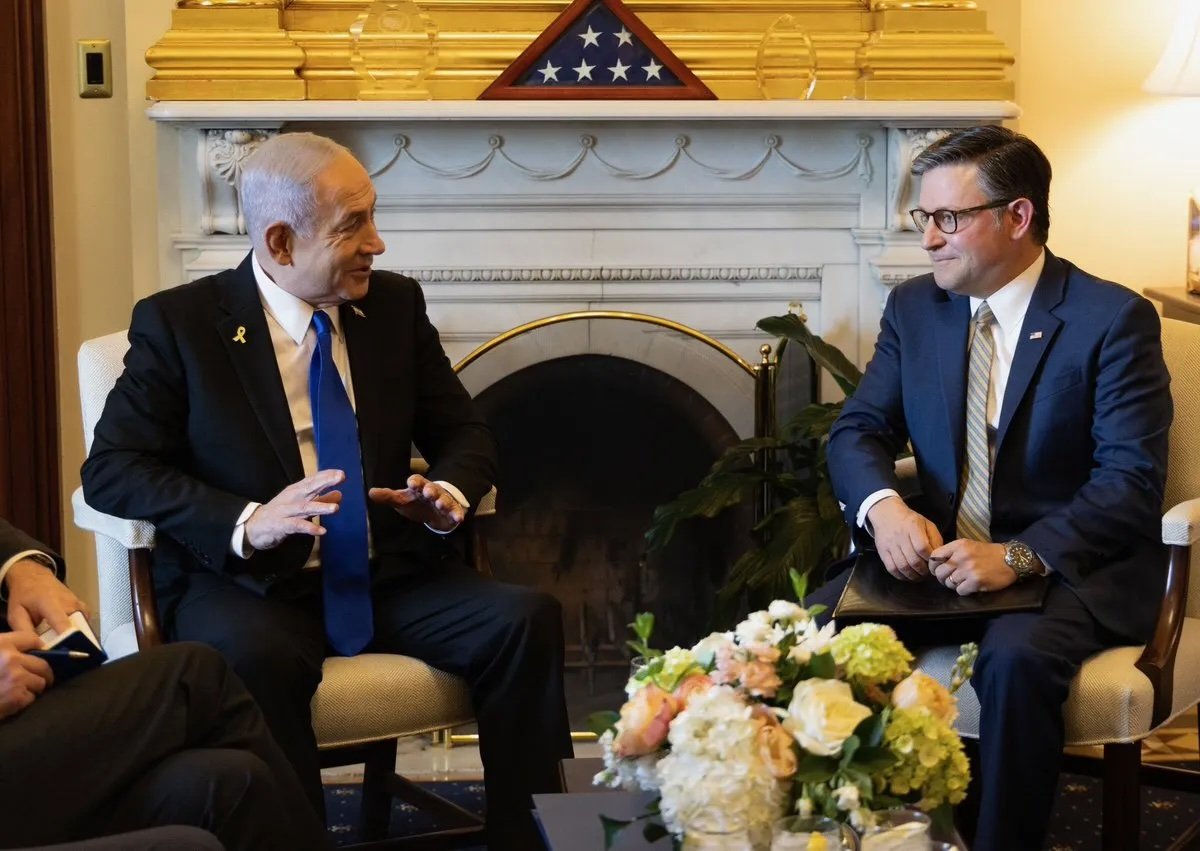
For nearly eight decades, Israeli strategists have treated American support as a fixed feature of the geopolitical landscape—as unchanging as the Mediterranean shore. Administrations changed, presidents pressured, but the core architecture—congressional majorities, public sympathy, and an annual aid package renewed on autopilot—seemed permanent.
That assumption was never fully accurate. Even in 1973, Washington's emergency resupply of the Israeli military came with strings attached, forcing diplomatic concessions Jerusalem would rather have avoided. But it was close enough to reality for long enough that Israeli planners could rely on American backing as a structural constant rather than a variable.
Today, that constant is under threat—not from a military defeat or an Iranian breakthrough, but from a demographic shift already visible in opinion polls across the United States.
Polling shows a historic reversal
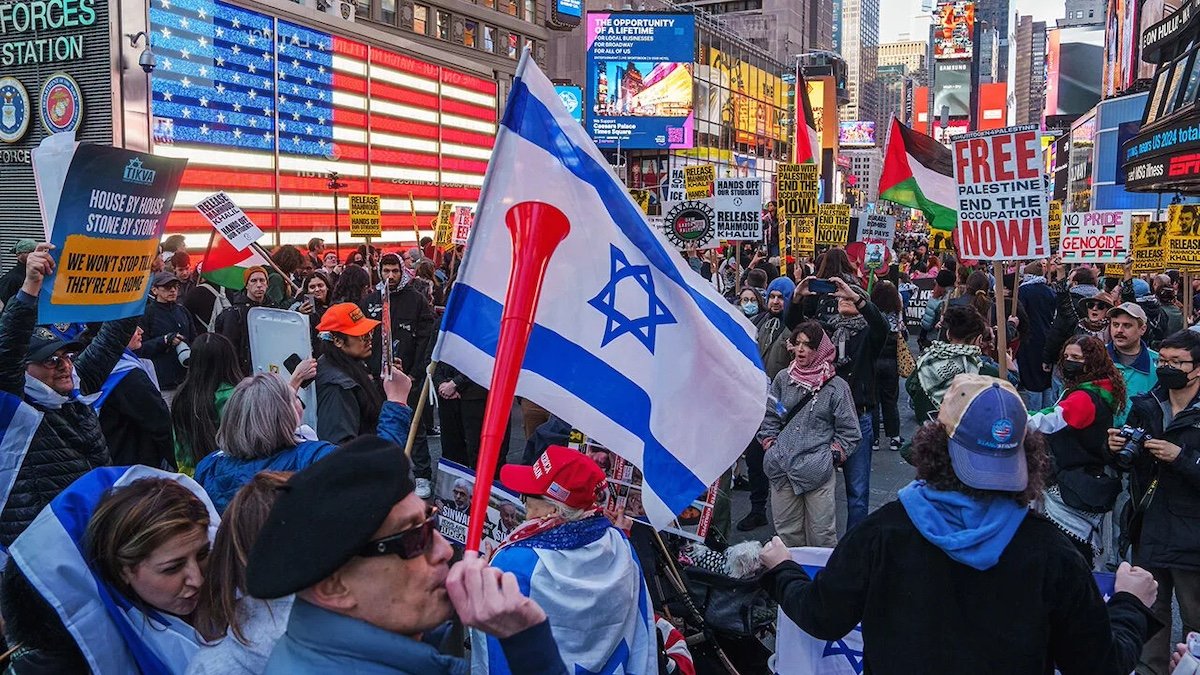
Gallup's long-running survey on American sympathies in the Israeli-Palestinian conflict has shown a consistent Israeli lead since 2001, often by margins exceeding 40 points. In 2026, that lead vanished: 41% of Americans now sympathize more with Palestinians, while 36% side with Israelis—a gap within the margin of error.
Pew Research offers a starker picture: 60% of US adults now view Israel unfavorably, up from 42% in 2022—a near doubling in four years. Confidence in Israeli Prime Minister Benjamin Netanyahu's handling of world affairs stands at just 41%. Among Democrats, unfavorable views of Israel have reached 80%.
The erosion is not yet bipartisan. Republicans still favor Israelis over Palestinians by a 70–13 margin. But the trend is concentrated among the young, across both parties. Gallup's 18–34 cohort now sympathizes with Palestinians by a 53% majority, a record. Pew finds that Republicans under 30 give only 52% confidence in President Donald Trump's handling of US-Israel relations, compared with 93% among Republicans over 65.
A Yale youth survey last year quantified the generational divide as the largest in American political life: Baby Boomers score +34 on a composite pro-Israel index, while Gen Z scores -22—a 56-point swing in one generation.
This is not a blip that a better public relations campaign or another congressional delegation to the Golan Heights can fix. It reflects a fundamental shift in formative experiences: older Americans remember the Six-Day War as a defining moment; younger Americans have grown up with live-streamed footage of conflict in Gaza.
Israeli officials often cite historical parallels—Pearl Harbor or the 1973 war—to argue that a shock will produce a rally effect and reverse the trend. But October 7, 2023, tested that theory, and any rally faded within months.
The structural reasons for this shift are clear. American sympathy for Israel was never a free-floating cultural attachment. It was built on specific postwar and Cold War conditions: living memory of the Holocaust, a Soviet-backed Arab bloc, and an Israel perceived as embattled and democratic rather than as a regional military powerhouse.
Those conditions are not returning. Cohort replacement is a one-way street. Each year, voters shaped more by Gaza than by 1967 replace those shaped by the Six-Day War.
The arithmetic is unforgiving. The current $3.8 billion annual military aid package runs through 2028, and the negotiation for its successor will be conducted by a Congress with more members who came of age after October 7 than before it. Automatic UN Security Council cover, unconditional arms sales, and the reflexive "ironclad" language of every administration since Bill Clinton are not laws of physics—they are political outputs, sustained by an electoral coalition that is aging out.
Within a decade, the Washington debate will likely shift from whether to support Israel to on what terms. Israeli governments accustomed to unconditional backing will find themselves negotiating from an unfamiliar position.
None of this is inevitable. Public opinion responds to events, and a genuine diplomatic settlement, a change in Israeli governance, or a different character of the next crisis could bend the curve. But the assumption that time is on Israel's side with the American public—that the relationship is a fixed asset rather than a renewable, contested political arrangement—is no longer tenable.
For the broader Indo-Pacific, this shift has implications. As the US rebalances its Middle East posture, allies like Japan and South Korea watch closely, aware that American commitments are not eternal. The unreliability of American alliances is a recurring theme in regional security debates, and Israel's experience may serve as a cautionary tale for other US partners.