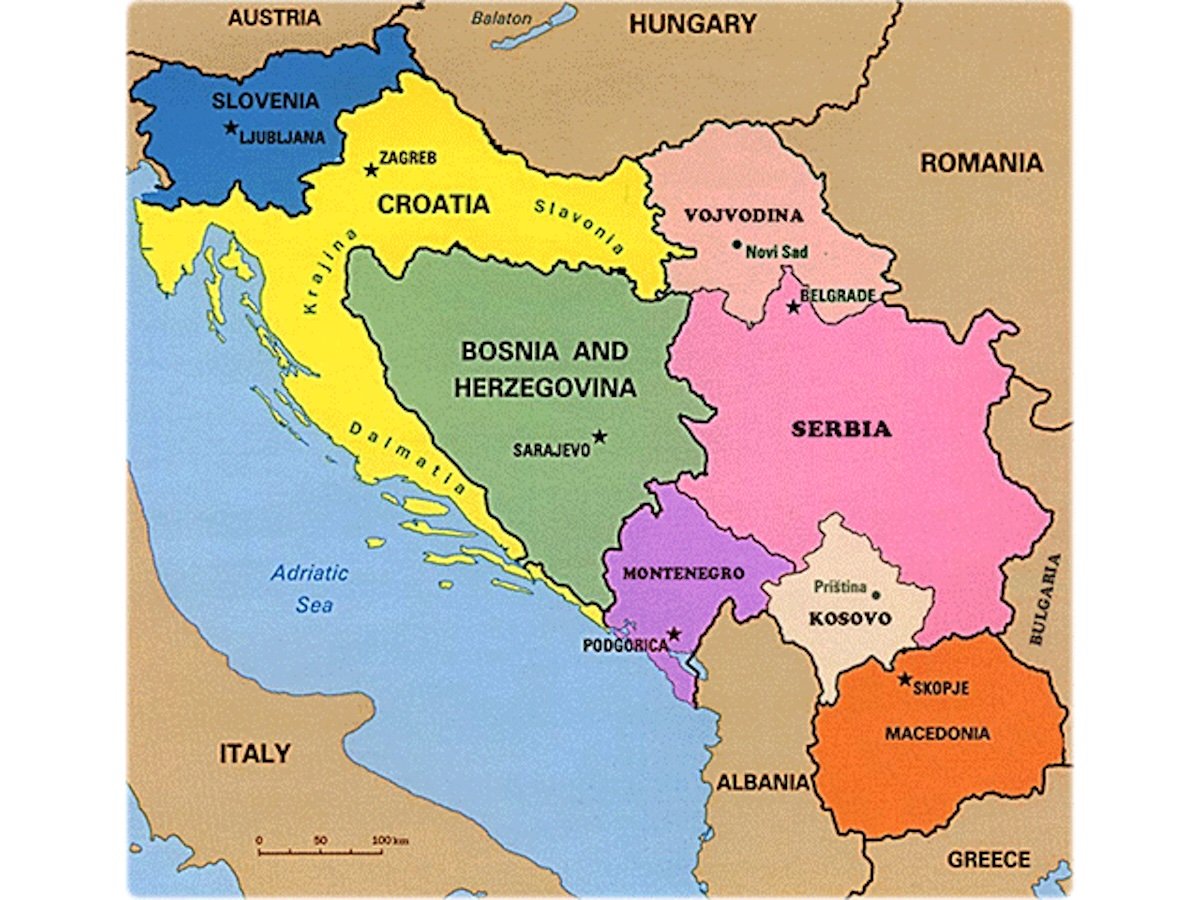
From the ancient walls of Dubrovnik, a city on Croatia's Adriatic coast that has become a byword for mass tourism, it is easy to forget that this picturesque setting was, not long ago, a war zone. The siege of Dubrovnik in 1991-92, during the breakup of Yugoslavia, left scars that are still visible in the city's restored rooftops. For an observer from Asia, where borders and identities are equally complex, the lessons of the Balkans are both stark and universal.
Yugoslavia was a multi-ethnic federation that, for decades, managed to suppress the worst excesses of nationalism. Before that, the region was carved up by the Austro-Hungarian, Venetian, and Ottoman empires. This history raises a fundamental question: what makes a nation? The answer, as the Balkans demonstrate, can be a matter of life and death.
There are two competing models of nationhood. The first, historically dominant, is based on shared ethnicity, religion, language, and cultural tradition. In such nations, minorities are often treated as second-class citizens, or worse. The second model, exemplified by the United States, is based on a shared commitment to equal rights for all, regardless of race or religion. This idea, rooted in the Declaration of Independence and the Gettysburg Address, has long been America's defining feature.
Yet a faction within the US, led by Vice President JD Vance, is now promoting a vision of America as a nation of a particular 'heritage' – European and Christian. This faction has encouraged nationalist movements in Europe that seek to weaken the European Union and return to a more parochial, ethnic-based politics. Their focus on immigration, with Vance warning of 'civilizational erasure' from Muslim refugees, echoes the very logic that tore the Balkans apart.
The Balkan lesson
The Yugoslav wars of the 1990s were not caused by ancient hatreds, but by cynical politicians who weaponized ethnic identity for power. In Croatia, Serbia, and Bosnia, minorities who had lived side by side for centuries were turned against each other. The result was a series of brutal conflicts, including the siege of Dubrovnik and the Srebrenica massacre. The region's ethnic mix was always complex: Orthodox Serbs lived in Croatia, Catholic Croats in Serbia, and Muslim Bosniaks in between. Nikola Tesla, the inventor of AC electricity, was a Serb from Croatia. The idea of ethnic purity was a myth, but a dangerous one.
The EU was created, in part, to prevent a repeat of the world wars that devastated Europe. By binding former enemies together in a shared economic and political project, it made war between them unthinkable. For the Balkan states, EU membership has been a similar force for peace. Croatia and Slovenia are already members; others aspire to join. This does not erase their national identities, but it gives them a framework to resolve differences peacefully.
For Asia, the lesson is clear. The region is home to many multi-ethnic states, from India to Indonesia, and has seen its own share of nationalist violence. The shared spiritual heritage of Kashmir's poet-saints is a reminder that cultural traditions can bridge divides, not just deepen them. Similarly, efforts to preserve China's Dong minority heritage show that heritage can be a source of pride without becoming a weapon.
The current US administration's fixation on 'heritage' is a dangerous echo of the Balkan playbook. It threatens to unravel the post-war order that has kept Europe at peace for seventy years. It also undermines the American ideal of a nation based on ideas, not blood. As the Balkans have shown, obsession with heritage leads not to greatness, but to war.
Neither the US nor Europe needs a return to blood-and-soil nationalism. The EU, for all its flaws, has been a force for peace and prosperity. The US, for all its divisions, has been a beacon of liberty. Let us not throw that away for the sake of a narrow, exclusionary vision of the past.