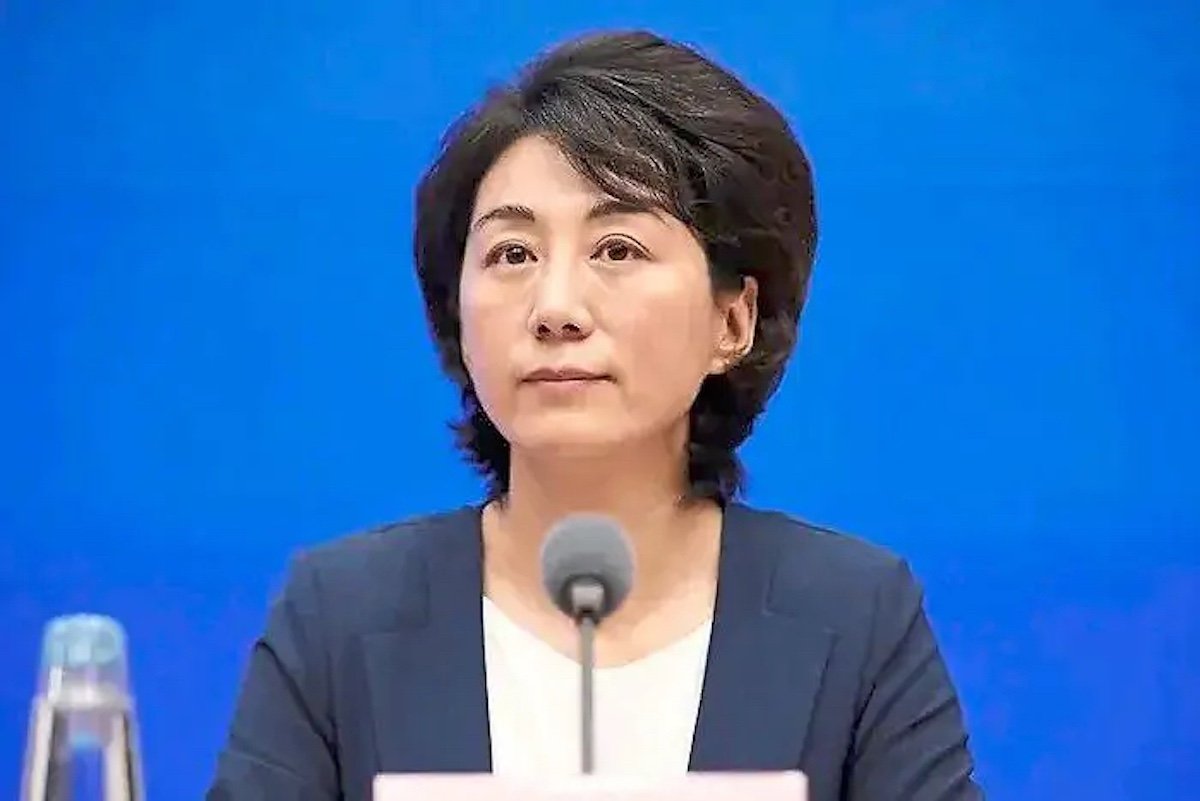
The nomination of Song Li, a Chinese public health official, to lead the World Health Organization has been framed largely as a geopolitical contest: with the United States withdrawing, Beijing is stepping in, and Geneva must choose sides. That narrative is convenient, but it is a poor basis for selecting the head of a technical agency.
Song's credentials are solid. A specialist in maternal and child health, she has spent two decades in the field, including stints during the SARS, avian flu, and Covid-19 outbreaks. Until recently, she directed the women's and children's health department at China's National Health Commission. In 2023, China put her forward for the WHO's Western Pacific regional directorship, but the region's governments chose Tonga's Saia Ma'u Piukala instead. If the World Health Assembly elects her in May, she would be the first mainland Chinese to run the agency, and only the second Chinese national after Margaret Chan, who led it from 2007 to 2017.
These facts are relevant, but they do not define the job. The next director-general will inherit an organization that has already cut its two-year budget by 22% to US$4.2 billion and shed roughly a quarter of its staff following the US withdrawal and a broader aid squeeze. The role demands more than diplomatic symbolism; it requires managing a leaner agency while maintaining its credibility as an independent health authority.
Money and influence
The financial picture is often misunderstood. Voluntary contributions, mostly earmarked by donors for specific projects, still make up over three-quarters of WHO's funding. Assessed dues—the membership fees every country pays—are the smaller, more predictable slice. With the US gone, China is now the largest state payer of assessed dues, projected at $320 million for 2026-27. Yet that still ranks only fourth among all funders once the Gates Foundation, the European Commission, and the World Bank are counted.
For over a decade, WHO reform plans have called for exactly this kind of funding: dues paid in full and not tied to a donor's pet project. Critics of Beijing worry about the influence that comes with being a big payer, but the agency has long encouraged such behavior. A director-general does not inherit the treasury of the government that nominated her; she inherits a gap.
That distinction should discipline the campaign. It is fair to ask what each nomination says about the government that made it, Song's included. But the same question applies to the other six candidates: Qatar's former health minister, Indonesia's sitting health minister Budi Gunadi Sadikin, Botswana's nominee, and three current or recently retired WHO officials, including two serving regional directors. Every name on that list is there because a government proposed it.
Independence has never been a matter of passport. It is a willingness to publish findings a capital would rather bury, to press one's own government for data and access, and to refuse the trade in which programs follow the loudest check. Member states should apply that test once, in public, to the whole field.
Two legitimate concerns
The first is concentration. Chan's decade at WHO, and the fact that a Chinese national, Qu Dongyu, now runs the Food and Agriculture Organization, give members a fair reason to ask whether another specialized agency should go the same way. Rotation exists so that no country treats a post as its reserved seat. But the norm loses its meaning if it is invoked only when the nominee is Chinese and forgotten when the nominee comes from a capital already well represented in Geneva.
Asia in particular has reason not to flatten this race into a referendum on China. The Western Pacific's 2023 vote for a Tongan surgeon over Song showed that governments in the region do not vote as a bloc. They should not be asked to now.
The second concern is memory. Covid-19 left unresolved arguments about early reporting, access for investigators, and the limits of WHO's authority over sovereign states. Those arguments will follow any candidate associated with Beijing. They should not be waved away, and they should not be treated as a disqualification unique to one person. The next director-general will need outbreak data from governments that would rather not share it, and sooner or later one of them will be the candidate's own.
So put the same question to every candidate, in public: what will you do, in the first crisis, when the government that nominated you is the one WHO has to challenge? Then ask for the answer in writing: fixed timelines for public statements under the International Health Regulations, protection for WHO staff who raise concerns, and rules for stepping aside when a home country's interests collide with the agency's.
None of this guarantees independence, but it makes independence something members can measure, and it asks no more than WHO's own constitution already does: the director-general and staff may not take instructions from any government, and governments undertake not to give them.
There is a better reason to take Song's candidacy seriously, and it has little to do with flags. WHO's hardest task over the next five years will be deciding what a smaller agency still does well. Maternal and child health is often treated as the soft annex of global health security. It is not. Keeping antenatal care, skilled delivery, and immunization running during an outbreak tests the same systems that detect and contain one. A director-general whose career was built on that continuity might stop WHO from splitting “health security” and “primary care” into rival camps.
She might also prove too narrow for the broader demands of the role. But that is a question of competence, not nationality. The selection should be based on the job, not the flag.