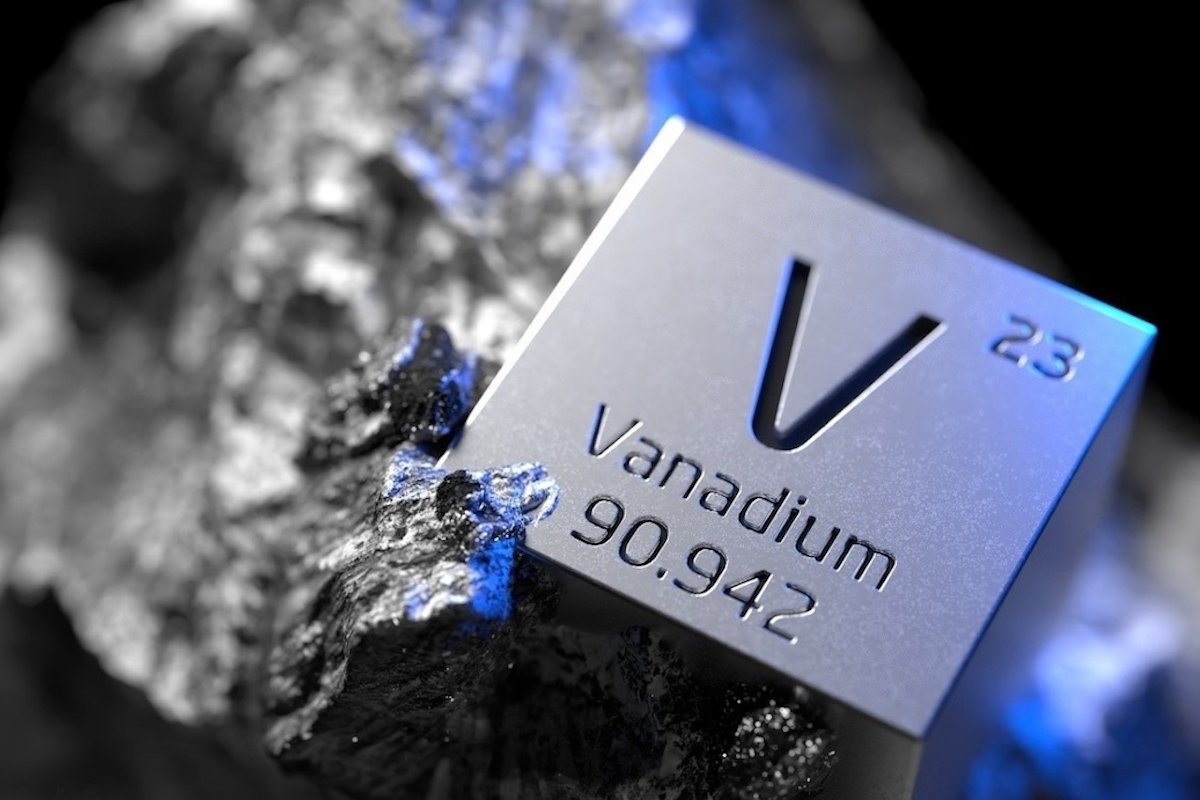
Vanadium has quietly become one of the most strategically important metals of the coming decades, prized for its dual role in hardening steel and enabling large-scale energy storage. The United States, the European Union, Russia, and China all list it as a critical mineral. Yet the market has consistently undervalued deposits outside China—and nowhere is that mispricing more evident than in Kazakhstan.
At the Astana Metals & Metallurgy Congress, Ferro-Alloy Resources CEO Nicholas Bridgen argued that his company's vanadium assets are undervalued amid supply chain disruptions and rising geopolitical demand. The discussion underscored a growing imbalance between vanadium supply and demand, as well as efforts to correct market perceptions.
The Tungsten Precedent
Kazakhstan's tungsten deposits offer a clear parallel. In 1941, Soviet geologists discovered tungsten at the Boguty deposit, 180 kilometers east of Almaty near the borders with China and Kyrgyzstan. For 75 years, the site sat idle—not because tungsten lacked value, but because there was no urgency to develop it. That changed as China's dominance in critical minerals became undeniable.
By the early 2020s, China produced over 75% of the world's tungsten, alongside similarly commanding shares of rare earths and other strategic minerals. This concentration was no accident; it resulted from decades of industrial policy and patient capital. In 2014, Chinese firm Jiaxin International Resources Investment Ltd. acquired Boguty for a modest sum, then spent roughly $300 million developing it. By 2025, after China imposed export controls on tungsten, prices outside China more than doubled. Jiaxin's market capitalization reached approximately $2.84 billion—nearly 9.5 times its development costs.
Meanwhile, U.S.-backed investors moved to acquire two other dormant tungsten deposits in Kazakhstan, Northern Katpar and Upper Kairakty. The Export-Import Bank of the United States issued a letter of interest for up to $900 million, and the U.S. International Development Finance Corporation offered up to $700 million. The pattern is clear: early movers capture extraordinary value; latecomers pay a strategic premium.
Vanadium's Strategic Case
Vanadium follows a similar logic. China accounts for over 72% of global vanadium production, according to the U.S. Geological Survey, while Russia supplies about 18.5%. Producers outside this duopoly are struggling: South African output fell sharply in 2025, and Brazil's Largo cut production amid financial strain. Supply is tightening just as demand begins a structural upswing.
Vanadium has two major demand drivers. The first is its use as an alloy in high-strength steel, essential for infrastructure, pipelines, and defense. The second is its role in vanadium redox flow batteries (VRFBs), increasingly seen as the optimal technology for large-scale, long-duration grid storage. As renewable energy expands, VRFB deployment is moving from pilot projects to industrial rollout. Analysts project the VRFB market will grow four to six times over the next decade, with Asia-Pacific leading installed capacity and North America recording the fastest growth.
One major forecaster estimates the vanadium market will grow at a compound annual rate of about 7% over the next 15 years, leading to a significant structural supply deficit. Vanadium now appears on every major country's critical minerals list—not just for its supply concentration, but for its indispensability in modern energy and defense systems.
Kazakhstan's vanadium deposits, long overlooked, may offer a strategic alternative. The question is whether investors and governments will act before the next supply shock. The tungsten story suggests that those who move early stand to gain the most.
For the broader Indo-Pacific, the implications are significant. As the Quad shifts focus to infrastructure and critical minerals, and as China's nuclear export push reshapes Southeast Asia's energy future, vanadium could become a linchpin of regional energy security. Kazakhstan, positioned at the crossroads of Central Asia, may find itself at the center of this transformation.