The United States economy continues to expand at a pace that leaves Europe and most of Asia behind, even as the Trump administration pursues a global tariff regime and military engagement with Iran. In the first quarter of 2026, US GDP rose 2.6% year-on-year, compared with just 0.7% in the European Union. Over the past five years, annual national income growth has averaged 3.3% in the US versus 2.6% in the EU.
These numbers contradict predictions that the trade war launched in 2025 and the subsequent conflict in the Strait of Hormuz would derail American growth. Instead, a combination of fiscal policy, technological investment, and structural advantages has kept the US economy humming.
Fiscal stimulus on a different scale
The US runs a budget deficit far larger than most advanced economies. In 2025, the deficit stood at 5.8% of GDP, nearly double the EU average of 3.1%. By spending more than it collects, the US government injects additional income into the economy, boosting demand and employment. While European governments also run deficits, the scale of American stimulus is unmatched.
This fiscal firepower has been particularly important as the Federal Reserve maintained relatively high interest rates to contain inflation. The combination of loose fiscal policy and tighter monetary policy is unusual, but it has sustained consumer spending and corporate profits.
AI investment drives productivity gains
Since 2025, artificial intelligence has become the centerpiece of US business investment. The country channels a significantly higher share of GDP into research and development than the EU. In 2021, Europe spent €270 billion less than the US on innovation, with much of that money going to its legacy automotive industry rather than emerging technologies.
The rapid adoption of AI across American industry has widened the productivity gap with Europe. Output per hour in professional services has risen more than 18% since 2019 in the US, compared with just 5% in the EU. Economy-wide productivity gains have allowed real wages to edge higher, sustaining consumer demand and driving share prices to record levels. In contrast, average real wages in the EU have barely grown over the past two decades, and corporate profits remain subdued.
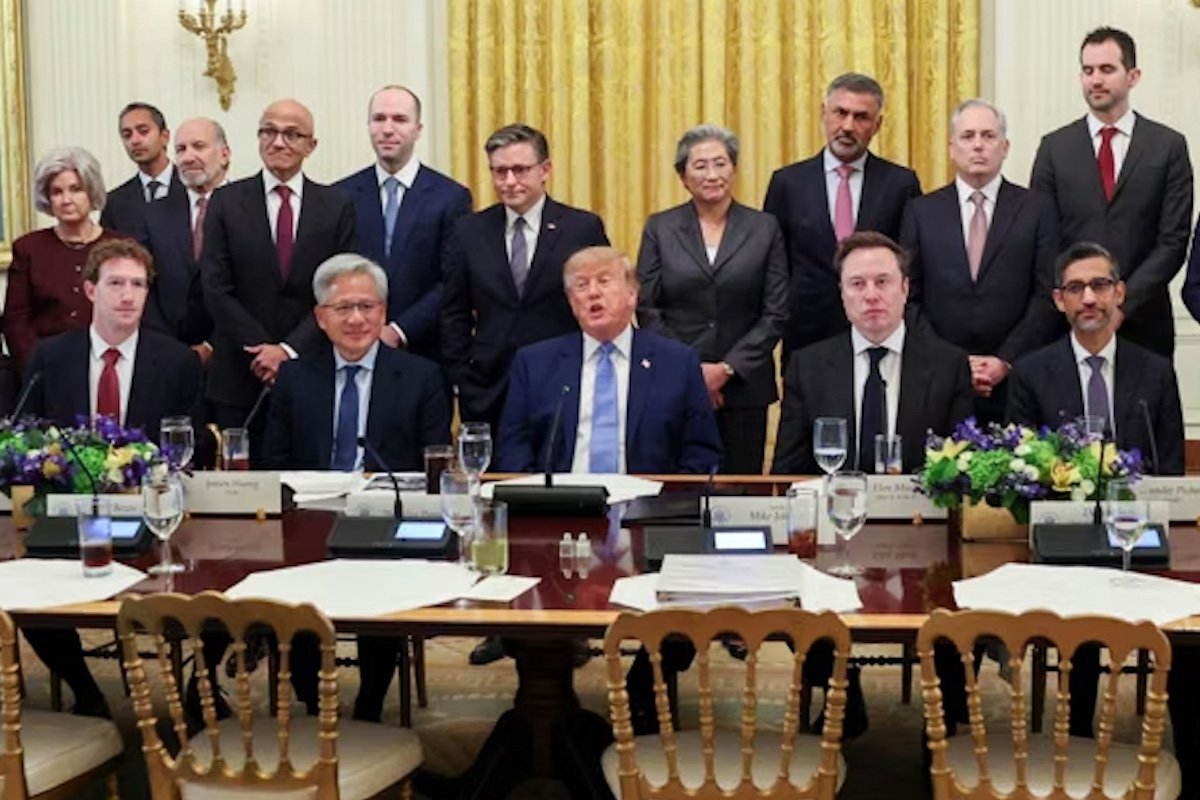
The Trump administration and its tech-entrepreneur allies argue that lighter regulation in the US encourages risk-taking and innovation. While the EU generates as many tech start-ups as the US, many relocate to America when they scale up. China, meanwhile, attempts to harness AI for state control, limiting its commercial dynamism. A US watchdog has been tracking AI industry ties to the Trump administration, highlighting the close relationship between Silicon Valley and the White House.
Energy cost advantage
American industry benefits from substantially lower energy costs than its European competitors. The US produces more fossil fuels and taxes them less. It is also advancing rapidly with cheap renewable sources, despite the administration's skepticism toward solar and wind. This cost advantage is helping to regenerate US manufacturing and meet global demand for data-based services such as e-commerce and generative AI.
Reliance on fossil fuels and indifference to carbon emissions may increase long-term economic vulnerability, but for now they provide a clear edge. The US is also less exposed to energy price shocks that have hammered Europe since the war in Ukraine.
The dollar's exorbitant privilege
The US spends more than it produces, resulting in a large current account deficit. For most countries, this would weaken the currency and fuel inflation. But the US dollar remains the universal standard for trade in commodities, and global investors consistently move money into US assets during crises—even when US policy is the cause.
In the 1960s, French finance minister Valéry Giscard d'Estaing called this the "exorbitant privilege" of printing the world's reserve currency. That privilege persists. Efforts by the EU to unify its financial markets have stalled, and Britain's 2016 decision to leave the bloc cost London and Brussels global financial market share. Attempts by China, Russia, and major oil exporters to launch an alternative reserve currency have made little progress.
The dollar's global role does come with costs. It makes it harder for the US to control inflation, as the Federal Reserve must consider the wider impact of interest rate changes. A strong dollar also hurts US export competitiveness. But for now, the benefits outweigh the drawbacks.
American consumers and businesses remain the engine of global growth. As governments across Asia and Europe struggle to balance their budgets, the US's deep-pocketed economy continues to pull the rest of the world along. Whether this can last under the weight of tariffs and military conflict remains an open question, but the data so far suggests remarkable resilience.