For nearly six years, Myanmar's military junta has used its air force to bomb civilian communities and resistance fighters with near impunity. But on September 10, that dominance was challenged in a way that could signal a turning point in the country's civil war.
Armed opposition groups, operating under the National Unity Government (NUG), launched a coordinated drone attack on Tada-U airbase, located about 35 kilometers south of Mandalay, Myanmar's second-largest city. The base, which shares its runway with Mandalay International Airport, has been a key launchpad for junta air strikes across central Myanmar.
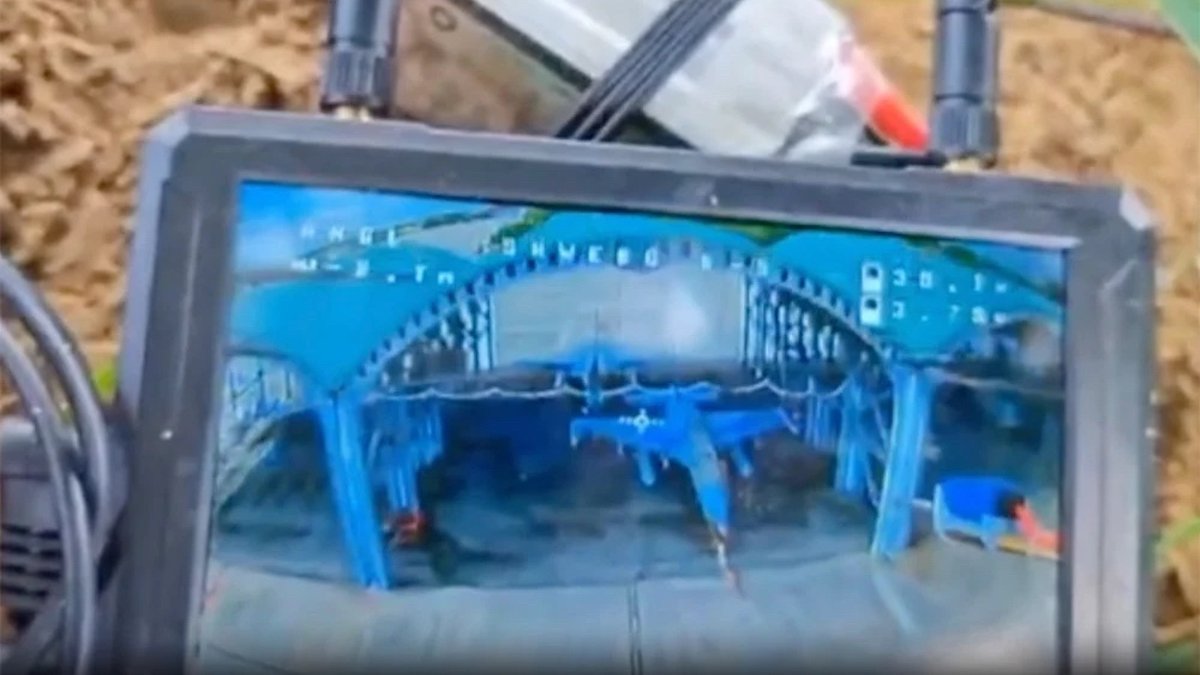
The operation, which involved six small quadcopter drones flown from a village to the southwest, targeted hangars at the southern end of the runway, more than two kilometers from the civilian terminal. Video footage released by the Myingyan District Drone Strike (MDSS) showed drones descending toward hangars housing Yakovlev Yak-130 jet-trainer and light attack aircraft, the junta's most lethal ground-attack platform.
The attack was notable not just for its target but for its technology. The drones used fiber-optic FPV (first-person view) guidance, a method that spools out a hair-thin wire from the drone, allowing operators to evade electronic jamming. This technology, which has proven decisive on battlefields in Ukraine and Lebanon, has been slow to reach Myanmar, but now appears to be in the hands of the resistance.
The strike was a morale booster for the opposition, which has struggled to counter the junta's air superiority. It also raised expectations among grassroots People's Defense Force (PDF) units across central Myanmar, who have been pressing for access to similar technology. The Kachin Independence Army (KIA), which has used FPV drones in recent battles along the Ayeyarwady River, has demonstrated the potential of this approach.
Impact and implications
The extent of the damage at Tada-U remains unclear. The drone footage blacked out as the drones struck protective netting draped across the hangar openings, a defensive measure indicating the junta was already aware of the drone threat. One drone was later found unexploded on a taxiway, suggesting the attack was not entirely successful. The NUG claimed that five junta personnel were killed, including Colonel Myo Hlaing Oo of Air Defense Unit No. 7, but did not claim that any aircraft were destroyed.
Despite the uncertainty, the attack marks a watershed. It was the first well-planned, multi-drone fiber-optic strike on a major airbase, and it demonstrated that the resistance can now penetrate the junta's air defenses. The challenge ahead is to translate this tactical success into strategic impact, by targeting not just airbases but also fuel and ammunition dumps, supply lines, and other critical infrastructure across the country.
The resistance alliance, known as the Steering Council for the Emergence of a Federal Democratic Union (SCEF), which includes the NUG and major Kachin, Karen, and Chin ethnic factions, will need to prioritize the sourcing and assembly of drone components at scale. This will require both domestic production and support from the diaspora, which has been re-energized by the attack.
The junta, for its part, has downplayed the attack, with state media claiming that the drones were intercepted. But the fact that the military has resorted to draping netting over hangars suggests it is taking the threat seriously. As the resistance gains more experience and capability, the junta's air dominance, which has been a cornerstone of its military strategy, is increasingly under threat.
The Tada-U attack is a reminder that Myanmar's conflict is entering a new phase, where drones are becoming a decisive factor. The international community, which has largely focused on diplomatic efforts, should take note of this shift. The resistance's ability to strike at the junta's air power could change the balance of the war, and with it, the prospects for a negotiated settlement.
For now, the resistance has shown that it can hit back. The question is whether it can sustain this momentum and turn a single strike into a broader campaign that can break the junta's grip on power.