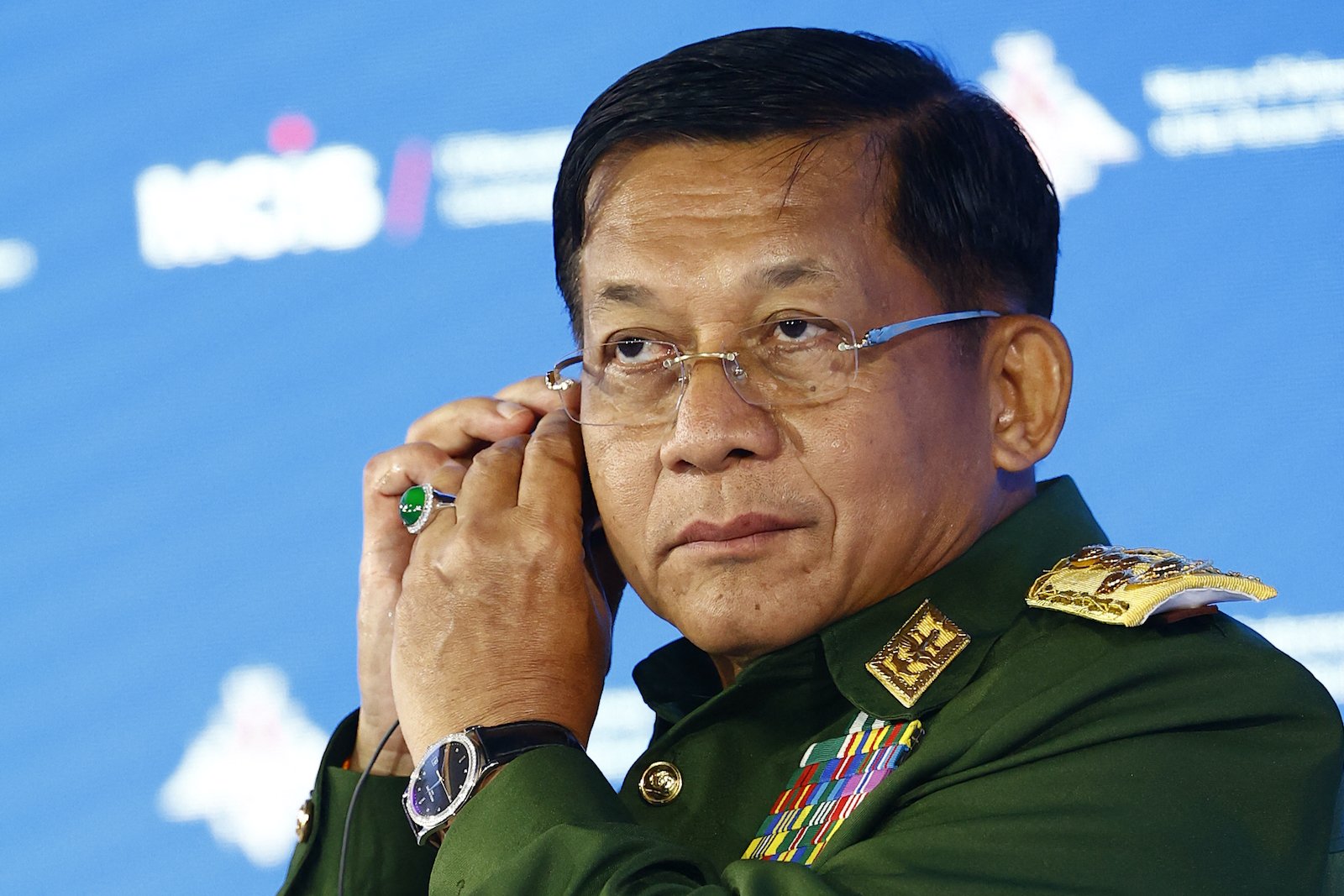
On August 8, Myanmar's foreign ministry issued a terse statement: the office of the ASEAN Chair's Special Envoy on Myanmar was "no longer necessary." The announcement came just 48 hours after junta leader Min Aung Hlaing returned from a state visit to Thailand, prompting some to read it as a victor's overreach. But the statement was not a spontaneous outburst; it was the culmination of a diplomatic sequence that began in Manila three weeks earlier.
The statement does not repudiate the current envoy, Philippine Foreign Secretary Ma Theresa Lazaro. Naypyitaw says it will continue to cooperate with her through the Philippine chairmanship. What it rejects is the creation of a new envoy role for future years—starting with Singapore's 2027 chairmanship—and it refuses ASEAN's August 7 request that Lazaro be allowed to meet detained leader Aung San Suu Kyi, a request already denied in late June. In short: accept the person, deny the access, abolish the office prospectively. Three moves, not one tantrum.
The least-quoted passage is the sharpest. Naypyitaw warned of "appropriate countermeasures, on a case-by-case basis" against "unconstructive and discriminatory treatment" by ASEAN "or any of its member states." That clause is aimed not at the bloc as a whole but at individual capitals—a pre-emptive threat to any government considering unilateral action.
A test that has already failed
The junta's countermeasure strategy has been tested, and it failed. In February, Timor-Leste opened legal proceedings against Min Aung Hlaing for war crimes and crimes against humanity, the first ASEAN member ever to do so. Naypyitaw retaliated by expelling Dili's senior diplomat, but Timor-Leste did not withdraw the case. ASEAN's newest and smallest member has shown that the countermeasures are survivable.
On July 12, Thailand hosted an informal discussion in Bangkok that put Myanmar's foreign minister in a room with several ASEAN counterparts. Naypyitaw read this as momentum. Nine days later, that momentum stopped. At the 59th ASEAN Foreign Ministers' Meeting in Manila on July 21, Myanmar was seated only at the level of its foreign ministry's permanent secretary, under ASEAN's standing policy of non-political representation at ministerial and summit meetings.
The ministers then moved further in the other direction. They agreed to develop benchmarks for measuring progress on the Five-Point Consensus and began discussing a longer-term special envoy in place of the annually rotating post. Days later, Lazaro said Myanmar's return to summits remained "far off."
Read August 8 against that backdrop, and it stops looking like arrogance. Manila handed the regime a scoring system it cannot pass and an envoy it cannot outlast. Eighteen days later, it moved to abolish the office. Min Aung Hlaing is not disputing the grade—he is trying to cancel the exam.
Here, Myanmar's democratic opposition must be careful, because the junta is recycling an argument that originated with its opponents. ASEAN's Five-Point Consensus has been called inadequate since the day it was adopted in Jakarta in April 2021, with Min Aung Hlaing in the room and the National Unity Government (NUG) excluded. The NUG rejected its first point—that "all parties shall exercise utmost restraint"—because it flattened perpetrator and victim into symmetrical combatants. In 2022, Scot Marciel, US ambassador to Myanmar from 2016 to 2020, called the five points "not appropriate for the situation in Myanmar" and said "it is a mistake to dwell on the Five-Point Consensus."
Both are correct. Neither supports what Naypyitaw is asking for, and the difference is the whole argument. The NUG and Marciel say the standard is too weak. Min Aung Hlaing says delete the standard. Because whatever the Consensus has failed to achieve as a peace plan—and it has failed comprehensively for five years—it functions as the reference against which Myanmar is measured. It is why Min Aung Hlaing has been barred from ASEAN's political-level meetings since 2021, and why ASEAN stripped Myanmar of the 2026 chairmanship. Remove the benchmark, and you remove the exclusion resting on it.
Engagement without recognition
Bangkok was not isolated. Three ASEAN foreign ministers visited Naypyitaw between April and June, including Indonesia's Sugiono, whose trip was Jakarta's first at ministerial level since the coup. But Indonesia still has not recognized the election that installed Min Aung Hlaing as president in April. Joanne Lin of the ISEAS–Yusof Ishak Institute warned that such engagement "could be perceived as conferring legitimacy on the military leadership without corresponding progress on the ground." It is a narrow ledge, and it is where ASEAN is standing.
Looking ahead, two dates are worth marking. The first is 2028. Singapore chairs ASEAN in 2027, Thailand in 2028. Bangkok, which used the joint statement to endorse Myanmar's "full and equal participation in ASEAN mechanisms," will be the friendliest chair he is likely to get. He may not be trying to defeat ASEAN. He may be outwaiting it.
But that bet is less safe than it looks, because the host paid for those two days. A People's Party legislator shouted "For peace! For humanity!" at Min Aung Hlaing inside the Thai parliament and was ejected; students at three Bangkok universities protested on August 7; Thai commentary called the welcome a low point for the country's diplomacy. Prime Minister Anutin Charnvirakul absorbed that for a two-day visit. A chairmanship lasts 12 months.
The second date is next month. On February 3, Belarus, Iran, North Korea, Myanmar, and Russia jointly authored a statement launching consultations toward a "Eurasian Charter of Diversity and Multipolarity in the XXI Century." The negotiating process opens in September during the 81st session of the UN General Assembly—the same session at which Myanmar's credentials fall due. Naypyitaw will appear in New York as co-author of a Russian-Belarusian instrument precisely when the Credentials Committee considers whether to seat its delegation. The junta is not just trying to cancel ASEAN's exam; it is seeking a different classroom altogether.