The United States Department of Justice has unsealed indictments against jailed Indian gangster Lawrence Bishnoi and his alleged North American associate, Satinderjeet Singh, known as "Goldy Brar," accusing them of orchestrating the June 2023 assassination of Sikh activist Hardeep Singh Nijjar outside a gurdwara in Surrey, British Columbia. The charges, part of a multinational law enforcement effort called Operation Hard Ball, represent one of the largest coordinated Western actions against India-linked transnational organized crime.
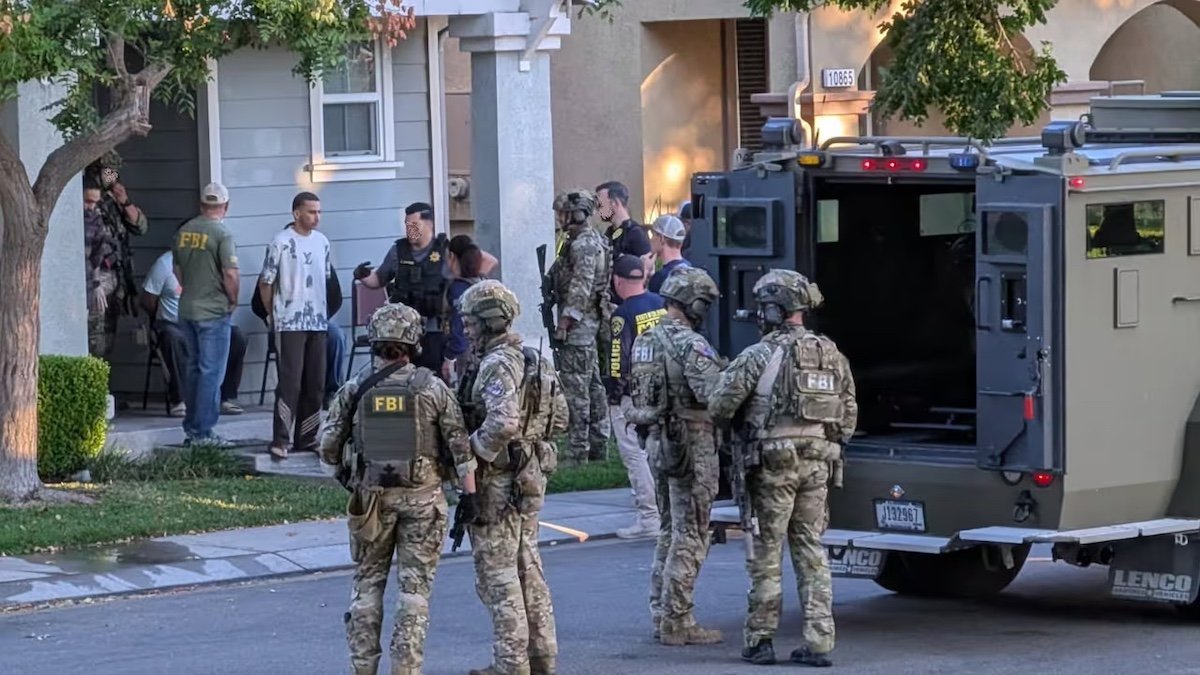
Prosecutors allege that Bishnoi, while incarcerated in an Indian prison, used smuggled mobile phones to direct operations, including murder-for-hire, extortion, racketeering, narcotics trafficking, and firearms offenses. The indictment names 37 defendants allegedly connected to three India-based criminal groups operating across India, the United States, Canada, the United Kingdom, Europe, Australia, and New Zealand. Authorities have arrested 24 suspects, executed dozens of search warrants, and seized approximately 1,000 kilograms of cocaine, one kilogram of heroin, firearms, and cash; several suspects remain fugitives.
Transnational Criminal Networks and National Security
The Nijjar killing has strained diplomatic relations between India and Canada. Former Canadian Prime Minister Justin Trudeau stated in 2023 that Canadian intelligence had credible allegations linking Indian government agents to the assassination. India rejected those claims, and the US indictment does not accuse the Indian government of involvement, focusing instead on the Bishnoi organization. Nevertheless, the case raises broader questions about diaspora security, transnational repression, and the ability of criminal networks to exploit institutional weaknesses across borders.
Operation Hard Ball reflects a growing trend among Western governments to treat organized crime as a strategic threat rather than a conventional policing challenge. The United Nations Office on Drugs and Crime (UNODC) has warned that criminal organizations are increasingly transnational, technologically enabled, and integrated into global financial and logistical networks. Canada designated the Bishnoi gang as a terrorist entity in 2025, a move that mirrors responses to Latin American cartels, Balkan criminal groups, and East Asian syndicates involved in cyber-enabled financial crime.
For India, which has long projected itself as a responsible security partner through defense cooperation with the United States, participation in the Quad, and intelligence exchanges with Western allies, the Nijjar case complicates that image. While New Delhi can argue that the indictments target organized crime, not state conduct, the allegations of corrupt local officials facilitating criminal activity invite closer scrutiny of India's prison administration and law enforcement effectiveness. As India-Japan strategic convergence reshapes Indo-Pacific power dynamics, confidence in governance and the rule of law remains integral to strategic trust.
The indictments also highlight the operational sophistication of the Bishnoi network. Prosecutors describe a criminal enterprise simultaneously involved in targeted killings, narcotics trafficking, extortion, firearms offenses, money laundering, and international logistics. If substantiated in court, these allegations would demonstrate how organized criminal groups can coordinate violence across jurisdictions despite the incarceration of their leadership. This pattern echoes concerns raised by the UNODC about the integration of criminal networks into global financial systems.
As the case proceeds, it will test the effectiveness of international law enforcement cooperation and the ability of democratic governments to respond to threats that blur the lines between crime and national security. For India, the outcome may influence perceptions of its institutional capacity and its role as a partner in the Indo-Pacific security architecture. The broader implications extend beyond the courtroom, touching on diaspora security, transnational repression, and the evolving nature of organized crime in an interconnected world.