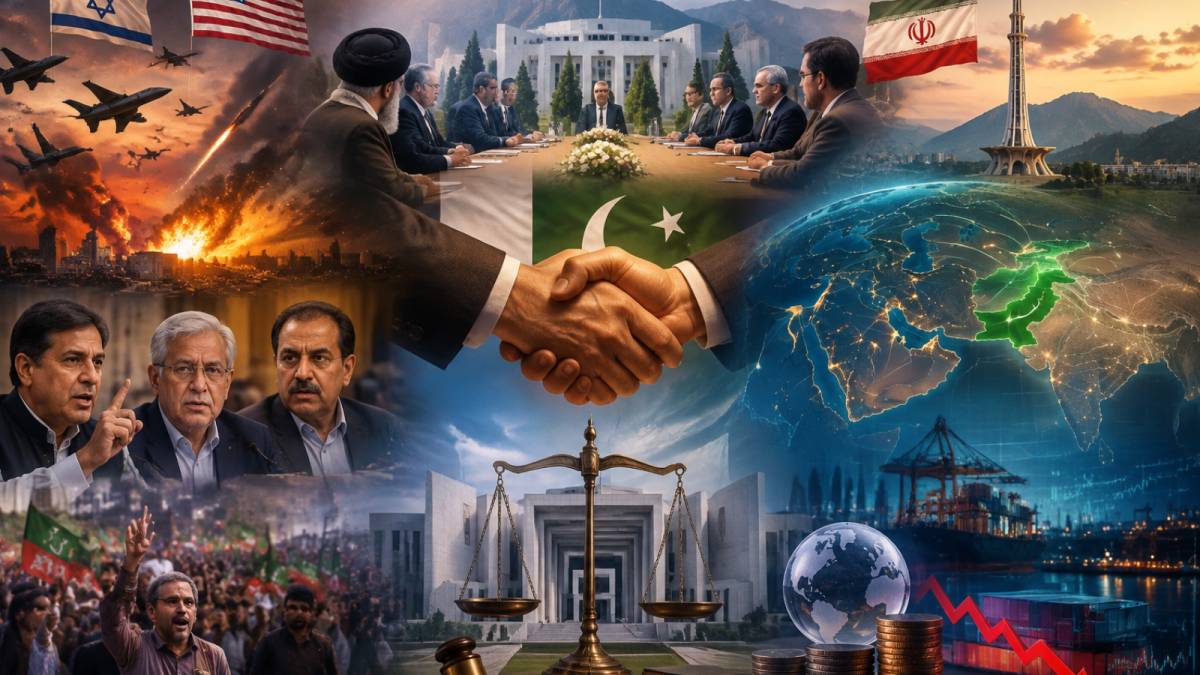
When the Financial Times recently described Pakistan as an emerging “hinge power” – a state whose simultaneous ties to Washington, Beijing, the Gulf, and Tehran allow it to broker where others must choose sides – it captured a genuine shift in the country’s international standing. The evidence is hard to dispute: Islamabad hosted direct US-Iran talks, signed the Makkah Joint Defence Agreement with Saudi Arabia and Turkey, and has spent the past year being courted by capitals that once treated it as a problem to be managed.
That diplomatic rehabilitation is real and deserves attention. But it also raises a harder question that no amount of summitry can answer: can Pakistan turn being wanted into being paid?
The diplomacy is ahead of the economics
Start with what has actually landed. In September 2025, Missouri-based US Strategic Metals signed a $500 million framework with Pakistan’s Frontier Works Organization to build a poly-metallic refinery and process critical minerals – the first tangible outcome of Islamabad’s pivot toward positioning itself as a minerals supplier to Washington. By February 2026, the US Export-Import Bank had committed $1.25 billion toward the Reko Diq copper-gold project in Balochistan, folding Pakistan into Project Vault, a $10 billion US initiative to rebuild critical mineral supply chains outside China.
Pakistan’s energy minister sat alongside Secretary of State Marco Rubio and delegations from 54 other countries at February’s Critical Minerals Ministerial in Washington. In April, Islamabad hosted its own Pakistan Minerals Investment Forum – and pointedly invited both Washington and Beijing to attend. That last detail is the whole story in miniature: Pakistan isn’t choosing a minerals partner; it’s trying to sell the same reserves to both.
As of early August, Reko Diq’s financing terms were still being finalized, and Pakistan’s mineral exports – mostly copper, chromite, and rock salt – still generate only a few hundred million dollars a year, a fraction of the sector’s estimated $6-to-$8 billion potential. The deals exist; the revenue mostly doesn’t, yet.
That gap matters more than the diplomatic wins do, because it’s the gap Pakistan has to close to make “hinge power” mean something beyond a headline. Saudi Arabia and the UAE convert geographic and financial leverage into actual capital deployment measured in the tens of billions of US dollars. Pakistan, so far, is converting geographic leverage into memoranda of understanding, ministerial seats, and financing “commitments” still being negotiated. Those are not the same thing, and international investors know the difference.
The Gulf pact raises the stakes, it doesn’t settle them
The Makkah agreement makes this test sharper rather than easier. Pakistan is now formally entangled in Gulf security planning at a moment when Washington is pushing Gulf states – the UAE and Qatar already inside its Pax Silica technology bloc, Saudi Arabia still holding out – to make binding choices about which technology and supply-chain ecosystem they belong to. Pakistan isn’t a Pax Silica signatory and isn’t a direct target of that pressure. But a country whose newest strategic relationship runs through Riyadh cannot assume it will stay insulated indefinitely from choices Riyadh itself is being forced to make. Diplomatic relevance bought Pakistan a seat near that table; it didn’t buy immunity from what happens at it.
The defense pact with Saudi Arabia and Turkey has reshaped regional security calculations, but it also ties Pakistan more closely to a Gulf order in flux. As the security architecture evolves, Islamabad’s balancing act between Washington and Beijing will face its sternest test.
What would actually prove the thesis
The “hinge power” framing will be tested over the next year, not by how many capitals want to talk to Islamabad but by three things: whether Reko Diq’s financing actually closes on the terms currently being negotiated – rather than slipping, the way large Pakistani infrastructure commitments often have done; whether Pakistan’s mineral exports move meaningfully off their current base, rather than remaining a rounding error next to the MoUs announced around them; and whether Islamabad’s balancing act between Washington and Beijing survives contact with a moment when both powers are demanding, in different sectors, that partners stop hedging.
Pakistan has spent the past year proving it can get invited into rooms it used to be locked out of. That is a genuine and underappreciated achievement, and the FT was right to notice it. The next year will test something harder: whether Islamabad can leave those rooms with contracts that actually fund, rather than merely flatter, its ambitions.
Geography made Pakistan interesting again. Only economics will make it matter.