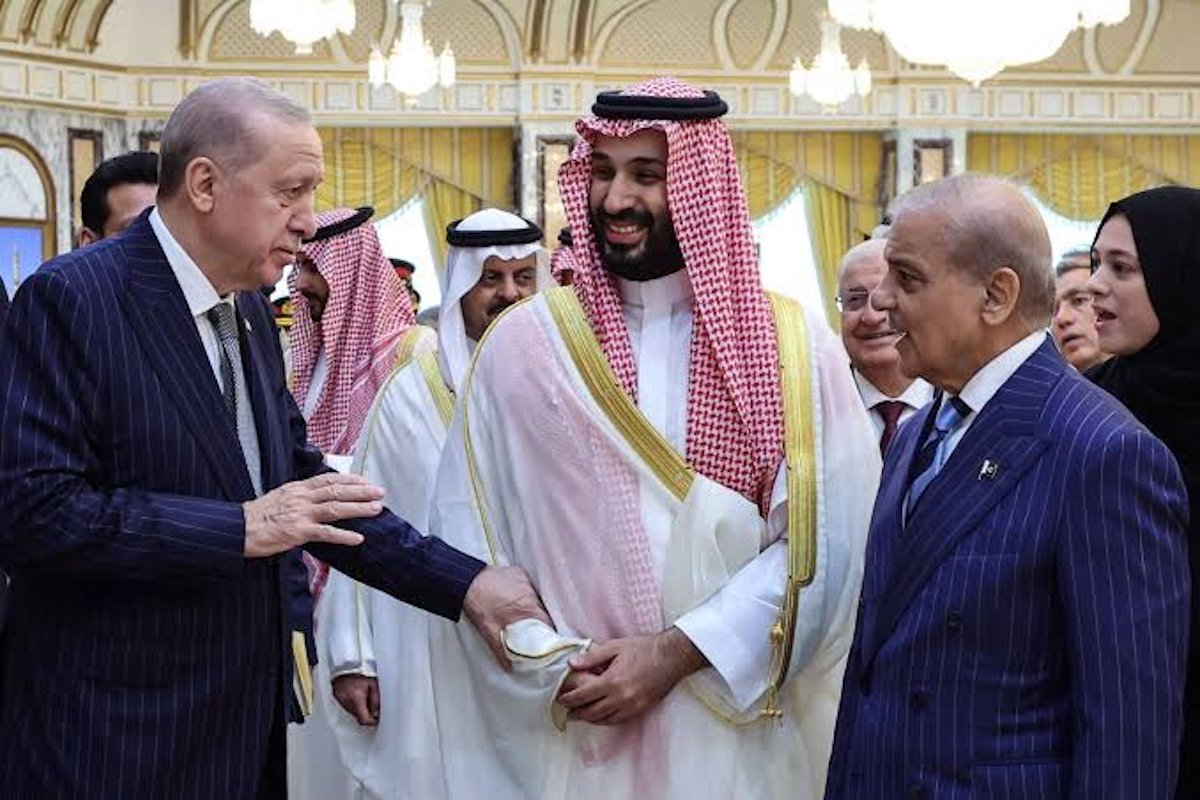
On August 7, 2026, in Mecca, the leaders of Saudi Arabia, Pakistan, and Turkey signed the Makkah Joint Defense Agreement, a pact that binds the three nations to treat an armed attack on any one as an attack on all. The signatories—Saudi Crown Prince and Prime Minister Mohammed bin Salman, Pakistani Prime Minister Shehbaz Sharif, and Turkish President Recep Tayyip Erdogan—have framed the accord as a step toward collective security in a volatile region.
The agreement builds on the Strategic Mutual Defense Agreement between Saudi Arabia and Pakistan signed in September 2025, extending cooperation to include joint exercises, defense-industrial collaboration, technology transfer, and intelligence sharing. Yet the specifics—troop commitments, command structures, and activation protocols—remain undisclosed, leaving analysts to speculate on the pact's true scope.
Strategic Motivations: Saudi Vulnerability, Turkish Ambition, Pakistani Needs
The timing is telling. The Middle East remains in flux: the US-Iran conflict shows no resolution, Houthi forces have escalated threats against Saudi interests, and the US-Saudi civil nuclear deal is tied to Riyadh's potential normalization with Israel. For Saudi Arabia, the pact is a hedge against perceived vulnerabilities, particularly from Iran-backed groups like the Houthis, who have disrupted Red Sea shipping and threatened the kingdom's Vision 2030 economic transformation.
Turkey, under President Erdogan, sees the agreement as a lever to expand its influence across the Muslim world. Ankara's active role in Syria, its confrontation with Kurdish groups, and its growing defense-industrial exports position it as a key player. The pact gives Turkey a foothold in South Asia, with Pakistan serving as a gateway to Central and South Asian markets.
Pakistan's motivations are more immediate. Islamabad's economy remains dependent on external assistance, and the China-Pakistan Economic Corridor has not resolved structural deficits. Beijing has grown cautious about further financing, and Pakistan has struggled to secure aid from other partners. The defense pact offers a channel for Saudi financial support and Turkish defense technology, while allowing the military to tout Pakistan's renewed strategic relevance domestically.
However, the arrangement cuts both ways. By tying its security policy to Riyadh and Ankara, Pakistan risks constraining its independent decision-making. If the pact's commitments translate into deployments beyond Saudi borders, Pakistani forces could be drawn into conflicts in Yemen, Syria, or elsewhere—effectively serving the strategic objectives of its partners.
Turkey's inclusion changes the dynamic. The earlier Saudi-Pakistan relationship was bilateral; now, Ankara's ambitions add a layer of complexity. Turkey's defense industry, including drones and armored vehicles, complements Pakistan's manpower and Saudi Arabia's financial muscle, creating a triangular synergy that could reshape regional power balances.
For observers, the pact raises questions about its impact on existing alliances. It comes amid broader shifts in global defense, such as South Korea's defense buildup and US defense decentralization, which leave Asian allies exposed. The Makkah agreement could be seen as part of a trend where regional powers seek autonomous security arrangements.
The pact also intersects with ongoing tensions, such as the Houthi maritime embargo on Saudi Arabia, which threatens Red Sea oil routes. And it may influence Pakistan's relations with Europe, as Europe's need for Pakistan grows amid shifting alliances.
While the full text remains secret, the Makkah Joint Defense Agreement signals a realignment in the Islamic world's security architecture. Whether it stabilizes the region or fuels new rivalries will depend on how the three powers operationalize their commitments—and how Iran, the US, and other actors respond.