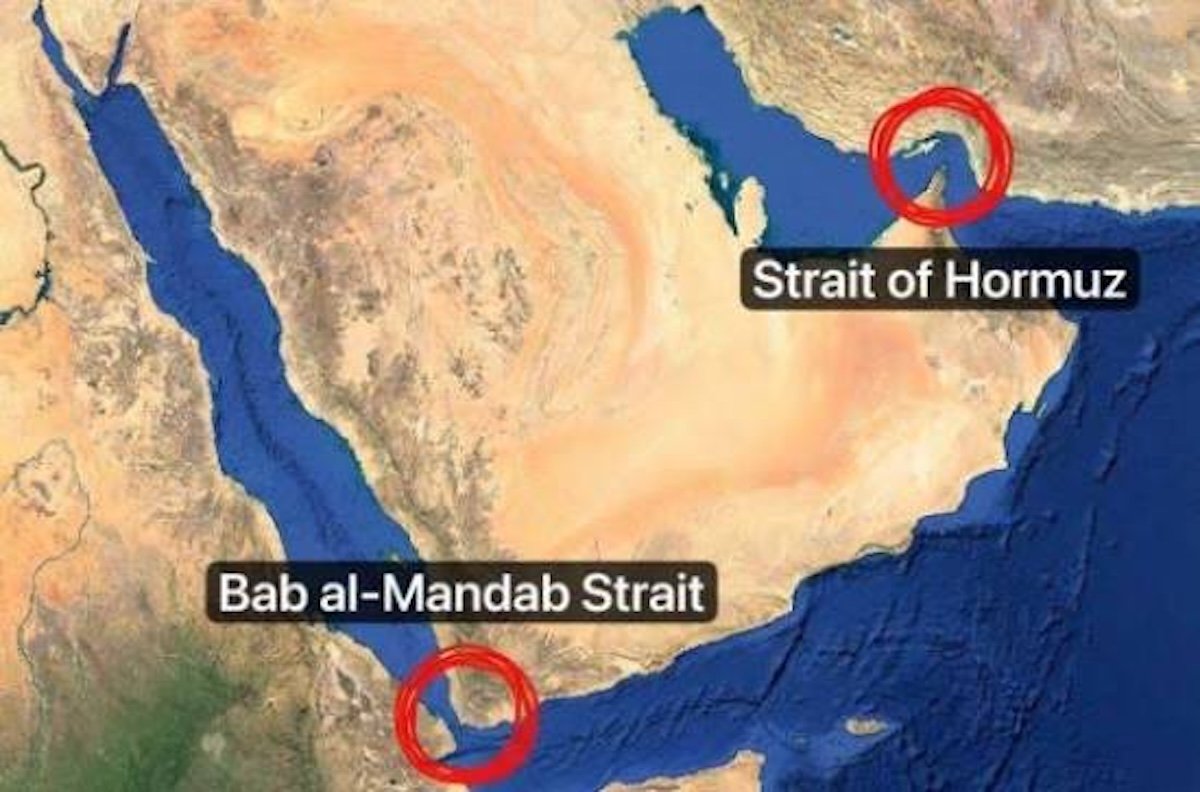
The United States military is grappling with a systemic crisis in its defense industrial base, a problem laid bare by the high-intensity conflicts in the Middle East. The ongoing campaign against Houthi militants in the Red Sea and operations linked to tensions with Iran have forced the Pentagon to expend long-range precision munitions and air-defense interceptors at rates not seen since the Cold War. This has exposed a critical vulnerability in the Indo-Pacific, particularly regarding deterrence against a rapidly militarizing China.
The cost-exchange ratio has become unsustainable. US Navy and Army units have fired Standard Missile-6 interceptors, each costing $5.3 million, and Patriot PAC-3 missiles at $3.9 million apiece to neutralize cheap Iranian-designed Shahed-136 drones, which cost as little as $20,000 to $50,000 to produce. This tactical imbalance has drained American air-defense magazines and handed adversaries a logistical advantage. When the cost of deterrence far exceeds the cost of aggression, the conventional defense model faces long-term strategic failure.
The fallout has degraded global combat readiness, drawing down as much as half of the US inventory of Patriot and THAAD missiles. This depletion leaves ammunition stockpiles in the Western Pacific inadequate to backstop Taiwan's defense contingencies against a potential Chinese invasion. The inability to rapidly replenish stocks stems from decades of structural atrophy in America's defense industrial base, which has operated on a peacetime footing, prioritizing cost efficiency and just-in-time inventory. Surge production capacity has been hollowed out, compounded by bottlenecks in component suppliers, a contraction in solid rocket motor manufacturing, and a critical shortage of specialized labor after decades of deindustrialization.
PIPIR: A Framework for Decentralization
To bypass these domestic constraints, the US Department of Defense launched the Partnership for Indo-Pacific Industrial Resilience (PIPIR). First introduced at the Shangri-La Dialogue in May 2024 and formally inaugurated in Honolulu that October, the multilateral framework has expanded to 16 nations, most recently welcoming Thailand and the United Kingdom. Unlike short-term crisis mechanisms in Europe, PIPIR is designed as a long-term, institutionalized defense-industrial architecture, distributing production, assembly, and maintenance nodes as close as possible to potential flashpoints. The goal is to defeat the Pacific's “tyranny of distance” and blunt China's Anti-Access/Area Denial (A2/AD) capabilities. By embedding logistics bases directly on the frontlines, Washington hopes to sustain high-intensity combat operations without relying on trans-Pacific supply lines vulnerable to interdiction.
However, PIPIR confronts China's vastly larger defense-industrial machinery, which operates on what amounts to a permanent wartime footing. Through its state-mandated Military-Civil Fusion strategy, Beijing has integrated its civilian manufacturing sector with national defense requirements, opening a wide capacity gap across critical domains. This integration would allow China to replace combat losses and replenish missile magazines within weeks—a logistical advantage the Western bloc no longer enjoys. In shipbuilding, for example, China's construction capacity is estimated at many times that of all US shipyards combined; one widely cited Pentagon estimate put the gap at roughly 200-to-1. A single Chinese shipyard, such as Jiangnan Shipyard in Shanghai, has a physical footprint larger than the entire US military and commercial shipbuilding industry.
That industrial dominance shows up directly in hull counts: The Pentagon assesses the PLA Navy as the world's largest navy by number of ships, while the US Navy's active battle fleet has shrunk to under 300 vessels. China is also mass-producing advanced warships like the Luyang III-class (Type 052D) destroyer, equipped with AESA radar and vertical launch systems that rival the US Aegis system. Although the US retains a qualitative edge with its 11 nuclear-powered supercarriers, China is quickly closing the gap with its newest carrier, the Fujian, which features an electromagnetic aircraft launch system (EMALS).
A similar imbalance exists in missile technology and combat aviation. Within the First Island Chain, China holds a large asymmetric advantage, deploying more than 1,250 land-based intermediate-range ballistic and cruise missiles. The US, by contrast, has no land-based missiles in this class—a legacy of its historical compliance with the now-defunct INF Treaty—forcing it to rely on air and naval platforms operating within China's dense denial zone. Meanwhile, the US military's inventory of combat-coded frontline fighter jets has shrunk to about 800, short of the roughly 1,200 aircraft the Pentagon says are needed to manage two simultaneous regional conflicts. Beijing is producing fifth-generation J-20 stealth fighters faster than Western intelligence agencies had projected.
For Asian allies like Japan, South Korea, and Australia, the implications are stark. The PIPIR framework may offer a path to industrial resilience, but it also outsources the burden of deterrence to partners who face their own industrial and political constraints. As the US deterrence plan against China strains under industrial and political gaps, these allies must weigh the risks of relying on a supply chain that remains vulnerable to disruption. The Sino-Russian cooperation reshaping Indo-Pacific deterrence further complicates the security landscape, as does the emergence of the Arctic as a key node in the missile defense network. Without a fundamental overhaul of the US defense industrial base, PIPIR risks being a bandage on a deep wound, leaving Asian partners exposed to a rapidly modernizing Chinese military.