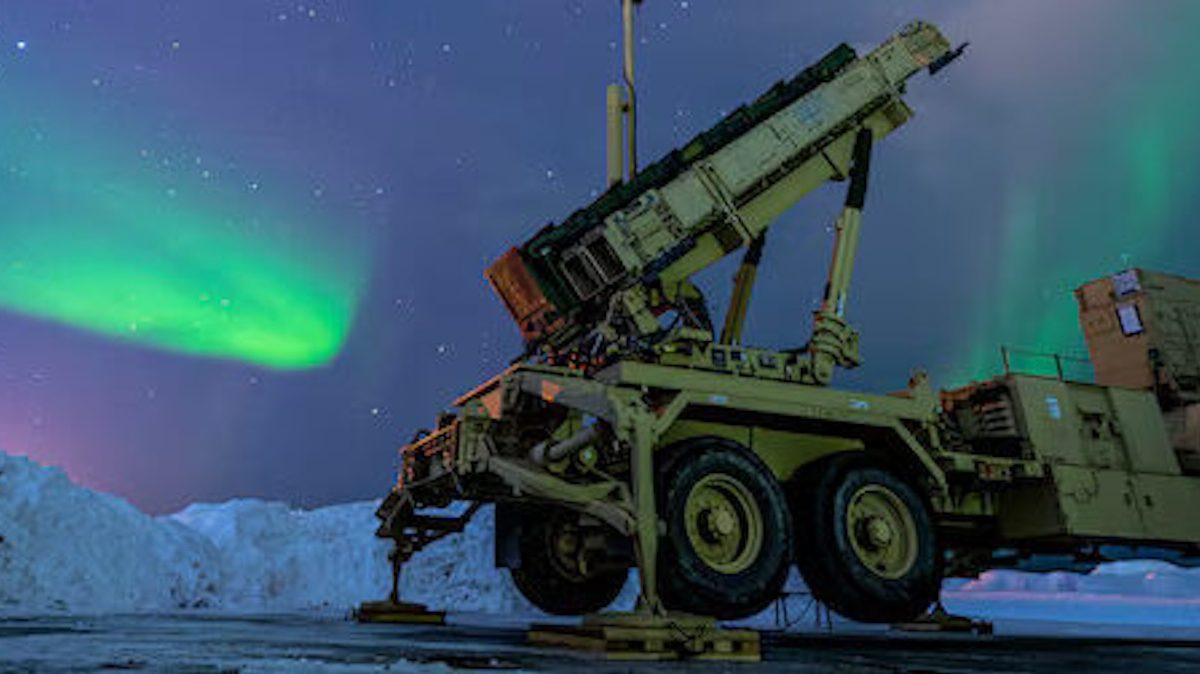
The Arctic is no longer a distant, frozen frontier separate from the strategic calculations of the Indo-Pacific. As Russian missile activities intensify in the High North and the partnership between Moscow and Beijing deepens, the region has become a critical node in the deterrence architecture linking North America to Asia.
Russia's increasingly frequent missile launches in the Arctic are eroding the reliability of US early warning and missile defense systems. Hypersonic delivery platforms, which reduce detection time and complicate trajectory prediction, challenge legacy radar and interception networks. These developments are not merely technical; they create a more constrained decision space for US commanders, with direct implications for homeland defense and extended deterrence commitments to allies in Tokyo, Seoul, and Canberra.
Commercial airliners flying polar routes further complicate the picture. When a commercial jet crosses a missile launch trajectory, it can hamper Alaska's ability to conduct warning and interception operations. Alaska remains a vital node in US homeland missile defense and a staging ground for reinforcing Indo-Pacific operations. Degraded Arctic detection capacity may slow strategic warning across both theaters, forcing Washington to allocate limited interception assets in a potential coordinated saturation attack.
The Sino-Russian Arctic Axis
The accelerating partnership between Russia and China is the most significant structural change in Arctic security. International sanctions on Moscow and Beijing's growing economic investment in the High North have moved bilateral cooperation from episodic coordination to a sustained strategic alignment. Chinese capital and infrastructure, combined with Russia's advantages in Arctic access and sea control along the Northern Sea Route, have produced a more regular pattern of joint activity.
This cooperation enhances intelligence, surveillance, and reconnaissance (ISR) capabilities, regional access, and operational flexibility for both countries. For Russia, it improves the ability to apply military pressure on North America from polar directions. For China, it provides a foothold in a theater far from its traditional Pacific focus. The resulting cross-theater coordination complicates US defense planning and strengthens bilateral deterrence.
The partnership modifies the Arctic security structure in three ways. First, it expands the operational footprint of a non-Arctic state—China—into the region, adding geopolitical influence beyond the Pacific theater. Second, joint air and naval patrols, ISR cooperation, and dual-use scientific activities augment interoperability and domain awareness, serving as force multipliers. Third, these developments enhance deterrence by improving sensing and regional access for homeland-directed operations across polar routes, while simultaneously pressuring US and allied forces in the Indo-Pacific.
China, which describes itself as a “near-Arctic state,” has invested heavily in dual-use scientific research, infrastructure, icebreaker deployments, and logistical activities in the High North. These moves align with broader geoeconomic and strategic goals, linking the Arctic to the Indo-Pacific missile defense network.
The expiration of the New START Treaty and China's rapid nuclear buildup add further strategic uncertainty. With fewer restrictions on the size and makeup of US and Russian nuclear arsenals, and with Beijing expanding its own forces, the Arctic becomes a theater where deterrence calculations are increasingly volatile.
US planners must now view the Arctic and the Indo-Pacific as strategically interconnected rather than separate operational environments. The growing engagement of non-Arctic actors signals that the region is moving from a North Atlantic security concern to a global competition arena. As industrial and political gaps strain US deterrence plans, the Arctic-Asia link demands urgent attention.