The Arctic is no longer just a melting frontier for commercial shipping. It is fast becoming a critical theater for missile warning and deterrence, with direct implications for the Indo-Pacific security architecture. As Russia, China, and the United States compete for military influence north of the Arctic Circle, Washington must recalibrate its High North strategy to safeguard both American homeland defense and its extended deterrence commitments across Asia.
The region’s unique geography—its location above 66°33′ N, extreme climate, and terrain—makes it an ideal node for early warning (EW) and missile interception. Because the Earth’s geodesic structure makes air routes over the Arctic the shortest path between many Northern Hemisphere points, ballistic missiles can travel from launch to target in minimal time. This positions the Arctic as the frontline for nuclear deterrence and early warning assets in any potential first-strike scenario.
Cold War Legacy, Modern Pressures
During the Cold War, both the United States and the Soviet Union built extensive military infrastructure in the Arctic. The Soviet Union established a dense network of facilities, including the Northern Fleet base at Zapadnaya Litsa and nuclear testing sites on Novaya Zemlya. The United States responded with a layered early warning and defense architecture across Alaska, Canada, and Greenland. The Distant Early Warning (DEW) Line—a chain of radar stations stretching from Alaska through the Canadian Arctic to Greenland—provided a three- to six-hour warning window against Soviet airborne threats. This was complemented by Nike Hercules surface-to-air missile installations, such as Nike Site Summit overlooking Anchorage, and forward operating bases for Arctic surveillance.
Today, the DEW Line has evolved into the North Warning System (NWS), a joint US-Canada radar network spanning 5,000 kilometers with 13 long-range and 36 short-range radar sites. Key US facilities include Pituffik Space Base in Greenland, equipped with Upgraded Early Warning Radar (UEWR), and Clear Space Force Station in Alaska. Fort Greely hosts Ground-Based Midcourse Defense (GMD) interceptors, a vital component of homeland missile defense.
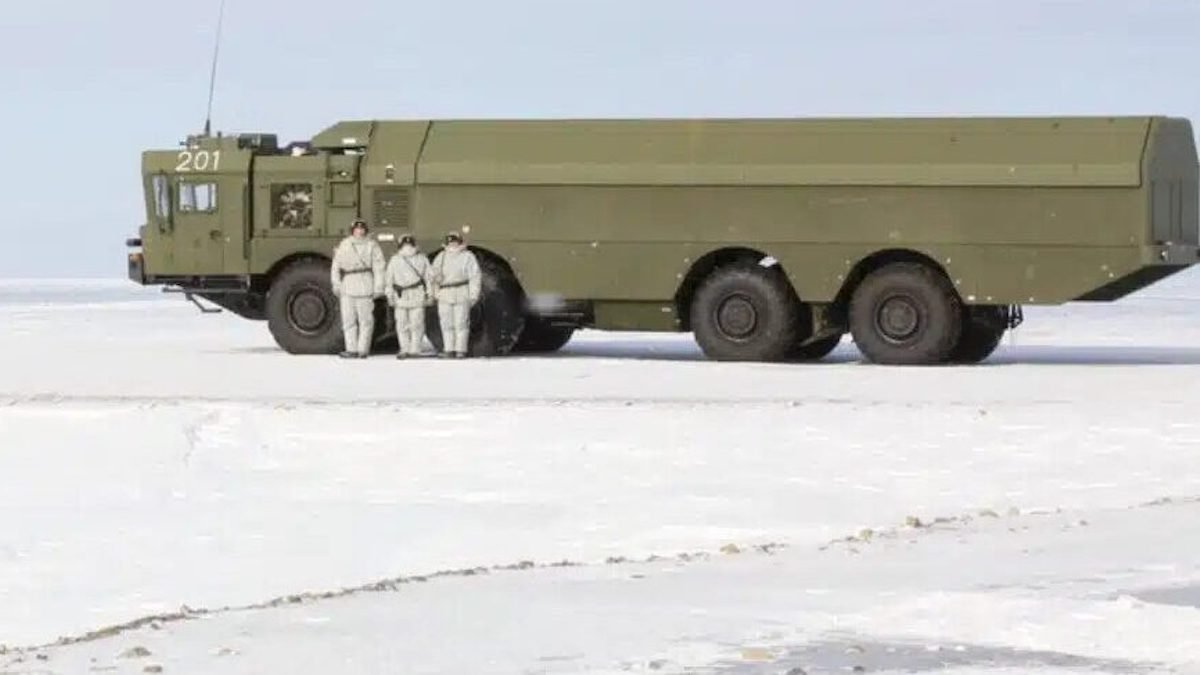
Russia, meanwhile, has revitalized its Arctic posture, reactivating dozens of Soviet-era bases and concentrating strategic assets on the Kola Peninsula. Moscow is investing in asymmetric capabilities, including the Nudol anti-satellite system, the nuclear-powered Burevestnik cruise missile, and Poseidon underwater drones—systems designed to complicate or overwhelm existing US missile defenses. Both nations have also poured resources into intelligence, surveillance, and reconnaissance (ISR), with US bases in Anchorage and Fairbanks—Elmendorf-Richardson, Eielson Air Force Base, and Space Force and Coast Guard installations—serving as critical nodes.
China-Russia Cooperation Reshapes the Arctic
In recent years, China and Russia have expanded joint activities in the Arctic, including strategic bomber patrols near the Alaska Air Defense Identification Zone, combined coast guard operations, and naval patrols in the North Pacific. They have also engaged in dual-use seabed mapping and maritime research that supports both scientific objectives and undersea military operations, including submarine navigation and ISR. This cooperation reinforces Russia’s existing advantages while enabling new forms of asymmetric capability development, particularly in underwater and uncrewed domains.
Russia’s missile activities have grown more destabilizing since its full-scale invasion of Ukraine. Moscow has conducted increasingly frequent missile tests across the Arctic, including major, publicized nuclear-delivery tests spanning air, land, and maritime domains. The development of hypersonic, highly maneuverable delivery systems—such as the Avangard hypersonic glide vehicle (HGV) and the Kh-47M2 Kinzhal air-launched ballistic missile—challenges traditional radar-based tracking. These systems operate at speeds between Mach 10 and Mach 20 and can be launched from unpredictable platforms like aircraft or rockets, defeating sectored, non-360-degree radar coverage.
These trends have direct implications for Indo-Pacific security. The Arctic’s missile defense architecture is increasingly linked to the broader network of US alliances and partnerships in Asia, including those with Japan, South Korea, and Australia. For instance, the US offer of PAC-3 missile production licenses to Ukraine underscores the global demand for advanced interceptors, while the Australia-Fiji defense pact signals shifting Pacific security dynamics. Meanwhile, China’s submarine missile tests and the failure to denuclearize North Korea highlight the persistent missile threats that Arctic early warning systems must address.
As the Arctic becomes a more contested domain, Washington must design its High North policy to protect not only American territory but also the extended deterrence networks that underpin stability in the Indo-Pacific. The region’s evolution from a Cold War frontier to a modern missile defense corridor demands a clear-eyed strategy that accounts for both Russian assertiveness and Chinese ambitions.