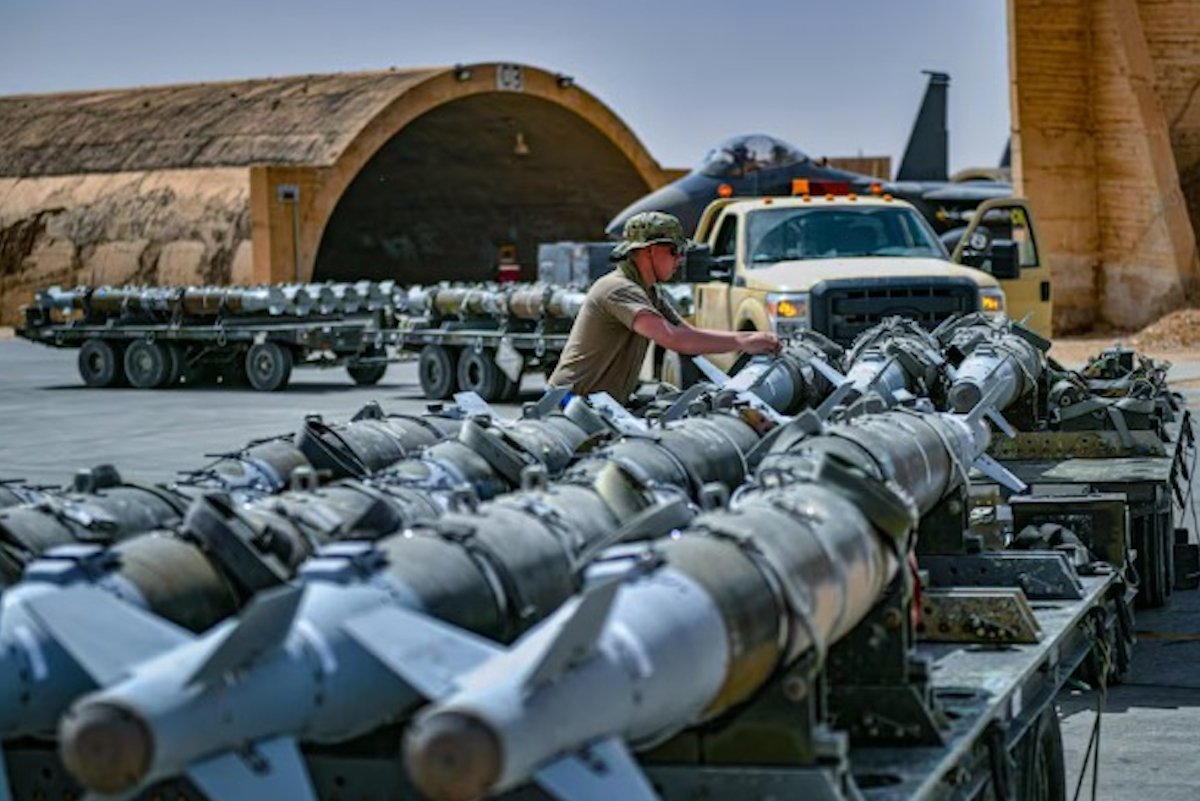
The United States is racing to modernize its defense industrial base for a potential multi-front conflict in the Indo-Pacific, but a new report from the Center for Strategic and International Studies (CSIS) warns that money and contracts alone may not close the gap with China's manufacturing machine.
Released this month, the CSIS assessment notes that the Department of Defense (DoD) has made significant strides since the Iran War, adding 5,000 new vendors in fiscal year 2025 and pushing nontraditional contract obligations past $120 billion. The Pentagon has also secured multiyear agreements to replenish munitions and shifted toward a “high-low mix” strategy, aiming for low-cost munitions to constitute 70% of requested units by fiscal year 2031. Additionally, Washington committed $7.6 billion between 2025 and 2026 to build a secure “mine-to-magnet” rare earth supply chain outside Chinese control.
Yet the report cautions that institutionalizing true readiness will take years. Manufacturing lead times for critical weapons still exceed three years, and the projected defense budget request of 4.6% of GDP for fiscal year 2027 may not be enough to outproduce China in a sustained conflict. The decisive test, analysts say, is whether the US can move matériel across the Pacific and replace losses faster than a real war consumes them.
China's Industrial Advantage and Shared Vulnerabilities
The Heritage Foundation's January 2026 TIDALWAVE report offers a stark comparison. It describes the US Indo-Pacific munitions system as structurally fragile, reliant on finite stockpiles that could face an extreme “Triple Bind” supply failure within 25 to 120 days due to a two-year production lag, critical bottlenecks in rocket motors, and heavy dependence on imported Polish TNT.
In contrast, China's state-owned conglomerates—such as NORINCO—operate automated, robotic “smart factories” that maintain resilient peacetime production with a 150% to 250% wartime surge capacity. This allows Beijing to sustain prolonged combat depth. However, the report notes that both nations share profound chokepoint vulnerabilities: the US is deeply dependent on Chinese rare earth minerals, while China's highly centralized, rail-dependent distribution networks remain susceptible to targeted cyber warfare and advanced semiconductor export sanctions.
The comparison suggests that China holds the advantage in sustained regional munitions production, but both sides remain vulnerable to targeted disruption at critical industrial and logistical chokepoints. As previous analysis has shown, even a temporary US production shortfall could embolden Beijing.
Scenarios of Conflict: Korea, Taiwan, or Both
In a pre-emptive strike against North Korea, Nicholas Anderson and Daryl Press estimate in a 2025 Texas National Security Review article that a highly localized operation would rely on 24 long-range B-1 and B-52 bombers carrying 528 air-launched cruise missiles, as well as 120 sea-launched Tomahawk cruise missiles. US ground forces on the Korean Peninsula would contribute 48 M270A1 precision-guided Multiple Launch Rocket Systems to the immediate counterbattery campaign against North Korean artillery.
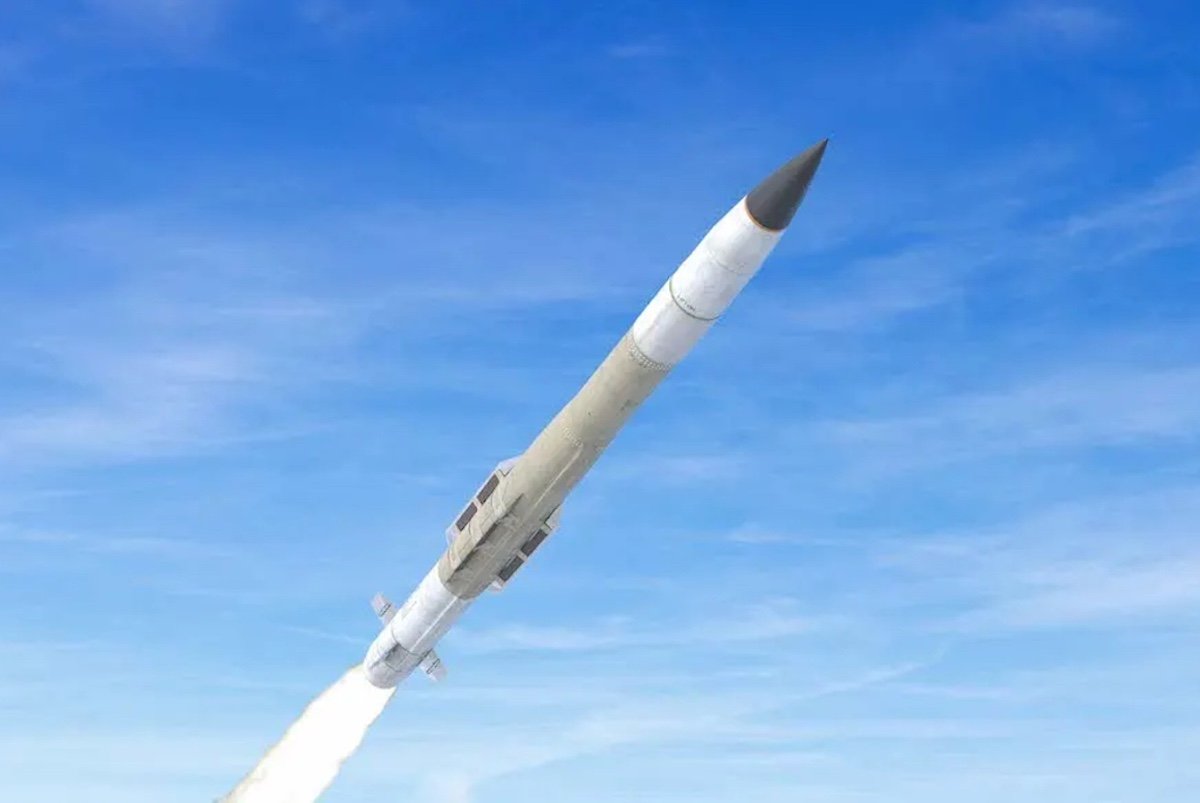
That expenditure pales in comparison to the cost of a potential US-China conflict over Taiwan. Seth Jones estimates in a May 2026 CSIS report that in the first seven days of such a conflict, the US military would expend 3,000 to 5,000 baseline Joint Air-to-Surface Standoff Missiles (JASSMs), 3,500 to 4,000 JASSM-Extended Range (JASSM-ER), and 400 to 1,000 Tomahawk cruise missiles, severely depleting or exhausting key US stockpiles almost immediately. A simultaneous or near-simultaneous Korea–Taiwan conflict would split scarce US missiles, bombers, and logistics, forcing support for one front at the expense of the other.
This raises the question of whether US munitions production can offset China's industrial advantage and replace wartime losses quickly enough to alter the regional balance. The US deterrence plan against China is already strained by industrial and political gaps.
Logistics Vulnerability in the Pacific
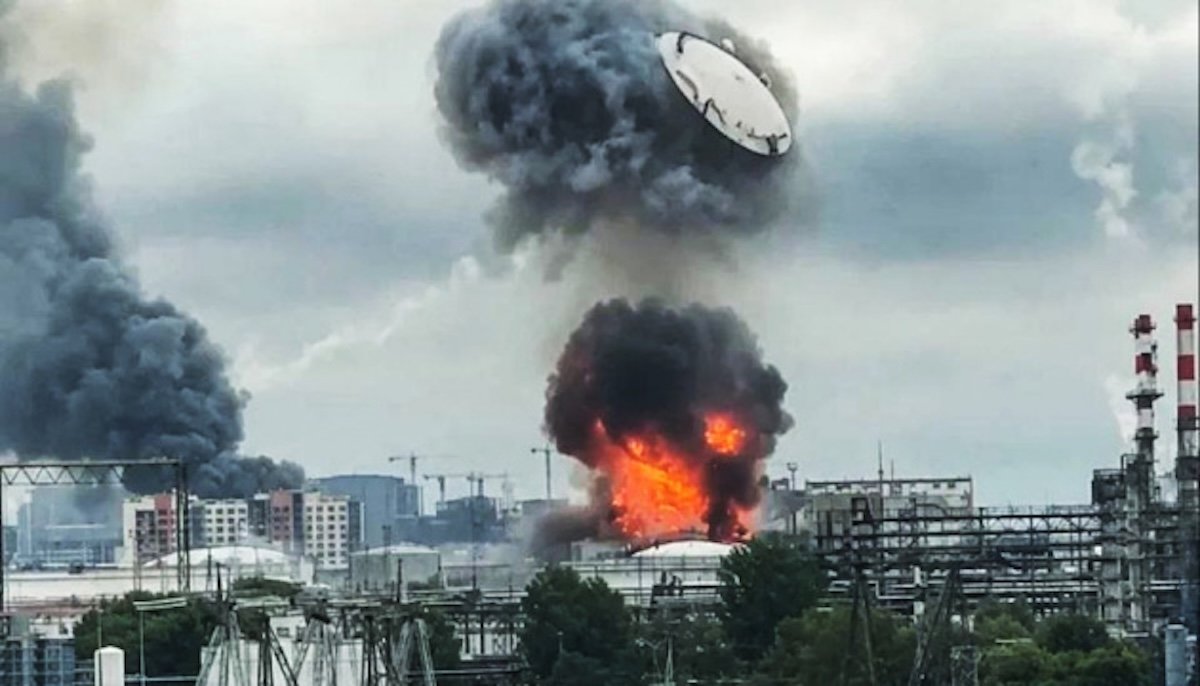
Even if the US consolidates its supply chains and expands munitions production, those gains may not translate into combat power if vulnerable ports, transport networks, and forward bases cannot deliver and sustain the weapons under Chinese attack. Thomas Shugart III and Timothy Walton argue in a January 2025 Hudson Institute report that chronic underinvestment in Indo-Pacific combat logistics has left US forward bases unhardened and acutely vulnerable. Chinese precision strikes could disable interdependent fuel lines, aboveground storage tanks, and munitions stocks essential for sustained flight operations.
Kelly Grieco and her co-authors reach a similar conclusion in a December 2024 Stimson Center report, warning that Chinese missile attacks on forward-base runways could sever logistics and refueling links. Prolonged runway closures could immobilize aerial tankers and restrict the operations of short-range fighters dependent on in-flight refueling.
The bottom line, as the CSIS report underscores, is that the US industrial clock is ticking. While Washington has made real progress, the gap between production promises and battlefield reality remains wide—and China's industrial machine is not waiting.