The deepening partnership between North Korea and Russia is not a conventional alliance. It is a pact rooted in a shared willingness to accept staggering human costs—a reality that defense planners in Washington and Seoul must now confront directly.
Unlike the collective West, where public opinion constrains military adventurism and economic sacrifice, the regimes of Kim Jong Un and Vladimir Putin operate from a fundamentally different calculus. They view liberal norms—human rights, rule of law, aversion to casualties—as strategic vulnerabilities to be exploited.
The Necropolitics of the Pyongyang-Moscow Axis
Political theorist Achille Mbembe's concept of necropolitics—the power to decide who lives and who dies—offers a useful lens. In a 2003 essay, Mbembe argued that the ultimate expression of sovereignty lies in dictating mortality. Applied to North Korea and Russia, this framework reveals a partnership centered not on trade or shared prosperity but on the exchange of weapons, ammunition, and soldiers to destabilize regions.
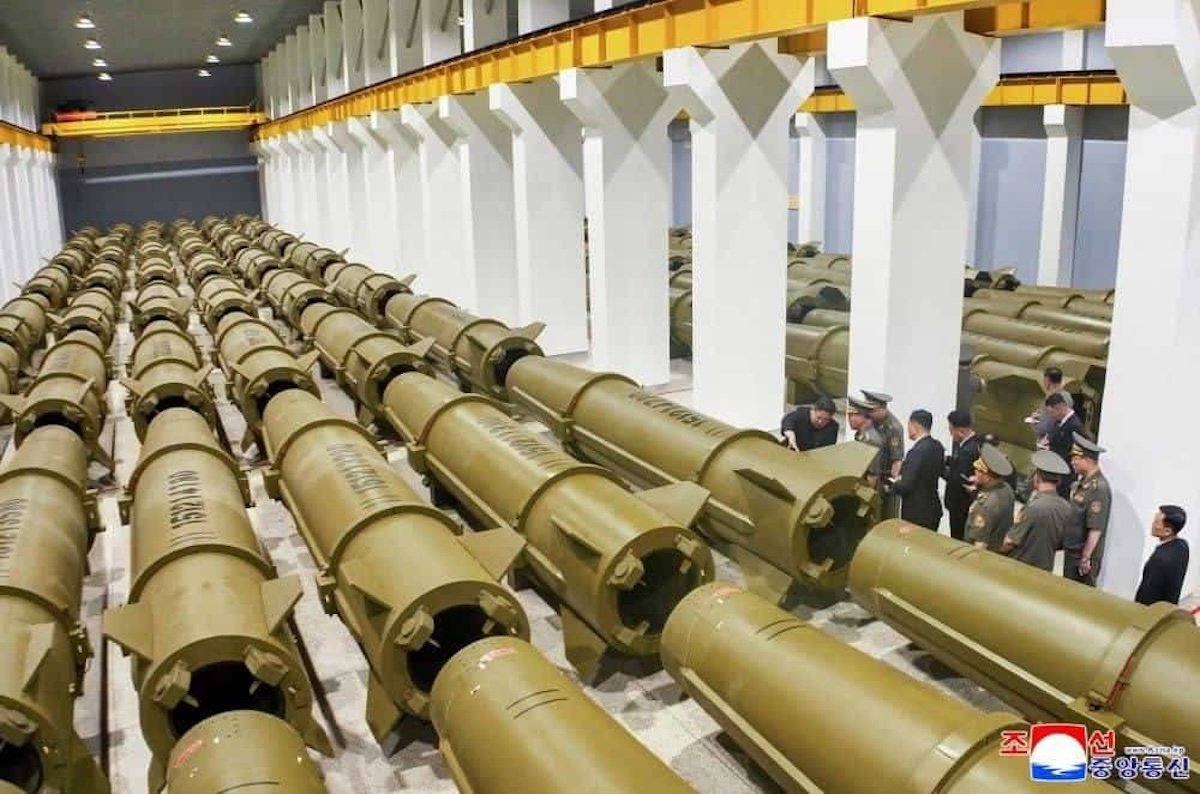
Kim Jong Un supplies artillery shells, troops, and landmine sweepers to Putin's war in Ukraine in return for military technology. This is not arms sales between democracies, where such transactions are one component of a broader relationship. For Pyongyang and Moscow, the trade in instruments of death is the relationship.
Both regimes maintain a permanent wartime footing. More than 350,000 Russian soldiers have died in Ukraine—a figure that echoes Stalin's disregard for life during World War II. While Western analysts often interpret such losses as signs of weakness, they miss a crucial point: dictators do not value individual lives the same way democratic publics do.
In North Korea, the state's grip extends to a vast political prison system, the elimination of rivals (including Kim's half brother), and mandatory military conscription that renders young men as what Mbembe calls the “living dead.” Malnourishment and precarious socioeconomic conditions define life for many in both countries. Russian dissidents routinely “accidentally” fall from windows or are sent to Siberian gulags.
This necropolitical worldview changes the risk calculus on the Korean Peninsula. While most pundits dismiss the likelihood of a full-scale North Korean invasion of South Korea, they underestimate Kim's tolerance for reckless action. He has already sacrificed thousands of his own soldiers in a distant European theater. There is no reason to assume he would not do something equally dangerous closer to home.
South Korea, by contrast, has matured into a robust liberal democracy with strong institutions and the rule of law. But that very strength may create a blind spot. As the international push to denuclearize North Korea has failed, the gap in strategic thinking between Seoul and Pyongyang has only widened.
Defector testimony and human rights reports consistently show that Pyongyang has a radically different conception of the value of individual human life. Kim is not irrational—but he operates from a vantage point that only a handful of other dictators understand. That makes him unpredictable in ways that standard deterrence models fail to capture.
Washington and Seoul must therefore prepare for wild and dangerous scenarios on the peninsula. This means war-gaming outcomes that assume a higher tolerance for casualties and escalation than Western planners typically consider. It also means recognizing that the North Korea-Russia partnership, while lacking the dynamics of 21st-century alliances, is durable precisely because it is built on shared illiberal values.
As Western sanctions on Russia keep backfiring, the Kremlin's willingness to absorb pain only reinforces the bond with Pyongyang. Both regimes see economic hardship as a manageable cost, not a deterrent. For Seoul and Washington, the lesson is clear: prepare for the worst, because Kim Jong Un and Vladimir Putin are playing a different game entirely.