Sixty years after the United States defeated the Soviet Union in the first moon race, a new lunar contest is unfolding—this time between Washington and Beijing. While the Apollo missions planted flags and collected rocks, they left no infrastructure for long-term habitation. Today's race is fundamentally different: both superpowers aim to establish permanent bases at the lunar south pole, drawn by deposits of water ice that can sustain life and be converted into rocket fuel.
Water ice is not evenly distributed, and the number of viable sites for human outposts is limited. This scarcity could transform scientific competition into a geopolitical struggle over territory. As US defense planners race against China's industrial capacity in the Indo-Pacific, the moon may become another arena for strategic rivalry.
Who Has the Capability?
Only three nations—the United States, Russia, and China—can currently launch humans into space using their own rockets. Despite the globalization of spaceflight, with some 20 countries capable of orbital launches, human space travel remains extraordinarily difficult. Continuous supplies of food, water, heat, and air leave no margin for error.
China, despite starting decades later, has made rapid strides. Its Tiangong space station, operational since 2021, hosts rotating crews. The Chang'e lunar program has returned samples from the Moon's far side, deployed relay satellites, and explored the surface with rovers. Partnering with Russia, China is now the primary competitor to the US-led Artemis program.
The South Pole Challenge
The lunar south pole is a harsh environment. Ice lies in permanently shadowed craters where temperatures plunge below -200°C. Mountaintops near the pole offer near-constant sunlight, but relay satellites are needed for communication when they dip below the horizon. Solar power is unreliable, so nuclear fission may be required to keep bases operational.
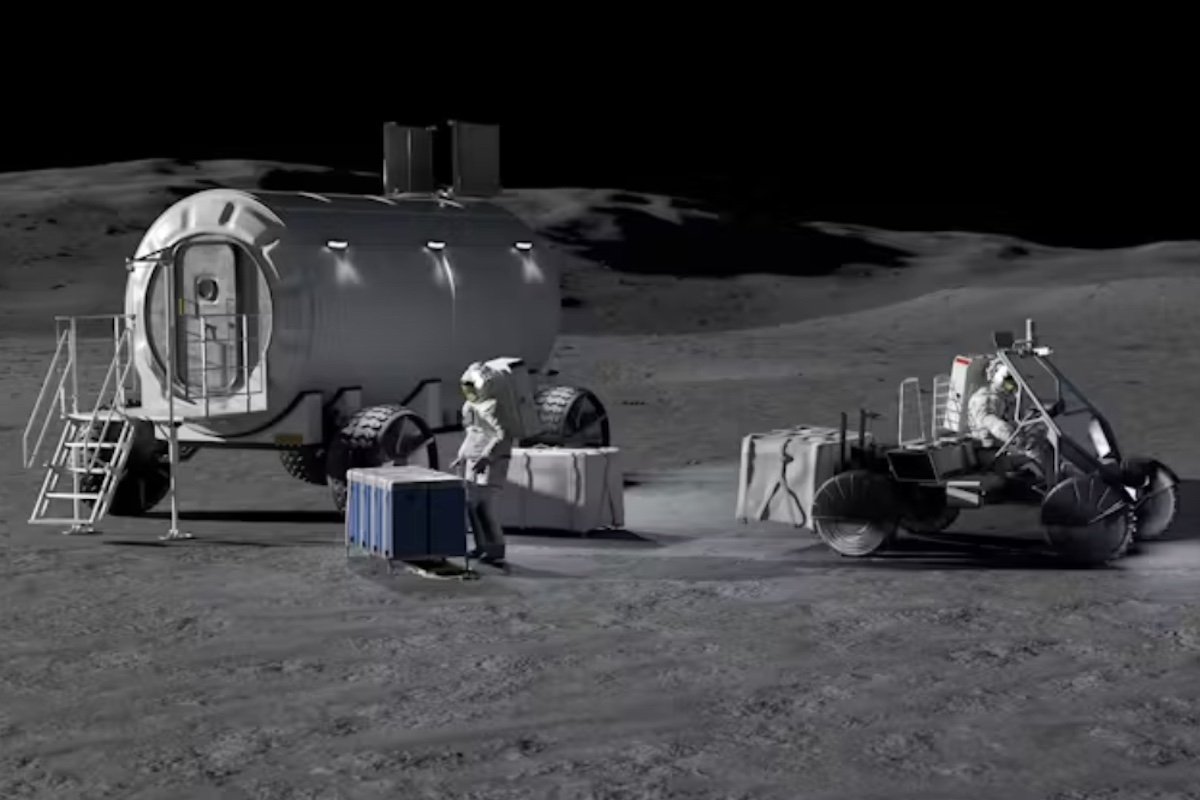
NASA's Artemis program plans to use the Orion spacecraft and separate landers being developed by Blue Origin and SpaceX. A critical test in 2025 will see Orion dock with one or both landers in low Earth orbit. By 2029–2032, key infrastructure like power and communications systems should be in place, with drilling and digging preparing the ground for a modular base that could be partially underground for radiation protection.
China, meanwhile, is developing its own lunar landing vehicle, Lanyue, and plans to build a base with Russian assistance. The competition extends beyond flags and footprints: it is about securing access to resources that could enable deeper space exploration.
This lunar contest mirrors broader geopolitical tensions. As ASEAN remains silent on the South China Sea ruling, the moon may become another domain where rules of engagement are unclear. Without international agreements on lunar resource rights, the race could turn into a land grab.
The next decade will determine whether the moon becomes a site of cooperation or conflict. For now, both the US and China are investing heavily, and the stakes are higher than ever.