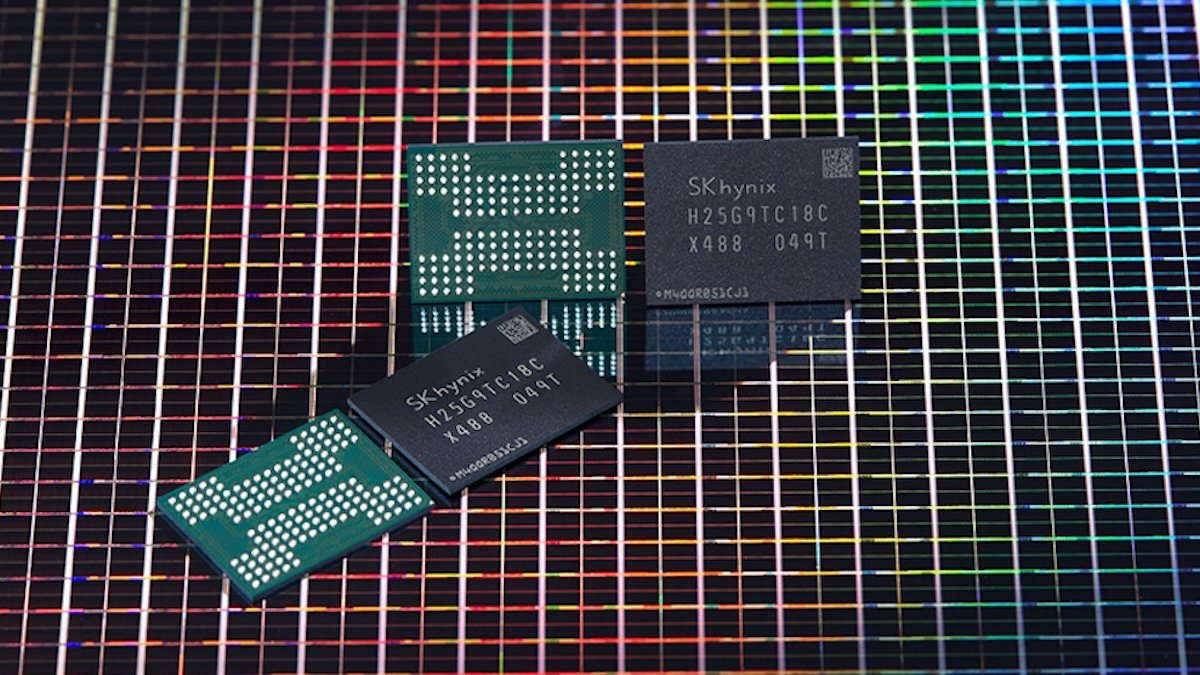
For a quarter-century, the price of computer software and accessories declined by roughly 5% annually, serving as the modern economy's most reliable disinflationary anchor. In late 2025, that anchor snapped. A technical note from three US Federal Reserve economists, including a serving Governor until the day before publication, revealed that this category posted a 73% annualized spike over four months. Its contribution to core inflation registered nine standard deviations above the historical mean.
A mere 1.2% slice of the consumption basket was adding roughly two-thirds of a percentage point to the Fed's preferred inflation gauge. The authors were cautious, but their caution itself is telling. A quarter to well over half of the contribution may be measurement error: flash-memory prices leaking into a software index, mismatched CPI and PCE baskets, and subscription software and AI upgrades that old matched-model methods cannot capture.
The old disinflationary line has not merely turned—it has lost definition. The index no longer cleanly measures software. It measures a collision between memory, billing architecture, unpriced AI quality, and statistical plumbing. This is not a footnote to the inflation story; it is the story itself.
Japan's Digital Trade Deficit: A Mirror of the Shock
Halfway across the world, this same force is violently reshaping current accounts. Japan, the nation that taught the world how to export electronics, posted a record 7 trillion-yen digital deficit for fiscal 2024, tripling over a decade. It now bleeds over 10 trillion yen annually to foreign cloud and AI platforms, backed by a meager 4 trillion yen in digital exports. The Trade Ministry projects this gap will hit 18 trillion yen (US$113 billion) by 2035. In a worst-case scenario, it reaches 28 trillion yen, eclipsing Japan's entire oil and gas import bill. The country that once sold the world its technology now rents it back, and the premium is engineered to rival the cost of fossil fuels.
These are not two separate stories. They are one shock, seen through two accounting systems. Technology, which economists trained themselves to file under productivity, progress, and deflation, is starting to behave like energy: a strategic input, a price shock, a balance-of-payments channel, a geopolitical exposure. This shift is already affecting central bank decisions, as seen in the Bank of Japan's struggle to navigate inflation amid global pressures.
For half a century, the global economy's most critical chokepoint was the Strait of Hormuz. Energy was the price that mattered most. Today, that map is obsolete. Today's bottlenecks are not just physical straits and pipelines; they are memory packaging lines in Gyeonggi, logic fabs in Hsinchu, opaque cloud regions, and software billing gateways. These new chokepoints do not flash on petrol station signs, nor do they offer politicians an easy villain or markets a clean ticker. Their frictionless, invisible nature is precisely what makes them so dangerous.
Macroeconomists may continually rework their models to argue that technology suppresses inflation, but the reality is the opposite. Through compute shrinkflation, capacity dilution, time dilation, and tiered API access, technology platforms are extracting significantly more capital for the same or less utility. Traditional inflation indices are entirely unequipped to capture this stealth pricing power. Yet these measurement failures must not obscure the fundamental structural shift: AI is an inherently expensive, highly inflationary technology, regardless of how long legacy policymakers take to realize it.
The Invisible Six-Trillion-Dollar Segment
Size is where this shift must be anchored, precisely because it is the variable most easily waved away. The legacy intuition assumes energy is the heavy, serious geopolitical input, while technology remains a consumer category adjacent to entertainment. That framing is now obsolete. According to Gartner, the world will spend $6.31 trillion on information technology in 2026, compounding at 13.5% in a single year. Compare this to the physical world: the International Energy Agency expects total global investment across all energy sectors (oil, gas, coal, nuclear, renewables, grids, and storage) to reach roughly $3.4 trillion. Within that total, less than $500 billion is allocated to oil supply, marking a third consecutive year of decline.
Artificial intelligence alone is staggering. Gartner puts worldwide AI spending in 2026 at about $2.5 trillion, up roughly 44%. AI, one subcategory of technology barely visible in national accounts a decade ago, is now being built out at a scale comparable to the entire global clean-energy investment machine and several times larger than annual oil-supply investment. The old hierarchy has inverted. For 50 years, energy was the input technology on which technology depended. Now, technology is becoming one of the forces deciding how energy itself gets built. This dynamic is also driving real yields structurally higher, as the AI boom reshapes capital markets.
The necessary caveat is that IT spending represents a broad market aggregate, whereas the IEA figure measures capital investment. The caveat matters, but it does not rescue the old worldview. This is not an accounting identity; it is a map of economic attention. Technology compounds at double-digit rates; oil investment shrinks; data centers call for power plants; memory prices drive device cycles; cloud bills enter current accounts; AI capex changes electricity forecasts. Even if one refuses to crown technology as the single largest input in the world economy, the weaker claim is already enormous: technology has become one of the largest, fastest-growing, and least-observed macro inputs on earth.
The implications for Asia are profound. Countries like Japan, South Korea, and Taiwan, which built their economic models on hardware exports, now face a new reality where value is captured through software and cloud services. This shift is reminiscent of the cost asymmetry reshaping Indo-Pacific defense, where technology is altering strategic calculations. The bill for this transformation arrives in 12 envelopes—monthly cloud invoices, subscription renewals, and AI licensing fees—that collectively rewrite the rules of global macroeconomics.