BANGKOK — As the United States grapples with its own protracted conflicts abroad, Thailand's new government under Prime Minister Anutin Charnvirakul faces a resurgent insurgency in the country's southern border provinces. The Barisan Revolusi Nasional Melayu Patani (BRN), a separatist group active for over 20 years, has escalated its campaign of bombings, arson, and targeted killings since the start of 2026, testing the resolve of Bangkok's policymakers.
The conflict, centered in the majority Malay-Muslim provinces of Pattani, Yala, Narathiwat, and parts of Songkhla, has long been a low-intensity struggle. However, recent months have seen a marked increase in the scale and coordination of BRN operations. On January 11, the group executed one of its most complex attacks to date, detonating large improvised explosive devices (IEDs) at ten PTT petrol stations and adjacent 7-Eleven stores across three provinces. The attacks, carried out between 00:50 and 01:30, involved teams of around ten rebels each, with the entire operation mobilizing several hundred operatives under tight security. Remarkably, the group took precautions to avoid civilian casualties, firing warning shots and ordering evacuations before the blasts, which resulted in only minor injuries to five civilians and one police officer.
Coordinated Campaign and Propaganda Push
BRN's tactics have evolved beyond isolated strikes. In February, a massive IED flipped an eight-ton armored personnel carrier in Yala's Bannang Satar district, injuring seven soldiers. In late March, a similar device in Narathiwat's Ra-ngae district wounded five police officers. The group has also intensified arson attacks, targeting heavy vehicles at road construction projects to disrupt the regional economy. These actions are complemented by a sophisticated propaganda campaign. On the night of February 5-6, ahead of Thailand's national elections, BRN supporters hung banners across all four provinces reading, in Thai, Malay, and English: "There can be no democracy under colonial occupation" and "National liberation is the precondition for peace."
The insurgency's resilience is rooted in its deep community ties. BRN's military wing, a generational enterprise embedded in Malay-Muslim villages, enjoys the sympathy of many locals, even if only a minority actively supports it. The group frames its struggle as a fight against "Siamese" colonialism, targeting symbols of what it calls predatory Sino-Thai capitalism, such as the state-owned PTT corporation and the Charoen Pokphand Group, which owns the 7-Eleven franchise. This narrative resonates in a region where the historical Muslim sultanate of Patani once ruled, and where economic disparities persist.
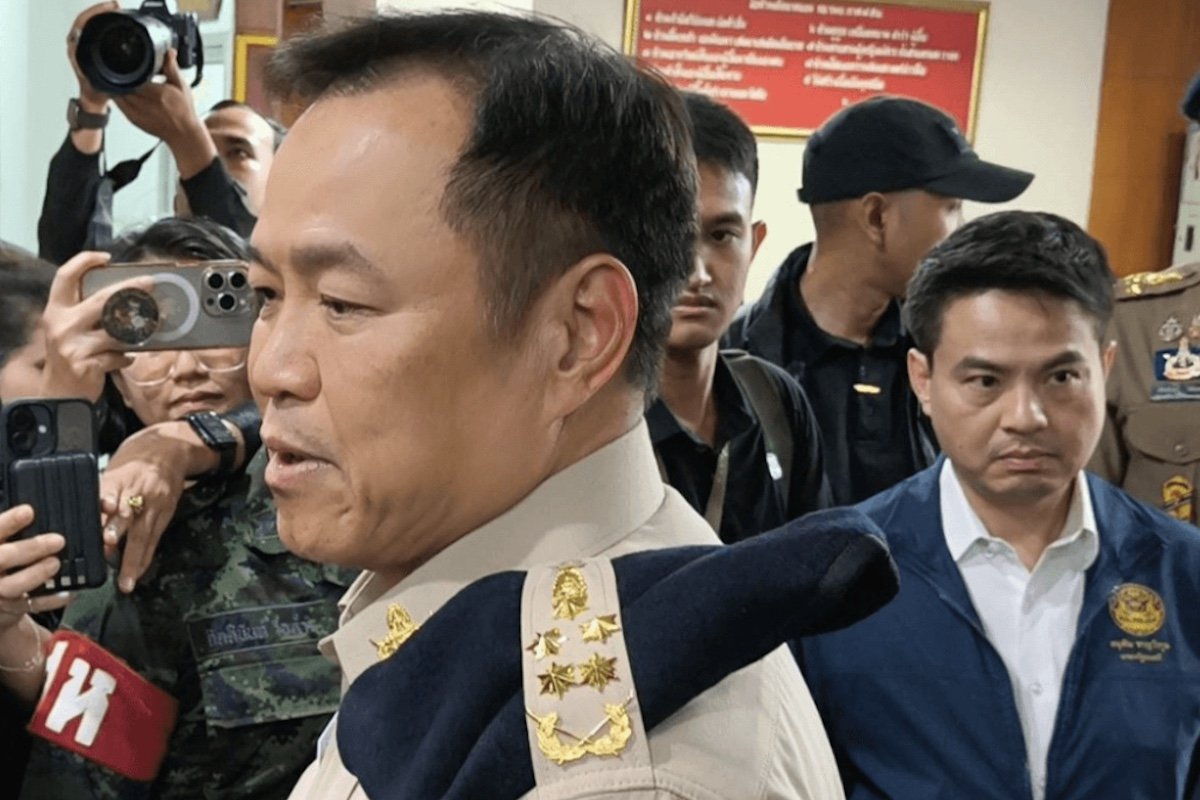
Prime Minister Anutin, who took office in April, inherits a conflict that has defied resolution for decades. A peace process facilitated by neighboring Malaysia since 2013 has been largely disregarded by BRN, which continues to recruit new members. The Thai security forces, numbering over 80,000 in the region, face a constant but manageable stream of casualties. The new government's approach remains unclear, but the insurgency's recent escalation suggests that Bangkok cannot afford to ignore the southern provinces any longer.
The broader regional context adds complexity. Thailand's southern conflict is one of several long-running insurgencies in Southeast Asia, including those in the Philippines and Myanmar. As the United States shifts its focus to the Middle East and the Indo-Pacific, allies like Thailand must navigate their own security challenges. The Anutin government's response will be closely watched, both domestically and internationally, as it seeks to balance military pressure with political engagement.