For decades, Southeast Asia has profited from great-power competition by keeping one foot in Washington's camp and the other in Beijing's. ASEAN governments attracted investment, expanded trade, and preserved diplomatic flexibility by maintaining good relations with both superpowers. But the accelerating race for artificial-intelligence dominance is upending that calculus, as the US and China build competing technology networks that may leave little room for fence-sitting.
The emerging divide is visible in the institutions taking shape around AI. Singapore and the Philippines have joined the US-led Pax Silica initiative, which aims to secure trusted supply chains for advanced technology. Indonesia, meanwhile, is a founding member of the World Artificial Intelligence Cooperation Organization (WAICO), launched in July 2026 under China's initiative, along with Cambodia, Laos, Malaysia, and Myanmar. These affiliations do not mean ASEAN has split into opposing camps, but they reveal how the region is being drawn into different institutional networks as AI competition intensifies.
AI is no longer just another commercial sector. Its foundations include advanced semiconductors, cloud computing, data infrastructure, software, electricity, and specialized expertise. Control over these assets can shape access to markets, the security of critical systems, and the capacity to innovate. Decisions that appear purely technical today can carry strategic consequences tomorrow.
Neutrality's paradox
For ASEAN, the danger is not only that Washington or Beijing might demand political allegiance. More subtly, each power can influence the choices open to governments and businesses through export restrictions, technical standards, investment conditions, and access to essential infrastructure. A country may remain diplomatically nonaligned while becoming technologically dependent on an ecosystem it cannot easily leave.
That is the paradox of Southeast Asia's AI moment. The region's traditional hedging strategy rests on preserving options, yet technological dependence can gradually eliminate them. Neutrality remains valuable, but without the means to manage such dependence, it risks becoming a liability rather than a source of strength.
The US and China are building influence through different, though not mutually exclusive, approaches. Pax Silica emphasizes trusted supply chains and cooperation across strategic technologies, while WAICO offers a framework for international AI cooperation and governance. Neither initiative is an identical or inherently exclusive bloc, but both show that AI competition increasingly involves organizing international networks as well as developing better algorithms.
Export controls as leverage
Recent export-control developments illustrate the stakes. On October 16, China proposed adding 23 AI technologies to its export-control catalog as part of a broader revision covering 40 technologies across AI, biotechnology, and solar energy. The proposal includes restrictions affecting the overseas deployment of certain AI models involving sensitive technologies. This followed years of US restrictions on advanced semiconductor exports to China. The policies are not identical, but both treat access to strategic technology as an instrument of state power.
Consider a Southeast Asian company operating a data center with American chips, foreign cloud software, and services connected to Chinese technology suppliers. Such an arrangement may be commercially efficient. But any change in export rules, licensing requirements, or security restrictions could disrupt access to components or services, even if the company has no dispute with either government.
Technology systems are interconnected, and replacing one component may require changes to software, data architecture, cybersecurity arrangements, and employee training. Once these systems are embedded in public administration or industrial production, switching suppliers can be expensive and disruptive. An initial decision to adopt a technology may therefore constrain future choices long after the original investment is made. This is how economic interdependence can become geopolitical leverage: not necessarily by forcing another country to obey, but by making certain choices prohibitively costly. ASEAN's challenge is to recognize that exposure before it hardens into dependence.
Investment without tech autonomy
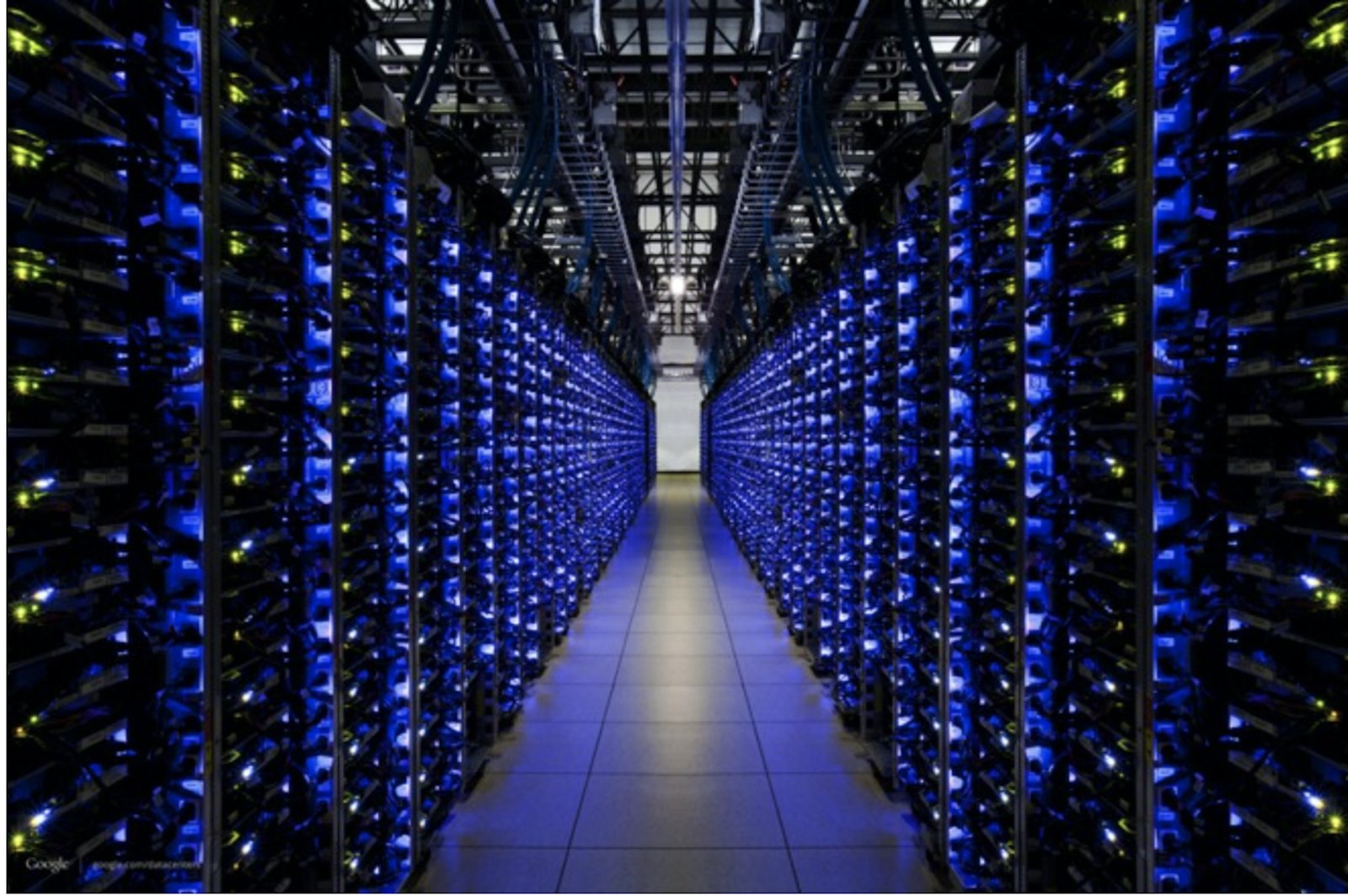
Southeast Asia has good reasons to welcome the AI boom. A growing digital economy, strategic location, and expanding infrastructure make it attractive to global technology companies. Cushman & Wakefield reported in August that Asia-Pacific's data-center development pipeline reached 26.5 gigawatts in the first half of 2026, with Southeast Asia accounting for approximately half of the region's capacity under construction. Malaysia had 1,039 megawatts under construction, while Jakarta's development pipeline reached 1,699 megawatts.
These figures show the region's growing importance to the global AI economy. They do not, however, establish that Southeast Asia is gaining control over the technologies powering the expansion. Data-center capacity is not the same as domestic technological capability; a country can host advanced computing infrastructure while relying on foreign suppliers for processors, software, intellectual property, and specialized expertise.
This is especially relevant for Indonesia. Its participation in WAICO could widen opportunities for international cooperation and AI capacity-building, but it also raises questions about the terms of that cooperation. As the US and China vie for influence, ASEAN's challenge is to ensure that its engagement with both sides does not erode the very autonomy it seeks to preserve. The region's traditional hedging strategy may need a new component: building its own technological resilience to avoid becoming a pawn in the AI race.