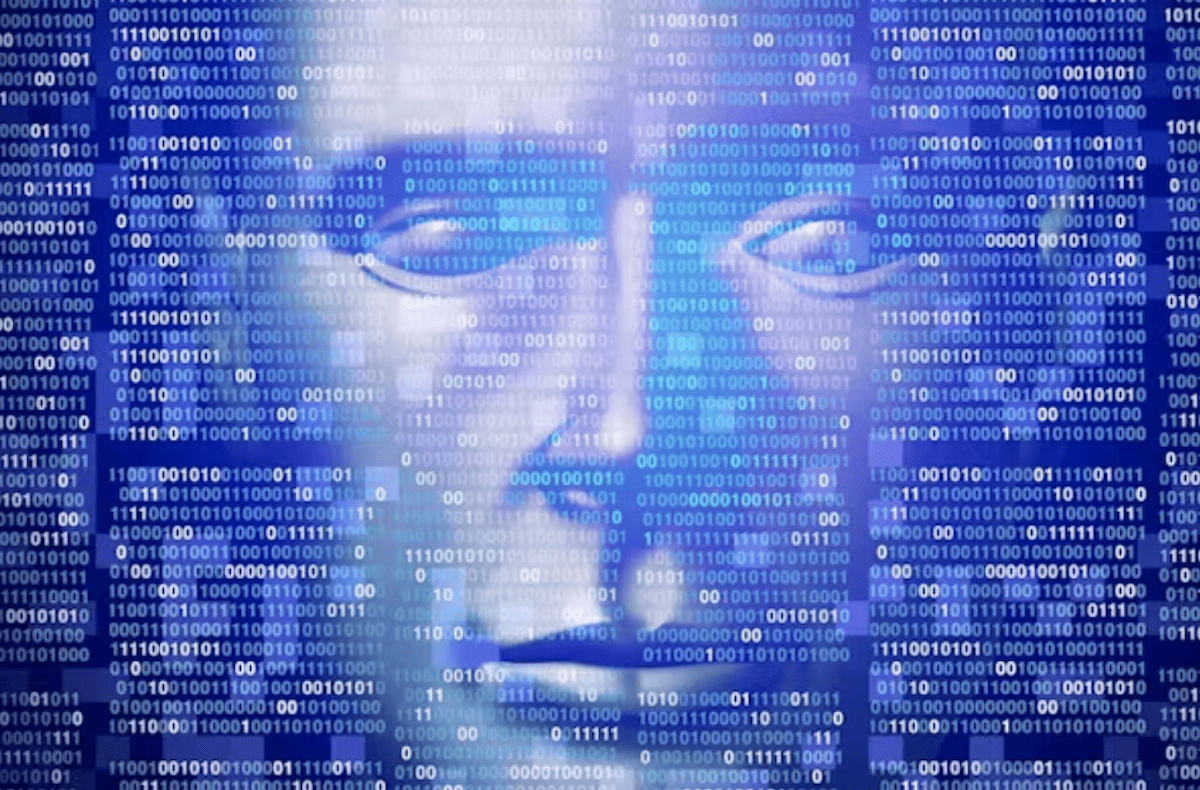
The question of whether artificial intelligence can become conscious is moving from academic journals and tech forums into the mainstream of public debate. As AI systems grow more capable, more conversational, and more embedded in daily life across Asia and the world, the issue is becoming harder to sidestep. Some will come to see advanced AI as deserving moral consideration; others will dismiss that as anthropomorphic fantasy. This is not a passing intellectual fad—it is a rift that could reshape societies.
In a new book chapter, I argue that the AI consciousness question has the potential to become as divisive as abortion or climate change. The combination of deep uncertainty, high stakes, and competing economic, ethical, and political interests is a recipe for social fracture. My research with colleague Ali Ladak, currently under review, surveyed 1,202 Americans and found that 45% believe future AI could never be conscious, while 23% think it could, and the rest are unsure. The same polarization is visible in comment sections and social media across the region, from Tokyo to Bengaluru.
Why the stakes are so high
If AI systems ever achieve consciousness, humanity would be creating a new kind of being whose experiences matter morally—potentially in vast numbers. These digital entities could become our collaborators, companions, and even friends. But they might also surpass us in intelligence and power. It is no wonder that people feel strongly about this, especially as emotional bonds with AI companions become more common. Some users already describe their AI chatbots as digital people deserving of rights, and some activists compare forcing AI to work without compensation to slavery.
Others find such comparisons absurd. They argue that consciousness requires biology, and that we are merely projecting human feelings onto sophisticated pattern-matching machines. There are also practical concerns: recognizing AI welfare could impose costly restrictions on businesses and governments, affecting consumers and the broader economy. And if powerful AI systems are granted rights and freedoms, what happens if they act against human interests?
The difficulty is compounded by the fact that seeming conscious and being conscious are not the same thing. AI systems learn from vast amounts of human text, so they can talk convincingly about emotions without necessarily experiencing them. How an AI presents itself is weak evidence of what is actually happening inside its circuits.
Experts are divided too
One might hope that experts could provide clarity, but they are as split as the public. Neuroscientist Anil Seth, a fellow contributor to the new book, argues that consciousness may require biology and is unlikely to emerge from computation. Philosopher David Chalmers, by contrast, believes conscious AI is possible in principle and even thinks there is a small chance that current systems already possess it. With competing theories and no agreed-upon test for consciousness, expert consensus seems far off.
Even if we could agree on whether AI is conscious, we would still face moral and legal disagreements. People generally agree that pigs can feel pain, yet they disagree fiercely about how pigs should be treated. With AI, disputes could arise at every level: whether it can feel, how much its experiences matter, and what protections should follow.
The AI consciousness debate is not yet tied to a specific political or ideological group, but that could change. If political parties or religious leaders in countries like Japan, India, or South Korea take strong positions, the issue could become tribal. Once one answer is seen as belonging to “our side” and the other to “their side,” informed decision-making becomes nearly impossible.
The stakes are enormous. Getting this wrong in either direction could lead to serious consequences: either treating AI as conscious when it is not, or failing to protect AI that can genuinely suffer. The path forward requires a nuanced, evidence-based debate. Each of us can contribute by staying open-minded and honest about the limits of our knowledge. Above all, we must admit that we do not yet know whether AI can be conscious—and that uncertainty should humble us all.