An old Chinese proverb advises, "Dig the well before you are thirsty." That wisdom is apt for the current global race to lead in artificial intelligence. For decades, the debate over China's rise has been framed in ideological terms: is it communism or capitalism that has propelled the country to become the world's second-largest economy? Both answers miss the point.
Modern China was not built on pure communist doctrine, nor on unfettered free markets. It emerged from a hybrid system that fuses the dynamism of capitalism with the organizational muscle of a strong state. Call it "capunism"—a model that neither endorses authoritarianism nor rejects markets, but accepts that neither governments nor markets alone can meet the demands of the AI economy.
The crucial question of the 21st century is no longer whether capitalism or communism is superior. It is whether a country possesses the institutional capacity to combine strategic state leadership with competitive markets. Capunism is not an ideological compromise; it is a strategic response to the institutional needs of the AI era.
Why the AI age demands a hybrid approach
The AI revolution differs fundamentally from the industrial revolution. It requires an ecosystem that includes advanced semiconductor fabrication, hyperscale data centers, abundant electricity, high-speed digital infrastructure, world-class universities, basic scientific research, cloud computing, and millions of highly skilled engineers. No single market—and no single state—can deliver all these elements efficiently on its own.
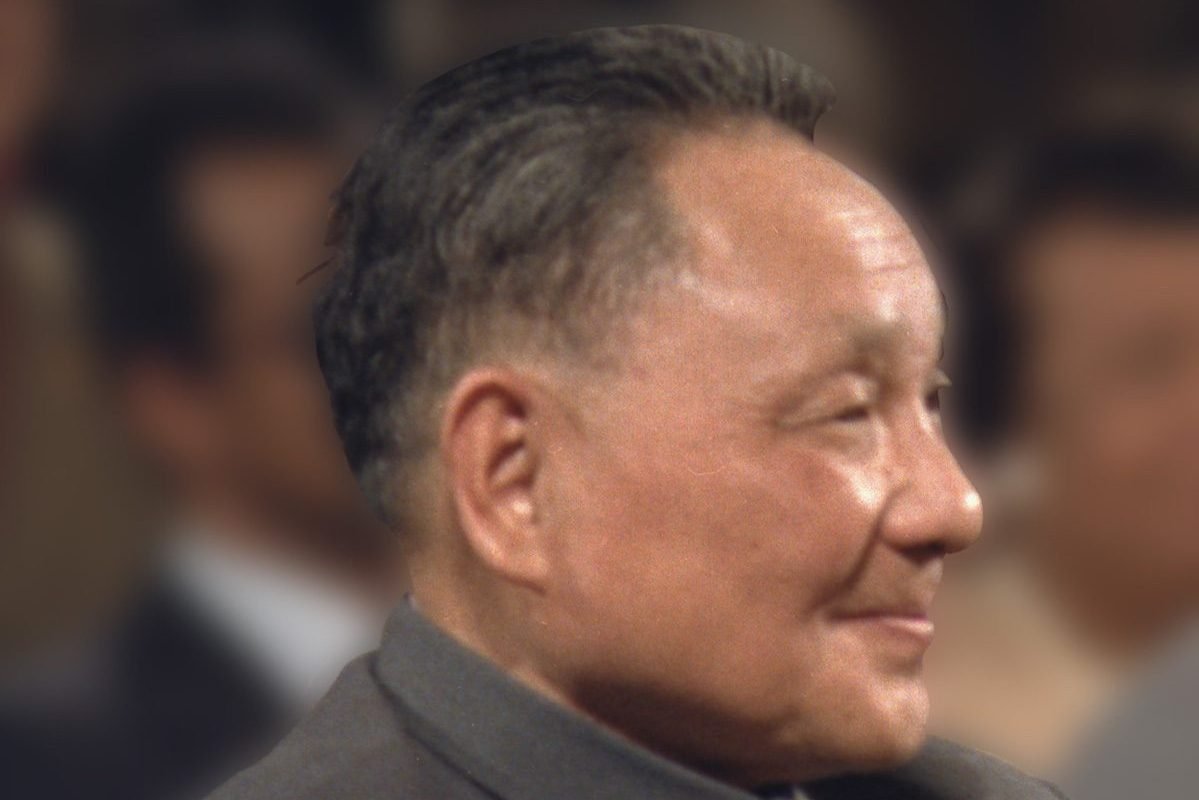
The countries most likely to lead the AI era will be those that combine state capacity with market dynamism, providing long-term strategic direction while allowing entrepreneurs and private firms to innovate. China's growth model offers one example. Since Deng Xiaoping's reforms in the 1980s, the country has paired centralized political authority with expanding markets, private enterprise, and long-term industrial planning. Whether one agrees with its political system or not, China's experience demonstrates that strategic coordination and market competition can coexist.
Recent developments underscore this point. In August, Hugging Face CEO Clément Delangue noted that China is winning the AI race with open-weight models and could catch up to U.S. frontier model makers as soon as this year. Chinese startup Moonshot AI's Kimi K3 outperformed Anthropic's Fable 5 on coding benchmarks. Reports also indicate that China has begun manufacturing deep-ultraviolet (DUV) lithography machines, a critical technology for advanced semiconductor production and one of the last areas where it relied on Western suppliers. These achievements reinforce the power of the hybrid model.
In a pure capitalist system, competitive markets are assumed to allocate resources efficiently. That holds for many sectors, but AI exposes coordination problems that markets alone cannot solve. A single company cannot build an electric grid and a semiconductor ecosystem while training millions of engineers. Such investments require decades of planning and coordination beyond the incentives of individual firms. Markets remain essential for innovation, but innovation increasingly depends on strategic public investment.
The central competition in the AI era will not be capitalism versus communism, but institutional capability versus institutional weakness. Nations that focus on combining strong state capacity with dynamic markets will hold a decisive strategic advantage over those that rely exclusively on market fundamentalism or centralized planning.
This is not just a Chinese story. Across the Indo-Pacific, governments are grappling with how to position themselves. India, under Narendra Modi, has launched national AI missions while nurturing a vibrant startup ecosystem. Japan, under Fumio Kishida, has promoted "Society 5.0" to integrate AI into its aging society. South Korea's Lee Jae-myung has called for state-led investment in AI infrastructure. Even Southeast Asian nations like Indonesia, under Joko Widodo, are experimenting with public-private partnerships in digital infrastructure.
The lesson is clear: the AI age demands a new political system—one that transcends old ideological divides. Countries that embrace hybrid models, combining state capacity with market dynamism, will be best positioned to thrive. Those that cling to outdated frameworks risk being left behind.