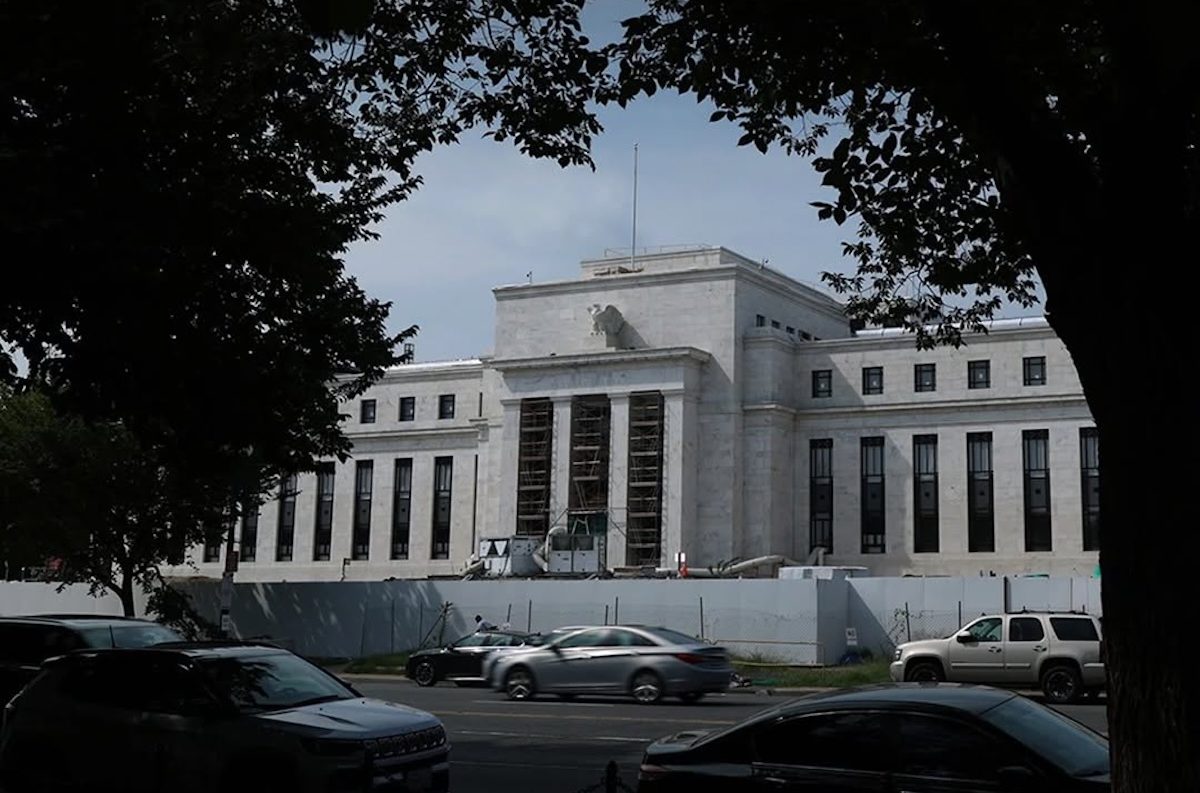
The Federal Reserve on Wednesday raised its benchmark interest rate by a quarter of a percentage point, the first increase in three years, as persistent inflation continues to pressure the U.S. economy. The unanimous 12-0 vote by the Federal Open Market Committee sets the new target range at 3.75% to 4%, making borrowing more expensive for households and businesses.
In a statement, the committee acknowledged that inflation remains elevated, but pointed to solid economic growth, resilient domestic spending, strong productivity, and robust capital investment. "Job gains have kept pace with the workforce, and the unemployment rate has changed little," the statement noted.
Federal Reserve Chair Kevin Warsh, four months into his tenure, described the decision as "sober." "The plain fact is that inflation is too high, and has been for too long," Warsh said at a press conference. He added that recent summer readings do not indicate meaningful improvement in underlying trends, with many categories still posting increases above 3% on both six- and twelve-month bases.
The rate hike comes less than a week after the latest consumer price index showed a 0.4% rise from July to August, with the annual rate at 3.4%. Energy prices, particularly gasoline, have been a major driver. Gasoline alone rose 3.9% in August, and the national average at the pump stood at nearly $4.37 a gallon, according to AAA. Diesel prices hit a record high of $6.31.
The conflict in the Middle East has pushed oil prices above $100 a barrel, reaching $105 on Wednesday. The United States and Iran continue to clash in the Strait of Hormuz, a critical waterway for global petroleum shipments. U.S. Central Command said it destroyed five Iranian crude oil carriers as part of a naval blockade. The war has also spilled into the Red Sea, where Iran-backed Houthi rebels have resumed attacks on commercial vessels and struck targets in Saudi Arabia, raising concerns of a humanitarian crisis.
Political pressure and independence
President Donald Trump had publicly pressured Warsh's predecessor, Jerome Powell, to lower rates, and the administration launched a federal probe into the Fed's headquarters renovations, which was later dropped. The White House did not respond to requests for comment on Wednesday's decision.
Warsh declined to address Trump's previous calls for lower rates, emphasizing the Fed's independence. "Part of the independence of the Federal Reserve is we stay in our lane," he said.
Republican lawmakers criticized the move. Rep. Jason Smith, chair of the House Ways and Means Committee, said in a statement that "interest rates should be coming down, not going up." He praised the Trump tax law for delivering larger paychecks and blamed former President Joe Biden for past inflation. "After years of elevated borrowing costs, a rate increase is the opposite of the relief families and small businesses need," Smith added.
When asked how rate hikes can help when geopolitical events show no signs of improvement, Warsh acknowledged the Fed cannot affect individual prices like oil or food. "But what we can do and will do is ensure that any change in relative prices don't broaden out, don't have second and third order effects on the economy," he said.
The decision has implications beyond U.S. borders, as higher U.S. rates can affect capital flows and currency valuations across Asia. For economies like India and Southeast Asian nations, a stronger dollar and tighter global financial conditions could pose challenges. India's recalibration of its global posture comes amid these shifting dynamics. Meanwhile, the ongoing conflict in the Middle East, which has disrupted energy supplies, is a reminder of the interconnectedness of global markets. Experts argue that the Trump administration's Iran war is lost, leaving Washington without leverage, and the economic fallout continues to reverberate.