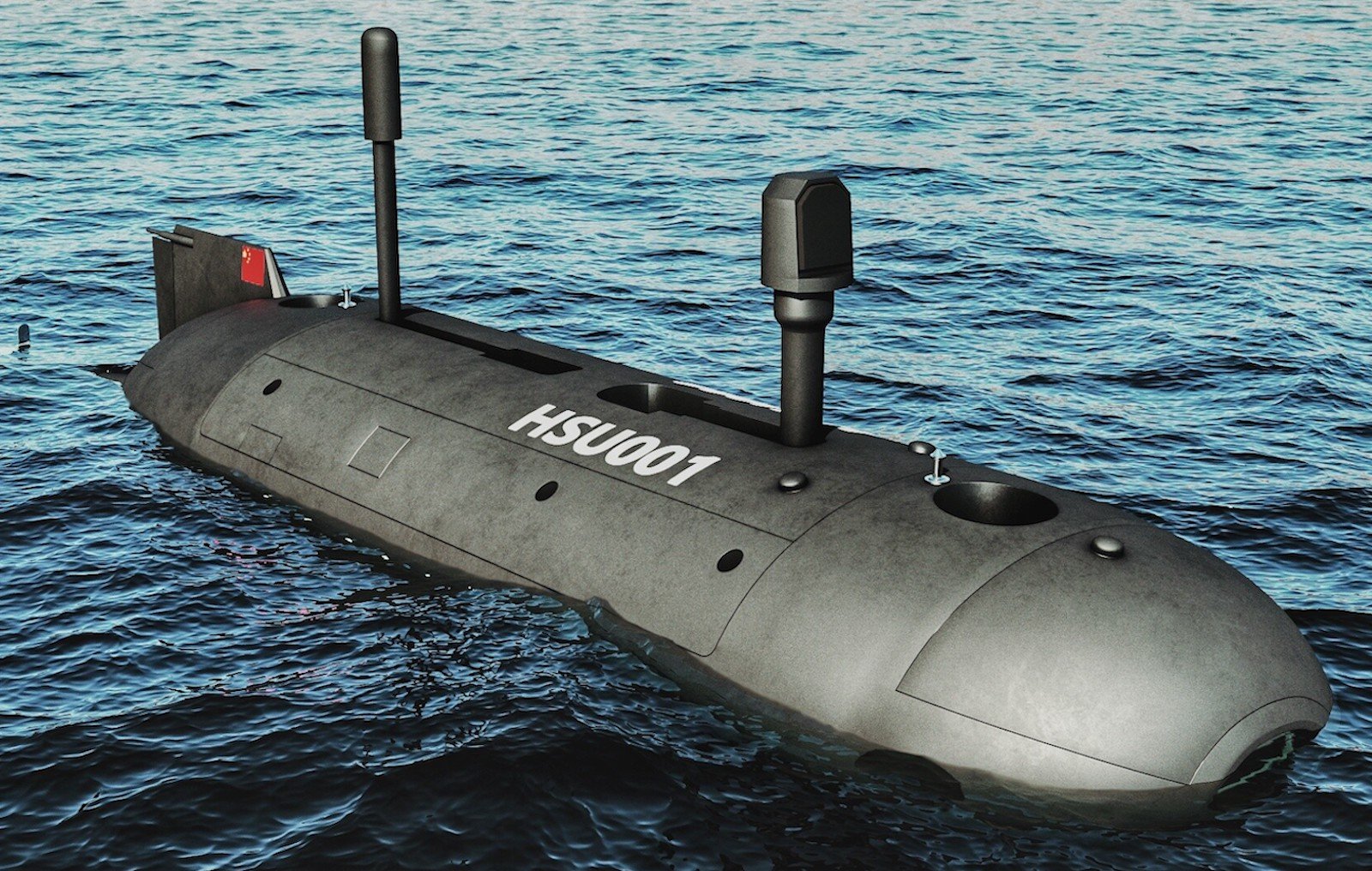
An undersea technological arms race is quietly reshaping the Western Pacific, as Japan prepares to deploy drone-swarmed quantum magnetic sensors to hunt China's rapidly growing, stealthier submarine fleet. According to a defense budget request released in late August, Tokyo plans to develop drone-mounted quantum magnetic sensors by fiscal 2031, responding to rising personnel costs and Beijing's expanding undersea capabilities.
The initiative envisions compact, atomic-level sensors aboard low-cost uncrewed aerial vehicles (UAVs) launched from warships and operating near the sea surface. This would enable persistent surveillance around vital maritime chokepoints where Chinese vessels must pass into the Pacific. While individual magnetic sensors have limited range, deploying them in mass via drones offers a far cheaper, more efficient alternative to crewed patrol aircraft like the P-1.
Quantum physics meets swarm tactics
Traditional magnetic sensors have limited sensitivity, require calibration, and are susceptible to background noise. In contrast, quantum magnetic sensors offer higher sensitivity, fast response times, and higher resolution, as noted in a September 2024 scientific conference paper by Donna Kocak and colleagues. These sensors measure subtle external magnetic fields using the spin properties of subatomic particles, as explained by Benjamin Nathan in a March 2023 paper.
Nathan details that exposure to an external magnetic field alters particle spins within sensor materials, revealing a target's presence. Nitrogen-vacancy diamond and silicon carbide magnetometers rely on atomic vacancies whose photoluminescent spins emit light frequencies that precisely track applied magnetic fields. Alternatively, superconducting quantum interference devices use Josephson junctions to identify submarines through distinct current shifts induced by external magnetic fields.
When deployed in sensor networks on uncrewed platforms, such technology delivers accurate vector coordinates to track underwater threats. A December 2024 article in the peer-reviewed journal Drones, authored by Yongzhao Yan and others, describes how these anti-submarine UAVs would initially launch from patrol aircraft. The swarm divides an expansive maritime sector into sub-areas using geometric path planning to conduct low-altitude searches for geomagnetic anomalies generated by metallic submarine hulls.
Once an individual UAV detects a target signal, the cluster activates a decentralized, distributed optimization protocol. The remaining drones dynamically adjust trajectories to converge within a preset timeframe, forming an encircling formation that precisely pinpoints, tracks, and traps the maneuvering submarine.
Strategic chokepoint: the Miyako Strait
In Japan's operational context, such capabilities may be deployed in the Miyako Strait. The 250-kilometer channel serves as China's primary deep-water gateway between coastal ports and the Pacific Ocean. As the deepest waters in the Ryukyu archipelago, it provides Chinese surface fleets and submerged submarines essential transit into distant seas. By controlling the waterway, Japan aims to constrain China's naval maneuvering and bottle up or attrit its North and East Sea Fleets during a conflict.
A Chinese breakout into the open Pacific threatens to sever Japan's sea lanes of communication (SLOCs), cutting off critical energy supplies and trade—potentially an existential threat. Multiple People's Liberation Army Navy (PLAN) carrier strike group (CSG) deployments through the Miyako Strait highlight its strategic significance for a potential conflict over Taiwan. Although public documentation showing submarines participating in those formations is scarce, those assets are most likely involved.
As Daniel Rice highlights in a July 2024 China Maritime Studies Institute (CMSI) report, submarines serve as a primary offensive and defensive shield in the PLAN's CSG battle groups, operating within the carrier's Outer Defense Zone extending 185 to 400 kilometers away. Drawing from Chinese media analysis, Rice concludes that submarines employ an “offense to enhance defense” strategy within this perimeter, using stealth and maneuverability for surveillance, tracking, and surprise strikes against enemy surface vessels.
The push comes amid an escalating Indo-Pacific surveillance race. China is developing its own drone sensors alongside an expansive “Underwater Great Wall” network, with the US Department of Defense projecting its submarine force will reach 80 vessels by 2035. Meanwhile, the US, Australia, the UK, and Japan are deepening joint investments in uncrewed systems, advanced acoustic communications, and data-processing capabilities to counter China's growing sea-based nuclear deterrence.
Japan's move also reflects broader debates about its undersea strategy, including shifts on nuclear propulsion. As both sides aggressively hunt opposing submarines while shielding their own inside contested regional waters, the quantum drone swarm represents a high-stakes bet on emerging physics and swarm tactics to tip the undersea balance.