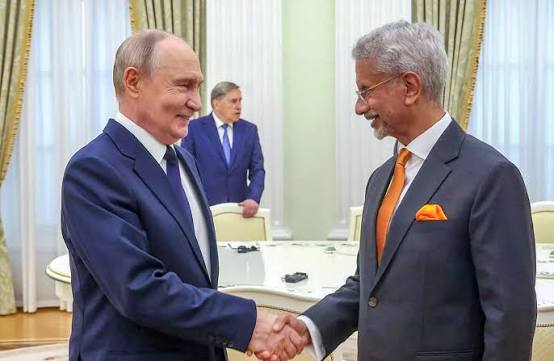
Two high-level engagements this past week underscore how India is reassessing its place in a rapidly changing global order. In Beijing, National Security Advisor Ajit Doval met Chinese Vice President Han Zheng and Foreign Minister Wang Yi, while in Moscow, External Affairs Minister S. Jaishankar held talks with President Vladimir Putin and First Deputy Prime Minister Denis Manturov. These parallel dialogues signal a deliberate effort by New Delhi to navigate a more fluid international landscape.
The backdrop is a series of developments that collectively suggest the limits of American influence. From the Middle East to the Americas, Washington's ability to shape outcomes appears increasingly constrained. The emerging Turkey-Saudi Arabia-Pakistan axis, the hedging by the UAE and Qatar, Oman's willingness to discuss the Strait of Hormuz with Iran, the ineffectiveness of sanctions on Tehran without Chinese cooperation, and the prolonged Russia-Ukraine conflict all point to a more diffuse distribution of power. Even Canada's recent decision to walk away from trade talks and impose counter-tariffs on the US reflects a broader trend of allies asserting their own interests.
Individually, these events may not signal the end of American primacy, but together they mark a turning point. For India, the message is clear: the era of unipolarity is over, and strategic autonomy requires active engagement with multiple poles.
Balancing Beijing and Moscow
The talks in Beijing focused on restoring "normalcy" in bilateral ties and building a long-term strategic framework. In Moscow, the emphasis was on deepening an already robust partnership despite Western pressure. India's approach is not about choosing sides but about cultivating overlapping partnerships—what some analysts describe as flexible arcs of security and interest—to safeguard its sovereignty and economic growth.
This strategy is evident in India's growing cooperation with Japan and Australia. As China expands its influence in the South China Sea and the broader Indo-Pacific, India has strengthened logistics sharing, maritime surveillance, and supply chain resilience with Tokyo and Canberra. Japan is investing heavily in Indian defence and industrial projects, while Australia is securing critical minerals and energy supplies. These ties form the backbone of the Quad, a grouping that offers both opportunities and risks, especially given the unpredictability of US leadership.
India's relationship with Russia remains a cornerstone of its foreign policy. Despite sanctions, bilateral trade has flourished, driven largely by Indian purchases of Russian crude. This engagement provides India with diplomatic space to manage its most challenging relationship—the structural rivalry with China. However, the partnership carries risks. Reports suggest that CIA Director John Ratcliffe's recent visit to Moscow may have involved warnings about potential Russian actions in Ukraine, which could put India in a difficult position if the conflict escalates.
From Washington's perspective, India's balancing act is difficult to factor into its strategic calculations. The US must acknowledge that its inability to adequately arm Ukraine and pressure Putin has prolonged the war. Moreover, if India were to sever ties with Moscow, Russia would likely fall deeper into China's orbit, destabilizing global energy markets. Washington also recognizes that the Quad's deepening architecture positions India as a key counterweight to China, but this requires accepting a more complex global system than the unipolar era.
The China thaw and economic interdependence
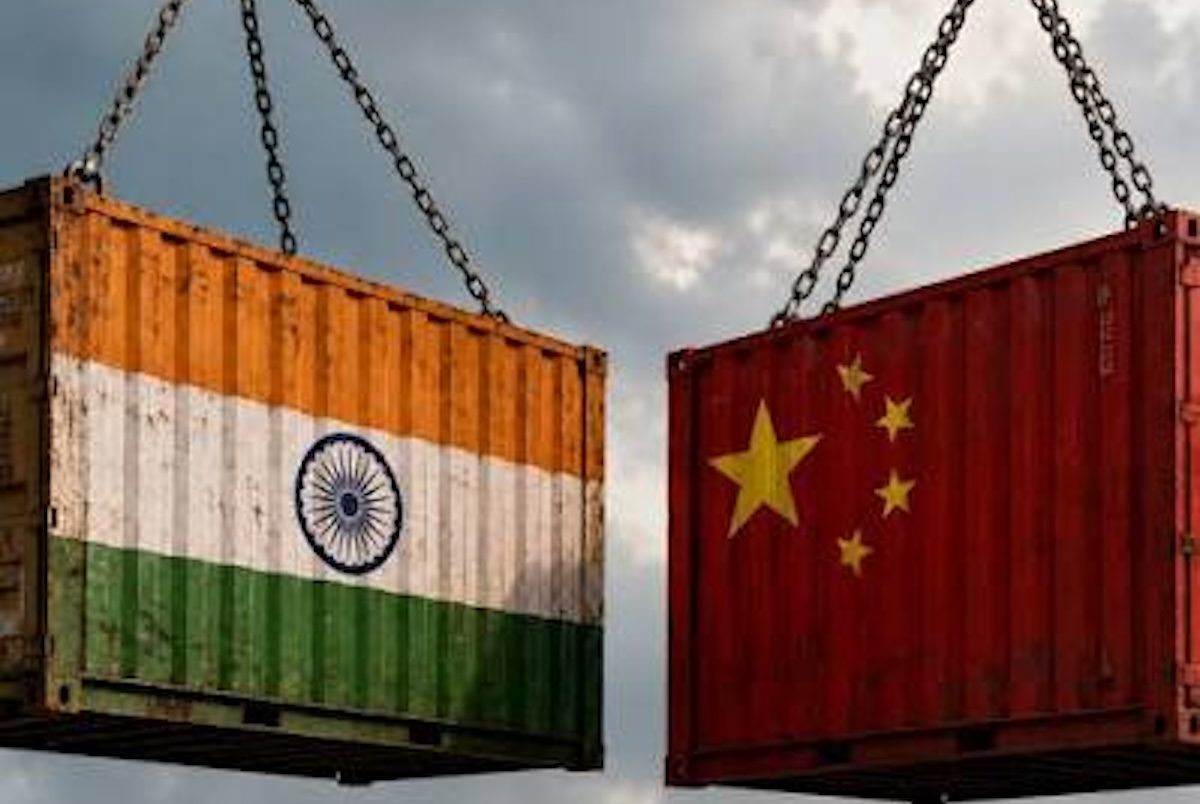
The gradual improvement in India-China relations reflects a pragmatic pursuit of competitive coexistence. Both sides seek to reduce the risk of a multi-front confrontation, though China's defence ties with Pakistan remain a concern. The current stabilization is driven less by trust and more by converging economic interests. China's domestic slowdown, property crisis, and Western trade barriers are pushing its firms to seek alternative production bases and markets. India, with its large consumer base and growing manufacturing sector, offers an attractive destination for Chinese investment and supply chain diversification.
This economic interdependence could transform China's internal vulnerabilities into a stabilizing factor in bilateral relations. However, as fragile stability in the Indian Ocean suggests, the thaw is not a reset. India remains wary of Chinese intentions, and the relationship will likely remain a delicate balancing act.
India's diplomatic moves also have implications for other regional dynamics. The prospect of Bangladesh joining a Mecca-based defence pact has unsettled New Delhi, while Myanmar's junta building closer ties with Russia adds another layer of complexity. These developments underscore the need for India to maintain a flexible and proactive foreign policy.
In this context, India's engagement with both Beijing and Moscow is not a contradiction but a calculated strategy. By diversifying its partnerships, New Delhi aims to secure its national interests in a world where power is increasingly dispersed. The coming months will test whether this approach can withstand the pressures of great-power competition and regional instability.