On March 24, 2026, the Philippines became the first country to declare a national energy emergency in response to the Middle East conflict and the disruption of the Strait of Hormuz. The move underscored a structural vulnerability shared by many Asian economies: heavy reliance on imported coal and liquefied natural gas (LNG) for electricity generation.
LNG prices surged in early March, while coal prices rose by up to 30% at the crisis peak. Retail electricity prices threatened to follow, prompting emergency measures. The burden fell hardest on low-income households, for whom electricity already consumes a disproportionate share of the family budget.
This supply shock was a stark reminder of how exposed countries that import significant portions of their fuel can be. From Vietnam to Indonesia to Bangladesh and Pakistan, power systems built around imported coal and LNG carry the same structural vulnerability: when global markets move, households pay.
Rethinking Energy Security
The emergency highlighted that reliance on imported fuels is not a stable foundation for energy security, prosperity, or consistently affordable power. It raises a critical question: what would genuine energy independence look like?
The answer lies in building power systems anchored in resources that can be controlled nationally — cleaner and more flexible grids, deeper regional integration, and a managed transition away from import-dependent generation. This is what The Rockefeller Foundation calls universal energy abundance: a future where the most vulnerable person has access to enough energy to thrive, not simply to survive, without remaining hostage to the next global supply shock.
A new analysis published June 11 by RMI, with support from The Rockefeller Foundation, offers a framework for thinking through these choices. Reconsidering Planned Generation examines 640 gigawatts of grid-connected coal power still in the development pipeline globally, 630 gigawatts of which is planned in low- and middle-income countries. It asks whether locking in these plants is still the best option.
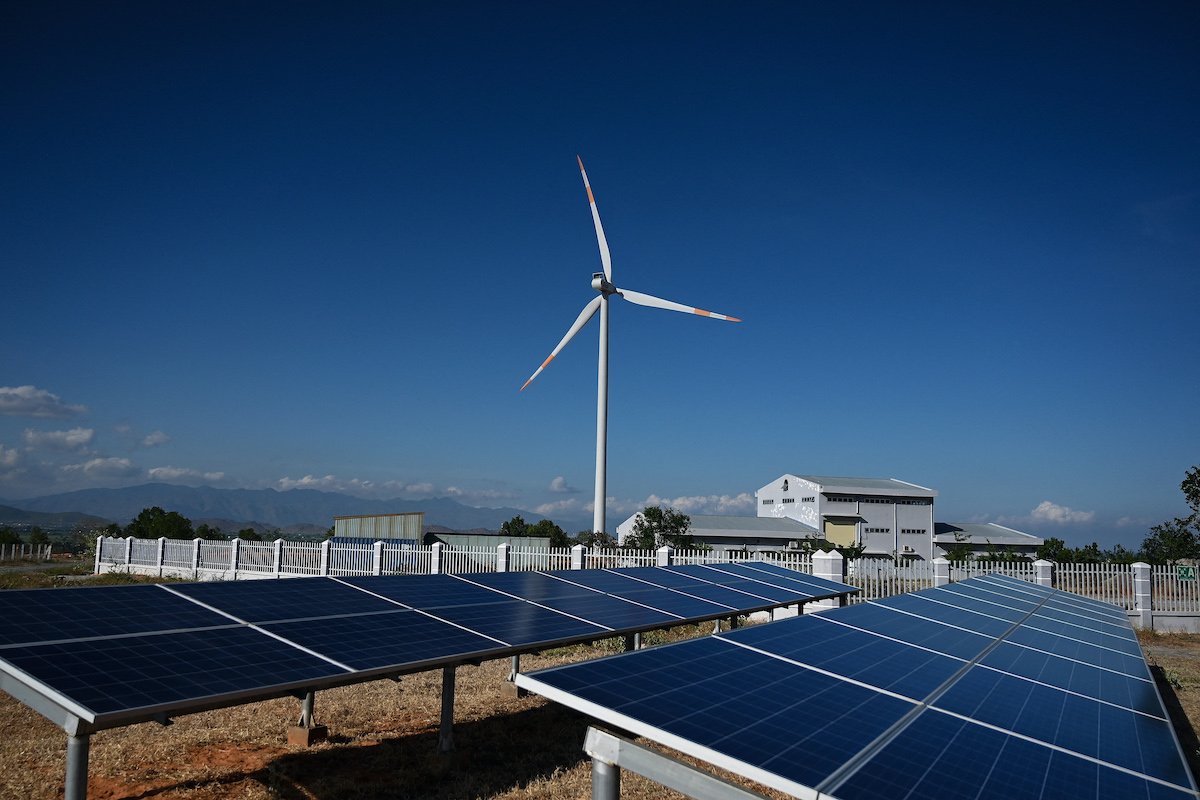
The analysis suggests it is not. Over the past decade, solar costs have fallen 70%, onshore wind 55%, and battery storage a remarkable 90%. Renewable technologies require importing materials only once, whereas imported fuels require decades of dependence on foreign imports. RMI finds that solar paired with four-hour battery storage is now cost-competitive with the most efficient new coal plants — and could be 30–50% cheaper by 2030.
The report also flags a particular risk for planned projects conceived long ago: nearly 30% of the global pipeline was first designed over a decade ago, when technology costs, grid needs, and geopolitics looked fundamentally different. Those assumptions are increasingly being questioned, especially in the wake of the second major energy crisis to hit Southeast Asia in five years.
From Theory to Practice
RMI and The Rockefeller Foundation have tested this proposition in real-world conditions, working directly with asset developers planning to build coal plants. When the analysis is done rigorously — modeling actual grid needs hour by hour, stress-testing reliability across peak demand, and comparing returns for the project developer — solar and battery storage often comes out ahead. It can be more affordable for the offtaker, strengthen long-term energy security by replacing imported coal with domestic renewable generation, and improve local air quality, reducing pollution that falls disproportionately on communities closest to these plants.
The same logic increasingly applies to the existing coal fleet, though the intervention is more complex. Building clean dispatchable renewables to replace firm capacity is increasingly viable in some contexts, but requires navigating existing contracts and sequencing new build carefully to protect grid stability. New financial innovations to smooth the transition — including transition credits — are increasingly available, and several pilot projects are under consideration across the region.
Every country faces unique pressures, and policymakers navigating fast-growing economies face genuinely complex choices. Existing resources are often still needed, contracts are hard to unwind, and energy security cannot be compromised. There are no universal solutions. But the context is changing rapidly, in ways that are prompting many to reconsider long-held assumptions.
The tools, the capital, and the analytical firepower are available. The open question is whether this moment of crisis prompts countries across the region to reexamine how they power their economies. As the Hormuz blockade has shown, Asia's growth model remains fragile. Meanwhile, China's nuclear export push offers one alternative, but renewables may provide a faster, cheaper path. For countries like the Philippines, the choice is clear: continue relying on volatile global markets, or invest in domestic energy independence.
Joseph Curtin is vice president of energy transitions at The Rockefeller Foundation. The author acknowledges the contribution of RMI to the analysis described in this piece.