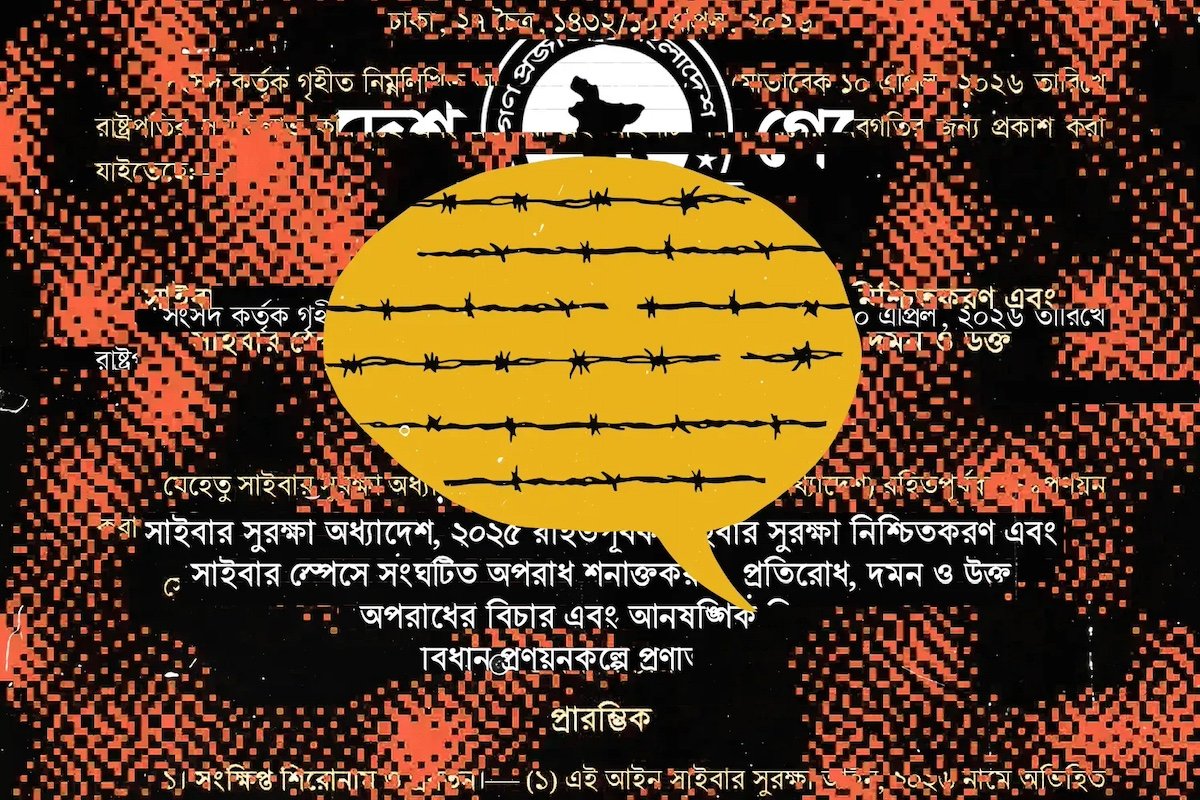
For years, Bangladesh has cycled through names for its internet speech law: the Information and Communication Technology Act, the Digital Security Act, the Cyber Security Act, the Cyber Protection Ordinance, and now the Cyber Protection Act. Each rebrand promises modernization, yet the underlying appetite for policing online expression appears stubbornly unchanged.
The latest draft, presented as a response to genuine cybercrimes like online harassment, sexual abuse, deepfakes, and misinformation, reaches far beyond those concerns. It proposes criminalizing vaguely defined humiliation and defamation, introduces an offense for sharing “unverified” information, expands government powers to remove online content, and even allows some speech offenses to be handled by mobile courts. The result, critics say, is a toolkit for authorities who find the internet insufficiently “respectful.”
A Defamation Clause with Elastic Reach
The most telling example is Section 25 of the draft. The existing provision targets serious harms such as sexual harassment, blackmail, revenge pornography, and child sexual abuse material. The amendment adds defamation, humiliation, and bullying, raising the maximum penalty from two years and 10 lakh taka (about $8,200) to five years and 20 lakh taka ($16,200).
But politics thrives on humiliation. Opposition leaders routinely seek to embarrass governments; cartoonists and satirists mock politicians; columnists and protesters criticize ministers. Calling a minister incompetent is not designed to enhance their standing. The draft’s language extends beyond false factual claims to words, publications, conduct, and even gestures that could diminish someone’s dignity, honor, or social standing—an extraordinarily elastic basis for criminal liability.
The gender dimension adds another layer. Under proposed Section 25(3), an offense against a woman or a minor could bring up to ten years in prison or a 40 lakh taka ($32,800) fine. Because defamation falls under Section 25(1), the aggravated penalty applies to defamatory speech directed at a female politician, potentially carrying a harsher punishment than the same speech aimed at a male politician. While protecting women from online sexual abuse is a clear public interest, creating a gender-dependent tariff for political defamation is something else entirely.
The definition of “person” also includes institutions, companies, and legal entities. A scathing Facebook review of a hospital or bank could thus acquire legal consequences far beyond a comment-section squabble.
Memes, Rumors, and the Chilling Effect
Section 25 covers graphics and AI-created or edited material without an explicit exemption for parody, satire, or cartoons. Section 27 compounds the risk by making assistance in an offense punishable as the underlying offense. Since publication and dissemination are covered, liability may extend to those who share content. Bangladesh may soon reach a point where forwarding a joke about a politician requires more legal consideration than writing one.
For journalists, the more alarming proposal is new Section 26A, which criminalizes publishing or disseminating “rumor” and false information online. The draft defines this as unsupported or unverified information capable of causing confusion, fear, excitement, or social instability. The maximum penalty is ten years’ imprisonment or a 40 lakh taka fine (around $32,800).
The word “unverified” is doing extraordinary work here. Journalism frequently deals with information that has not been officially verified—that is often why journalism is necessary. Imagine a reporter learns from hospital sources that demonstrators have been shot dead, but authorities deny it. The reporter publishes; six hours later, the deaths are confirmed. The story was true, but at the crucial moment it was unverified and capable of causing fear or “excitement.” The prudent response for an editor under such a law is to wait—for police, for the ministry, for an official stamp. By then, the story may be politically useless.
That is the elegance of the chilling effect. The state need not imprison every reporter; it need only make them sufficiently interested in not being imprisoned. Citizen journalists, protesters, and activists would have even fewer protections, documenting events precisely when information is confused and rapidly developing. A smartphone video uploaded during a clash is valuable because it appears immediately, not after a committee authenticates it on Tuesday.
Section 8 supplies the other half of the mechanism. Law-enforcement bodies, the Information and Broadcasting Ministry, and other government agencies could seek to block or remove material considered defamatory or “disrespectful to the state.” The draft does not define that phrase—a phrase ill-suited to a democracy. States do not have feelings; ministries cannot be offended; police headquarters does not need protection from sarcasm. A citizen’s right to describe the state as incompetent is precisely what democratic accountability requires.
Bangladesh’s political context makes these provisions especially concerning. The interim government under Muhammad Yunus has promised reforms, but this draft suggests continuity with the past. As Hasina's return pledge remains unlikely to restore her power, the country’s democratic space is under scrutiny. The new law could further entrench censorship, undermining the very freedoms citizens have recently fought for. The government should weigh the strategic costs of such a law, especially as it navigates regional alliances and its own democratic credibility.