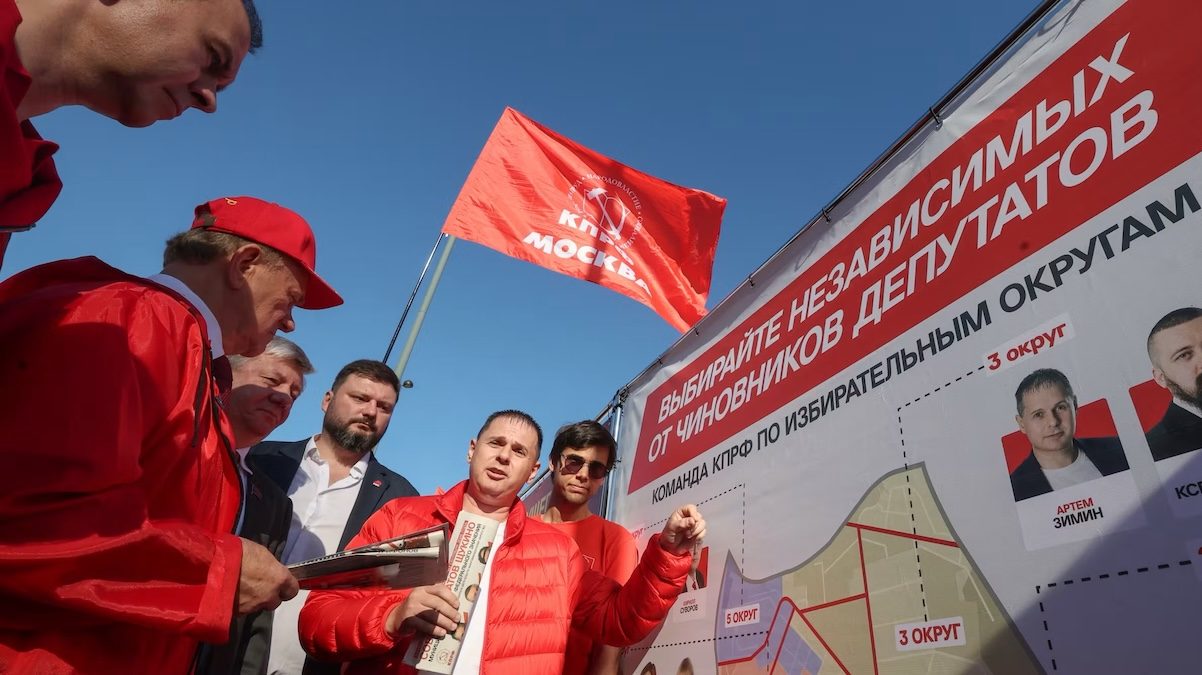
When Russians head to the polls on September 18-20, 2026, they will be voting in a parliamentary election that the Kremlin has already decided. The backdrop is grim: a war in Ukraine that was supposed to last days has dragged on for years, Ukrainian drones have struck Russian energy infrastructure, casualties have mounted far beyond initial expectations, and inflation and unemployment are rising in many regions. Yet few analysts doubt the outcome: President Vladimir Putin's United Russia party will retain its constitutional majority.
This is not because the party is popular. Polls put United Russia's support at around 32 percent, the lowest since the full-scale invasion of Ukraine in February 2022—and even that figure is likely inflated by respondents' fear of expressing opposition. The real story is the machinery of coercion and control that the Kremlin has built over two decades to ensure electoral outcomes without resorting to blatant vote fraud.
The Kremlin's electoral toolkit
Russia's election managers have long relied on coercive tactics, pressuring business and bureaucratic managers to deliver their workers' votes. Gerrymandering has been a staple: urban districts are redrawn to resemble flower petals, incorporating aging voters in small towns and rural areas who tend to be more loyal to the regime. But this time, the Kremlin has not offered the usual financial incentives to these groups, and the war's casualties are disproportionately concentrated in rural areas, while fuel shortages hamper the harvest. The challenge is to overcome these hurdles to secure the two-thirds majority needed to amend the constitution.
The three-day voting period and the expansion of online voting provide cover for manipulation. Officials can monitor counts and adjust them over the course of the vote, and the lack of independent observers—the election watchdog GOLOS was disbanded under Kremlin pressure, and European monitors were not invited—means there is little outside scrutiny. Statistical analyses and past observer reports have documented significant fraud in previous elections.
Most importantly, the Kremlin controls who can compete. The party system is artificial: alongside United Russia, there are 18 other registered parties, but only 10 will appear on the ballot, all handpicked for their loyalty. They exist to create the illusion of competition and to absorb protest votes, but none will challenge the government or win seats.
The Yabloko interlude
In a surprising move, the Central Election Commission in July 2026 allowed the liberal, anti-war Yabloko party to register for the election. With only about 3 percent support, Yabloko posed no electoral threat, but as the only anti-war party on the ballot, it could have served as a barometer of public sentiment toward the war. That role was short-lived: the commission reversed its decision, Yabloko lost a Supreme Court appeal, and its deputy leader Lev Shlosberg was sentenced to 11 years in prison on charges of spreading "fakes about the military." The episode underscores the Kremlin's intolerance for any genuine opposition.
The broader opposition has been systematically dismantled. Alexei Navalny's Anti-Corruption Foundation, which had built a national network to challenge elections, was declared an extremist organization in 2021 and forced into exile. Navalny died in prison in 2024, and most of its regional leaders are jailed. Independent political space is effectively closed.
For observers in Asia, the Russian election is a reminder of how authoritarian systems manage legitimacy under stress. The Kremlin's ability to deliver a predictable result despite wartime setbacks reflects not popular support but the depth of its control. As Asia plans for a Russia without Putin, the mechanisms of this election offer a glimpse into how the system sustains itself—and how brittle it may become.
The vote also has regional implications. Russia's wartime alliances, including Myanmar's junta building a sanctions-busting axis with Moscow, are part of a broader pattern of authoritarian solidarity. And as Russia's quagmire in Ukraine deepens, the economic strain on ordinary Russians may eventually test the limits of coercion.
For now, the election will proceed as scripted. United Russia will win, the Kremlin will claim a mandate, and the war will continue. But the level of coercion required to produce that result is itself a measure of the regime's fragility.