Beijing has issued a stark warning to Brussels: any new unilateral trade measures or discriminatory restrictions will be met with firm retaliation. The statement from China's Ministry of Commerce came just a day after the European Commission declared that the current trade situation with China is 'not sustainable' and called for a coherent strategy to counter what some officials have labeled 'China Shock 2.0.'
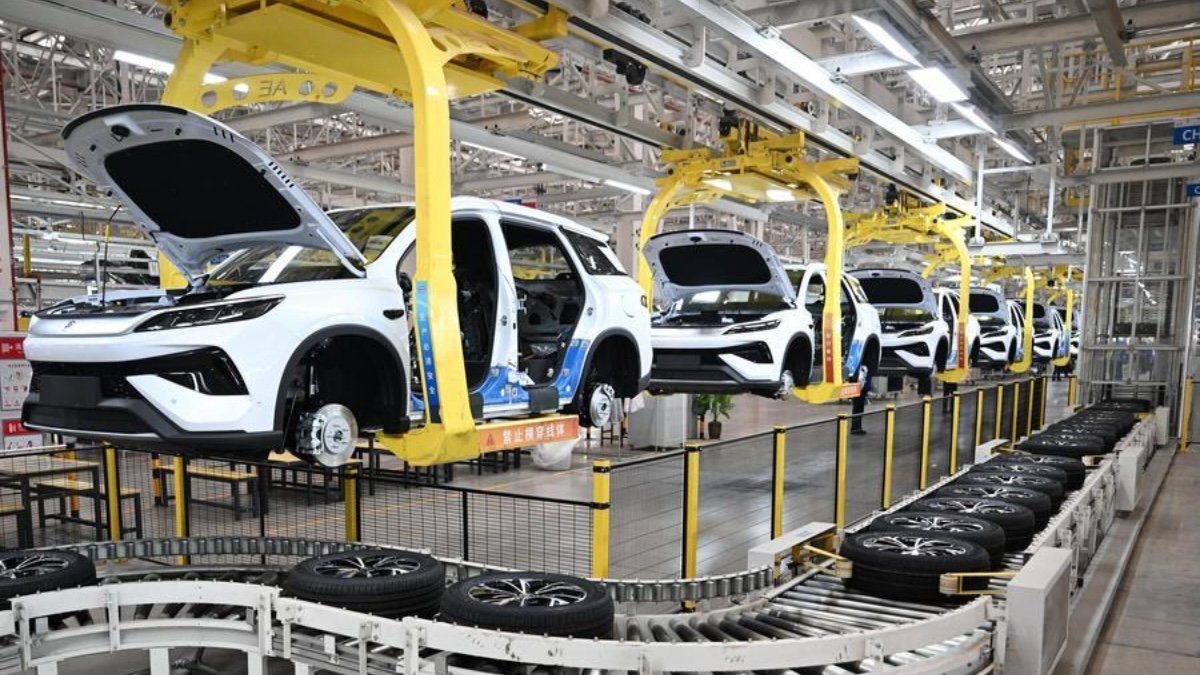
The term refers to the growing disruption caused by a surge of cheap Chinese exports flooding European markets, threatening local manufacturing in sectors from electric vehicles to solar panels and steel. The European Commission's May 29 statement highlighted that both economic and security interests require a more robust response.
Widening Trade Imbalance
Europe's trade deficit with China has widened dramatically. According to Eurostat data published in February, the gap hit €359 billion (US$418 billion) in 2025—more than double the pre-pandemic level. Chinese goods worth nearly €560 billion entered the bloc last year as Beijing redirected exports toward Europe to offset weakening demand from the United States and other markets.
Brussels has responded with an increasing number of anti-dumping cases: seven in 2024, 17 in 2025, and more than 50 ongoing this year. These target Chinese electric vehicles, solar supply chains, steel, and other goods. Yet the bloc remains divided. France, Spain, the Netherlands, Italy, and Lithuania have jointly called for tougher trade tools and faster investigations. Germany, however, has refused to sign on, instead pushing for stronger industrial ties with Beijing.
Chinese commentators argue that Europe's economic troubles are largely self-inflicted. Ding Chun, director of the Center for European Studies at Fudan University and president of the Shanghai Society for European Studies, said: 'Europe over-invested in traditional industries like automobiles and chemicals while missing the waves of internet, digital, and artificial intelligence development from the 1980s and 1990s onward. In the competition with China and the United States, Europe has fallen visibly behind.'
Ding added that Europe's old growth model collapsed amid the Russia-Ukraine conflict and US protectionism, leaving its manufacturers unable to compete on either technology or cost. 'Europe has responded by erecting a wall of trade protection tools to shield its industries, but that is the wrong prescription,' he said. 'China has shown restraint and repeatedly urged the EU to take a clear-eyed view of the situation. Europe should be raising its competitiveness through stronger domestic innovation, not through market-distorting measures.'
He noted that China has already put in place countermeasures covering supply chain security and extraterritorial jurisdiction, and retains the tools needed to respond if the situation escalates. All parties, he said, should work to avoid a further slide into trade friction.
Trade War Fears Mount
Over the years, the EU has imposed anti-dumping and anti-subsidy duties on a broad range of Chinese goods, from electric vehicles and steel to solar components, chemicals, and industrial materials. In June 2025, the European Parliament's International Trade (INTA) committee released a research report arguing that traditional investigations are too slow and fragmented to counter structural foreign overcapacity. Probes currently take between nine and 14 months to conclude, meaning cheap or state-subsidized imports often inflict severe damage before any defensive tariffs take effect.
The report recommended that the European Commission initiate anti-dumping investigations within one month of receiving a complaint and implement provisional measures within six to seven months when justified, in line with WTO recommendations. It singled out the US, China, and India for deploying aggressive industrial subsidies to boost their manufacturing and export sectors.
Since 2026, the situation has intensified. China posted a record global trade surplus of US$1.19 trillion last year, driven by a manufacturing machine that has increasingly redirected exports to Southeast Asia, Africa, and Latin America to sidestep US tariffs. The figure is the largest ever recorded by any single economy. The surplus also reflects weak import demand and domestic consumption in China. With excess industrial capacity finding fewer outlets in the US, more Chinese goods have flowed toward Europe, intensifying what Brussels is now calling 'China Shock 2.0' and fueling debate over whether the current trade order is sustainable.
The European Parliament's researchers, in a March 2026 report titled 'Industrial Overcapacities, with a Focus on China,' noted that six sectors—automobiles, electric machinery, general machinery, rubber and plastics, special machinery, and medicines—saw rising export shares and accounted disproportionately for China's export growth to the EU. While the report acknowledged that empirical analysis does not allow for a precise assessment of the role of active state involvement in industrial overcapacity, the findings underscore the structural nature of the challenge.
Others caution that the prospect of all 27 EU member states agreeing on joint trade measures against Beijing remains slim, given the deep commercial ties many capitals have built with the world's second-largest economy and their reluctance to jeopardize them. As tensions escalate, the risk of a full-blown trade war between Europe and China looms larger, with implications for global supply chains and the broader Indo-Pacific economic order.