TOKYO — The US Treasury market is delivering a stark message to those who believe inflation is under control: think again. The recent sharp selloff in Treasury Inflation-Protected Securities (TIPS) suggests that the world's largest bond market is increasingly skeptical about the durability of price stability. This shift has profound implications for Federal Reserve policy, real interest rates, and equity valuations, and it is likely to keep upward pressure on conventional Treasury yields.
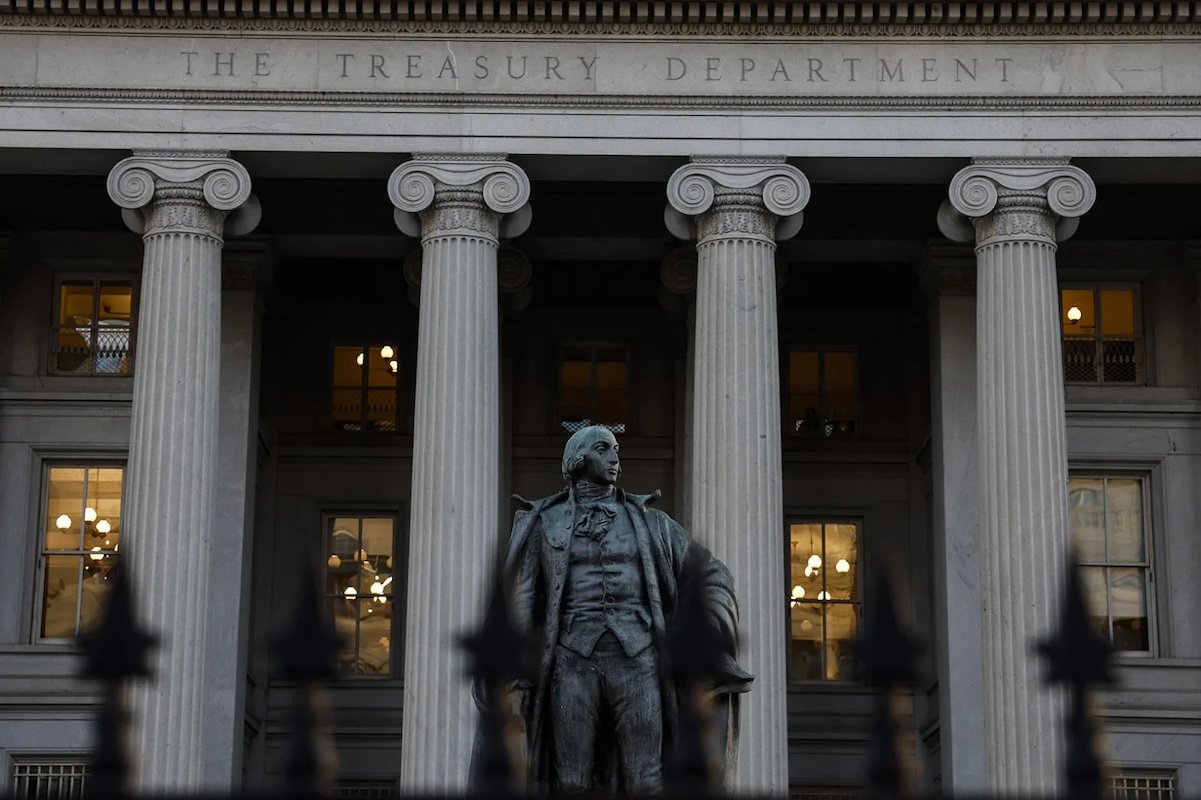
Demand for US government debt is already softening. Last week, the Treasury Department's $70 billion auction of 5-year notes drew tepid interest, selling at a yield of 5.033%—the highest for that maturity since June 2006. Meanwhile, 30-year yields are testing levels not seen in 24 years, and 10-year yields are near two-decade highs. The trigger? The Iran war's inflationary shock is rippling through the global economy, with oil prices as the swing factor.
“The 'Yes, No, Maybe So' jawboning over the Strait of Hormuz reopening is keeping investors on edge,” says Craig Johnson, chief market technician at Piper Sandler. Ian Lyngen, rates strategist at BMO Capital Markets, notes that the “historically strong correlation between oil and yields will leave the market particularly focused on the durability of the latest diplomatic efforts in the Middle East.”
Yet many investors remain unprepared for the scale of the adjustment. “It's striking how many market participants have been surprised by the recent surge in US yields,” says Mohamed El-Erian, chief economic adviser at Allianz. “The fundamental drivers have been evident for some time. What's playing a far larger role than it should is psychological anchoring: the collective mindset shaped by more than a decade of artificially low, repressed yields following the 2008 global financial crisis.”
That complacency could make the global debt market correction more abrupt and disorienting than many anticipate. The strain is already visible in households. Thirty-year Treasury yields hit their highest level since 2002 on the same day the Conference Board reported that US consumer confidence had fallen to a 12-year low. The two data points reflect the same underlying problem: persistent inflation is fueling an affordability crisis. Gasoline above $4 a gallon, soaring diesel costs, and surging heating oil prices are taking a heavy toll on sentiment.
As Conference Board economist Dana Peterson puts it: “Consumers' write-in responses regarding factors affecting the economy were mostly pessimistic in September. References to prices, the high cost of goods and services, and oil and gas prices in particular, rose to new heights.”
All this suggests that the action in the $2.153 trillion TIPS market is not irrational or an aberration. Rising real yields indicate that the market expects the US economy to remain resilient—at least in pockets thanks to AI—while inflation pressures intensify. This trajectory underscores the magnitude of the Federal Reserve's policy dilemma. On Sept. 16, the Federal Open Market Committee raised rates by 25 basis points to a range of 3.75% to 4%, in a unanimous vote. Even Fed Chairman Kevin Warsh, appointed by President Donald Trump to lower rates, supported the move.
The decision has sparked a lively debate about whether the Fed is making a policy error. Moody's economist Mark Zandi is among those worried that tightening into both internal and external shocks could backfire. “The odds of a serious Fed policy mistake are uncomfortably high and rising,” Zandi says, adding that “the economy is already growing near potential (2% real GDP growth) and operating at full employment.” He notes that the artificial intelligence boom is driving growth while non-AI sectors lose momentum. The Fed's choice, he argues, is to actively slow AI investment that is keeping both the economy and the stock market afloat, or to defend against weakening consumer confidence. “Neither is a good outcome,” Zandi says. “Of course, it doesn't have to choose either. It can wait.”
The conventional wisdom is that the Fed will continue tightening—perhaps two more times by year-end. Some market pricing suggests hikes could extend into early 2027. James Lord, global head of FX at Morgan Stanley, says the bank “now forecasts US dollar strength through year-end and into 2027,” adding that “elevated energy prices, robust US data, and a hawkish reaction function have generated not just a rate hike but likely further hikes to come.”
Fed Governor Michael Barr defends the recent move: “Economic growth is strong and the labor market is solid, but inflation is above our 2% target and not clearly trending toward target in a timely way. Moreover, risks to achieving our inflation target have increased, while risks to the labor market have receded. We needed to recalibrate monetary policy to reflect the balance of risks to our mandate goals.” He adds that “further policy adjustments are likely to be needed to ensure inflation comes down to target in a timely fashion.”
The Fed's dilemma is compounded by the US national debt topping $40 trillion just as Warsh's tightening cycle begins. Emre Tiftik, economist at the Institute of International Finance, warns that “as benchmark rates rise, interest expense is set to surge, while structural pressures from healthcare and public pension spending remain largely unaddressed.” This fiscal strain is not unique to the US; similar pressures are building in Japan, where the government's debt burden is even heavier relative to GDP. The global bond market is increasingly interconnected, and a coordinated selloff is underway as investors reassess risk.
For Asia, the ripple effects are significant. Higher US yields typically strengthen the dollar, putting pressure on Asian currencies and complicating monetary policy across the region. The yen and won are already flashing warning signs, and central banks from Tokyo to Seoul are watching closely. The message from bond markets is clear: inflation is not tamed, and the adjustment is far from over.